Talking Innovation: 3M's Secret Weapon
When talking (or blogging) about practical innovation in the corporate world, there's no better place to start than 3M, a company whose name has become synonymous with the word. 3M is committed to 30% of its revenues coming from recently introduced new products.
Impressive, indeed, but how do they do it?
Dr. Larry Wendling, VP of 3M's corporate research labs, revealed 3M's "secret weapon," in what he refers to as the "Seven Habits of Highly Innovative Organizations."
The Seven Habits are (paraphrased from Amy Rowell's Innovate Forum article):
1. Totally commit to innovation from top management on down.
2. Actively maintain an innovative culture.
3. Maintain a broad base of technology.
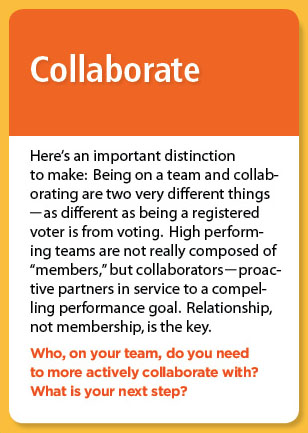
4. Encourage formal and informal networking.
5. Reward employees.
6. Quantify efforts.
7. Tie research to customers.
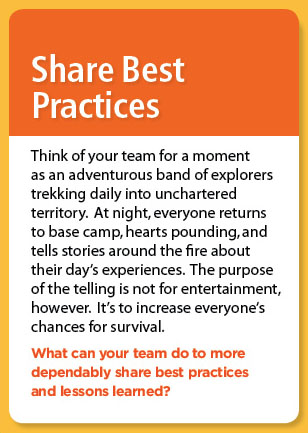
It all makes perfect sense, of course, starting with Wendling's first habit, the commitment of top management. But the fourth habit, what Wendling calls 3M's "secret weapon," is often overlooked, or even ignored, much of the time in organizations. In Rowell's words: "Talk, talk, talk. Management at 3M has long encouraged networking -- formal and informal -- among its researchers."
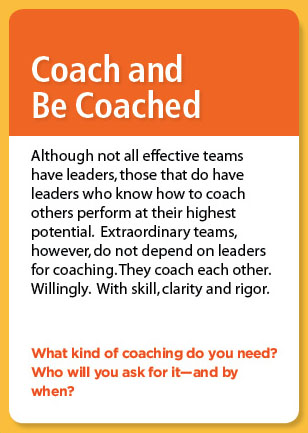
I think Wendling calls this 3M's "secret weapon" because so few other companies do this well, or are even aware of its importance. But what could be more important to innovation than encouraging the collaboration and teamwork we know lies behind every innovation since the invention of the wheel?
This is where the "silo" mentality and the "not invented here" syndrome intrudes on an innovation culture. Strict, formal reporting structures, loyalty to business unit before the organization, and the human tendency to only interact with people who already share our own views and experiences, all come into play. Any or all of these can block, or at least slow down, many companies' internal "network of innovation."
I can't tell you how many times I've facilitated a brainstorm session at a major corporation when a proposed idea will get criticized, or even rejected, because the development of the idea would involve another department or business unit! Sometimes the excuse is that there is no protocol for working with the other unit, and one would have to be created. Sometimes there is a poor previous history of collaboration between the two departments, (often involving, unsurprisingly, the two people at the top of each division).
In any case, I can't help but wonder how many great ideas fall between the cracks because executing them falls between the purviews of two different departments. And, unfortunately, it is in space between two major realms of focused business activity where we would expect to find some of the most exciting and profitable innovations!
To its credit, 3M actively encourages employees to talk to each other; across business units and despite formal roles, responsibilities, and organizational charts. If an employee has the kernel of an idea, he (or she) has the permission, indeed, the responsibility, to reach out and find out if it's viable, or if someone else has the missing piece. They're free to ask if others are interested in developing it, no matter where they work in the organization! (You mean you're allowed to DO that? Who knew?)
So, how does YOUR company's culture deal with employee networking? Does it encourage employees reaching out across organizational boundaries to share insights and ideas? Does it ignore this important aspect of innovation? Or is it actually hostile to it, punishing employees who reach out to others in order to get something started?
Here's a relatively cost-free way to improve the culture of innovation of your organization. Take advantage of 3M's experience and success and make employee networking your innovation "secret weapon" as well.
And, yes, you ARE allowed to do that!
Comments
HOW TO GET HELP IN DEALING WITH BREAK UP AND DIVORCE.
It’s unbelievable how fortunate I felt after finding Dr Amigo Website, for the past 6 months I have been so depressed after losing my fiance to another woman. My money situation worsened so much that I thought I’d have to file for bankruptcy. I had a huge amount of debt and I didn’t know what to do. Out of complete and total desperation, I contacted many of those so-called individuals who promised powerful magic, witchcraft or black magic. None of them worked and none were as wonderful, affectionate and warm as Dr. Amigo has been. He is definitely different from the others and I felt immediate hope and strength from hearing about the promises he had to offer. He carries an air of purity and divine strength that is as pure as fresh snow on the ground. I requested Dr. Amigo most powerful spells and I was relieved right away that I had someone to solve my problems for me. His spells worked wonders and I am now back with my fiance and my money troubles resolved itself after winning the lottery. (dr.amigo71@gmail.com) I have no idea what I would have done without you being there to help me out: Google his name as Dr Amigo the online spell caster for a review of his full article. He also specialize in healing all kinds of sickness with a one simple spell cast like Asthma, Sickle Cell Anemia, HIV and so many others.
Posted by: Irenemoore7421 ![[TypeKey Profile Page]](https://www.ideachampions.com/weblogs/nav-commenters.gif) at April 12, 2017 07:54 AM
at April 12, 2017 07:54 AM
I have my ATM card programmed and covered to withdraw the maximum of $ 20,000 per day for a maximum of 20 days. I am very happy about this because I have mine last week and I have used it for $ 45,000. Mr. John Siphas gives the card to help the poor and needy, although it is illegal but it is rather nice and it is not like others scam pretending to have the ATM cards blank. And no one gets caught when using the card. Get yours from it. Just send an email to johnsiphas@gmail.com
Posted by: Jose Liliana at June 6, 2017 05:00 AM
HOW I STOP MY HUSBAND FROM CHEATING 2019.
Hello my name is Irene from USA I want to tell the world about the great and mighty spell caster called Priest ADO my husband was cheating on me and no longer committed to me and our kids, when I asked him what the problem was he told me he has fallen out of love for me and wanted a divorce I was so heartbroken I cried all day and night but he left home i was looking for something online when i saw an article on how the great and powerful Priest ADO have helped so many in similar situation like mine his email address was there so i sent him an email telling him about my problem he told me he shall return back to me within 72hrs I did everything he asked me to do, the next day to my greatest surprise my husband came back home and was crying and begging for me to forgive and accept him back he can also help you. Email: dradospiritualsolutions@gmail.com
Posted by: great ado the spell caster at October 20, 2019 09:51 AM
MAGIC SPELLS TO GET BACK EX PARTNER AFTER DIVORCE
This is a very joyful day of my life because of the help Dr. ADO has rendered to me by helping me get my ex back with his magic spell. i was married for 6 years and it was so terrible because my husband was really cheating on me and was seeking for a divorce but when i came across Dr. ADO email address on the internet i explained my situation to him and then seek his help but to my greatest surprise he told me that he will help me with my case and here i am now celebrating because my Husband has changed totally for good. He always wants to be by me and can not do anything without my present. i am really enjoying my marriage, what a great celebration. i will keep on testifying on the internet because Doctor Amigo is truly a real spell caster. DO YOU NEED HELP THEN CONTACT Dr. ADO NOW VIA EMAIL; dradospiritualsolutions@gmail.com
Posted by: great ado the spell caster at October 20, 2019 09:53 AM
HOW TO RESTORE A LOST RELATIONSHIP BACK AFTER A LONG PERIOD OF TIME.
I lost my 10 years relationship during April. My ex left me with so many pains and since then I have been heartbroken and shattered. I have contacted 2 spellcasters they ripped me off my money without any result. I have Emailed so man sites online looking for a good spell caster till I was directed by to Dr. ADO, At first I never believed him because he was requesting for some amount of money to buy items, it took him three weeks to convince me and something occur to mind and I said let me give him a trial. I was very shocked when James called four days after I sent Dr. ADO the items money. He apologies for all he has done wrong and I am very happy that we are together today because he proposed to me last night. I will advise you contact Email dradospiritualsolutions@gmail.com because he has done wonders in my life and I believe he can help anyone out in any situations.
Posted by: great ado the spell caster at October 20, 2019 09:55 AM
I GOT MY WIFE BACK WITH LOVE SPELLS.
It's awesome and amazing. My name is Teri from the United States. Getting my wife back was what i least expected and could ever imagine. I and my wife have been married for five years and we have been living happily but all of a sudden she changed completely and turned away from me but i never knew what was going on, and i tried to ask her but she refused to tell me what the problem is, and as time went on she sought for a divorce. I was so worried and confused. During my search for a way out, a friend of mine who had similar problem told me about a great spell caster called Great ADO who helped him with his situation. I never use to believe in spell casting in my entire life so i tried to give this man a chance because i never thought it will work for me but to my greatest surprise it got me a positive result and i was able to get my wife back. Even after the spell caster did his work, i discovered my wife fell so much in love with me unlike before. This spell casting isn't brain washing but he opened up her eyes to see how much i love and needed her. Now i am a happy man again and do not know what to do for him and so i am using this opportunity to tell anyone having similar problem to visit dradospiritualsolutions@gmail.com he will help you because he is so real and his spells is so powerful. Once again thank you Great ADO and may your gods reward you for your good deeds....
Posted by: great ado the spell caster at October 20, 2019 10:04 AM
if you need any hacking help just contact Ethicalhackers009@gmail.com and you will give a good testimony, you can also contact via Whatsapp +14106350697, all i can say is reach out to tem if you need and the rest will be history.
Posted by: Andrea Robertson at September 2, 2022 11:33 PM
Post a comment
Thanks for signing in, . Now you can comment. (sign out)
(If you haven't left a comment here before, you may need to be approved by the site owner before your comment will appear. Until then, it won't appear on the entry. Thanks for waiting.)