January 21, 2008
The Big Game

t1home.tynes.ap.jpg

Last night I watched the NY Giants beat the Green Bay Packers 23-20 in an NFL championship football game. I watched it with eight friends. As always, we had a fantastic time -- an experience that our wives (no matter how wonderful they may be) have never been able to truly fathom. Our viewing behavior, to them, is a merely a parody of the American male: two-dimensional, woefully predictable, and absurd.

That assessment, however, was not my experience last night. No way. On the contrary, my experience was noble, ecstatic, tribal, and divine. Beyond the pretzels, popcorn, chips, and beer something else was happening.

At the risk of making a mountain out of a football game, allow me to share a few observations about the experience and, by extension, the experience of millions of men huddled together before the Big Game. In that sacred act of viewing, NOTHING ELSE WAS HAPPENING! Zero. Nada. Zilch. No work. No bills. No back taxes. No car repairs. No war in Iraq. No recession. No primaries. No relationship issues. No cholesterol. No this and no that. Only The Game. Pure immersion it was. Spontaneous expression. Presence. Unbridled emotion. Liberated laughter. And the kind of concentration most yogis would trade their third eye for.

What, you may ask, has any of this to do with innovation -- the supposed topic of this supposed blog? Plenty. The state of mind (no, make that state of being), of last night's BIG GAME watching, pretzel munching men is exactly the state of being required by an individual, team, or organization in order to have even the slightest chance of innovating.

OK. Let's go to the slow motion, video replay of that last sentence: I'm talking focus, friends. I'm talking compelling goal. The experience of community. Uncensored delight. Resilience. Loyalty. Humor. Hope. Perseverance. The entertainment of possibility. And the soulful appreciation of each other.

Please don't get me wrong. I'm not talking about the common garden variety trance experience induced by watching TV or a movie. No. I'm talking about the BIG GAME. The "All In" moment. The Full Monte. The No Turning Back. The This Is It. The There's No Tomorrow. And all of it sprinkled with a healthy dose of pepperoni and celebration even before anyone knows the final score.

Yes, I admit, the eight of us didn't deliver anything as a result of watching the BIG GAME -- no output, no product, no proof that we had used our time well. But so what? When you're eating chips and experiencing the Unified Field of Consciousness on the day the Lord rested and time stops as your team huddles in the freezing cold, against all odds, to gather together one more time, focused on the goal and absolutely free of constraint, doubt, and delusion, what is there left to say except:

Giants 23, Packers 20. (And in overtime, yet!)

Posted by Mitch Ditkoff at 01:30 AM | Comments (0)

January 17, 2008
The Good Thing About Bad Ideas

bartdunce.gif

"You can only be as good as you dare to be bad." - John Barrymore

One of the inevitable things you will hear at a brainstorming session is something like "there are no bad ideas." Well, guess what? There are plenty of bad ideas. Nazism, for instance. Arena football. Bow ties. What well-meaning "keep hope alive" brainstorming aficionados really mean is this: Even bad ideas can lead to good ideas if the idea originators are committed enough to extract the meaning from the "bad." It happens all the time. Do you think that War and Peace was written in one sitting? Madame Butterfly? The Idiot's Guide to Volkswagen Repair? No way. There were plenty of earlier drafts that were horrid, but eventually led to the final outcome. Even diamonds begin as coal.

The key for aspiring innovators? To find the value in what seems to be a "bad idea" and then use that extracted value as a catalyst for further exploration. The following technique, excerpted from Awake at the Wheel: Getting Your Great Ideas Rolling (in an Uphill World) shows you how to do this. It's a particularly effective method for naysaying, skeptical groups to use when they are committed to sparking a breakthrough idea. Oh, I forgot to mention, it's also a hoot and a great way to make boring brainstorming sessions come alive.

1. Bring your challenge or problem to mind.
2. Conjure up a really bad idea in response to it. Like really.
3. Jot down anything that is good about this bad idea -- an essence that is redeemable.
4. Using this redeemable essence as a trigger, generate at least three new ideas you can actually do something about -- then brainstorm those further. (Then watch the expressions on people's faces.)

Posted by Mitch Ditkoff at 06:59 AM | Comments (2)

January 12, 2008
Innovation Ninjas

garyhamel-225.gif

Every once in a while I come across a quote or excerpt from an article that I want to immediately post on the windshield of every client of mine. It cuts to the chase and lucidly states what I've been trying to say, in various Neanderthalic ways, all these many years.

Take Einstein for example: "Not everything that counts can be counted; and not everything that can be counted counts." Bingo! Bullseye! What a perfect way of explaining to a left-brained addicted world that metrics and analysis is not the only game in town.

And then there's Gary Hamel. He takes a bit more time than Albert to make his point, but hey, it's all relative isn't it? Check this out from the man behind one of my favorite business books of all time:

"Today, innovation is the buzzword du jour in virtually every company, but how many CEOs have put every employee through an intensive training program aimed at boosting the innovation skills of the rank and file? Sure companies have electronic suggestion boxes, slush funds for new ideas, elaborate pipeline management tools, and innovation awards -- but in the absence of a cadre of extensively trained and highly skilled innovators, much of the investment in these innovation enablers will simply be wasted."

"Imagine that you coaxed a keen, but woefully inexperienced golfer onto the first tee at Pebble Beach. After arming the tyro with the latest titanium driver, you challenge him to split the fairway with a monster drive. You promise the neophyte a $100 bonus every time he hits a long bomb that stays out of the rough, and another $100 for every hole where he manages to break par. But what you don't do is this: You don't give him any instruction -- no books, no tips from Golf Digest, no Dave Pelz and Butch Harmon, no video feedback, and no time off to perfect his swing on the practice range. Given this scenario, how many 200-yard drives is our beginner likely to land in the fairway? How long is he likely to stay avidly devoted to the task at hand? And what kind of return are you likely to get on the $2,000 you spent on a bag full of high tech clubs and the 450 bucks you shelled out for a tee time? The answers are: Not many, not long, and not much. And no one who knows anything about golf would ever set up such a half-assed contest.

"That's why I'm dumbfounded by the fact that so few executives have invested in the innovation skills of their frontline employees. The least charitable explanation for this mind-boggling oversight: senior managers subscribe to a sort of innovation apartheid. They believe that a few blessed souls are genetically equipped to be creative, while everyone else is a dullard, unable to come up with anything more exciting than spiritless suggestions for Six Sigma improvements. A more charitable reading: CEOs and corporate HR leaders simply don't know how to turn on the innovation genes that are found in every human being"

"Obviously, you can't teach someone to be an innovator unless you know where game-changing ideas come from. In other words, you need a theory of innovation -- like Ben Hogan's theory of the golf swing. This is why, a few years back, I and several colleagues analyzed more than a hundred cases of business innovation. Our goal: to understand why some individuals, at certain points in time, are able to see opportunities that are invisible to everyone else. Here, in a pistachio-sized shell, is what we learned. Successful innovators have ways of seeing the world that throw new opportunities into sharp relief. They have developed, usually by accident, a set of perceptual "lenses" that allow them to pierce the fog of "what is" in order to see the promise of "what could be." How? By paying close attention to four things that usually go unnoticed:"

"1. Unchallenged orthodoxies -- the widely held industry beliefs that blind incumbents to new opportunities.

2. Underleveraged competencies -- the "invisible" assets and competencies, locked up in moribund businesses, that can be repurposed as new growth platforms.

3. Underappreciated trends -- the nascent discontinunities that can be harnessed to reinvigorate old business models and create new ones."

4. Unarticulated needs -- the frustrations and inconveniences that customers take for granted, and industry stalwarts have thus far failed to address."

Thanks Gary! Clearly, what's needed these days are organizations full of "Innovation Ninjas." Skillful, agile, perceptive, courageous, and highly trained individuals who know how to find their way through the seeming obstacles in the way in order to get a result. These obstacles might be "internal" -- as in the outdated assumptions, paradigms, and habits of people with three letter acronyms after their name. OR the obstacles might be "external" -- as in an organization's funkadelic infrastructure, protocols, and processes. But whatever the obstacles encountered (not counted!), our nimble ninjas of necessity manage to find their way to the goal. Imagine if you had hundreds of these people working in your company. Imagine you had thousands.


Posted by Mitch Ditkoff at 12:57 AM | Comments (0)

January 09, 2008
Innovation Slush Funds

stacks of money.jpg

Nortel, the fiber optics giant, allocates pools of money (or "innovation slush funds") at different organizational levels for any idea a manager thinks has great potential, but doesn't want to be accountable for the bottom-line result. Very cool.

A client of mine, at Michelin, does a similar thing. He is authorized to distribute as much as $10,000 to aspiring innovators who have done their homework and are able to convince him that their high potential projects need a bit funding to get untracked. Also very cool.

What I like about this approach is that it sidesteps the bureaucratic hokey pokey, run-it-up-the-flagpole, command and control, funky chicken shuffle that all too often scuttles powerful new ideas in need of a timely infusion of capital to get them rolling.

Of course, these "innovation slush fund" scenarios require some trust and clearly defined evaluation criteria to keep things on the up and up -- but that is simply done. No Six Sigma required. It's such a simple thing to do and can radically reduce the time it takes for breakthrough ideas and aspiring innovators to make magic happen in your organization.

In what ways can YOU establish some kind of innovation slush fund this month? And if you have already done so, click "comments" below and let us know how it's working out.

And remember, as one wise pundit put it, "It's not the money that starts the idea, it's the idea that starts the money."

Posted by Mitch Ditkoff at 09:30 PM | Comments (1)

January 04, 2008
An Ocean of Possibilities Awaits You

wcfieldsPort1.jpg

WC Fields was always an exceptionally gifted performer. But some of his most unforgettable performances took place off-camera. Like most actors in the start of their careers, Fields found himself a little short of cash. A problem? Not for him. The non-traditional Mr. Fields simply created a "Blue Ocean" job for himself in Atlantic City, one summer, as a professional drowner.

Here's how it worked:

Several times a day, Fields would swim out to sea, pretend to be drowning, and then be "rescued" by one of his accomplices, the lifeguard. Invariably, a large crowd would gather on the beach as the no longer struggling actor was "resuscitated." Once it was clear that this poor fellow was going to live, the suddenly relieved crowd would turn to Field's third accomplice, the hot dog vendor, (who just happened to be standing nearby) and treat themselves to an "I'm-so-glad-he's-alive" snack. At the end of each water-logged day, Fields would split the take with his buddies -- the lifeguard and the hot dog vendor.

Brilliant!

Now, I'm not suggesting that you do anything to deceive your customers. Not at all. But what I AM suggesting is that you take a fresh look at what you might do differently to get an extraordinary result. Is there a risk you need to take? An experiment you need to try? A non-traditional collaboration to enter into?

If your product, service, or venture is drowning, what can you do to resuscitate it?

My company, Idea Champions, once got a sizable contract from AT&T by teaching the Director of Training and Development how to juggle in five minutes -- something he'd been trying to learn for 25 years.

That's what I'm talking about: a new approach, a different twist, a non-traditional angle that will spark a positive response from your target market.

The alternative? In the famous words of Anonymous, "If you always do what you've always done, you'll always get what you've always got."

And so... if you have an example of an extraordinary result you've gotten by doing something different, simply click "comments" below and tell us about it. We will mail a Free the Genie deck to the person who, in the spirit of the great WC Fields, catches our attention with the most compelling anecdote.

Posted by Mitch Ditkoff at 11:49 PM | Comments (1)

January 03, 2008
View from a Creative Mind

Although we are by no means a locally-focused company, with consultant/trainers traveling very widely to lead sessions, we are based in the mid-Hudson Valley of New York State, and one similarly local-but-far-reaching event caught my eye which I thought was very much worth sharing.

Steinberg,man_draws_self-50p.jpgThat would be a nearby exhibition of the work of Saul Steinberg, titled "Illuminations," the artist most famously known for his frequent appearances over six decades in The New Yorker magazine. He was the clever fellow who gave us the much-imitated 1976 cover illustration of how New Yorkers see the world, "The View from 9th Avenue," where a couple of blocks of the city dominate, and the rest of the country occupies a small square of land in the distance.

But so much of his work displayed such a fresh, wonderfully creative mind that, for me, it "illustrates" an essential attitude that successful innovators have. This is the habit of looking to see things newly, as opposed to how we usually see, which is through a haze of existing thought patterns; and, freely associating, to find useful connections between things that were hidden until then.

Steinberg,walking_up_numbers-50p.jpgIn the words of the Saul Steinberg Foundation's page on his life and work, "fingerprints become mug shots or landscapes; graph or ledger paper doubles as the facade of an office building; words, numbers, and punctuation marks come to life as messengers of doubt, fear, or exuberance; sheet music lines glide into violin strings, record grooves, the grain of a wood table, and the smile of a cat."

"Saul Steinberg: Illuminations" will be on view through February 24 at the Frances Lehman Loeb Art Center at Vassar College, 124 Raymond Avenue, Poughkeepsie. (845) 437-5632;

(...which I found in Chronogram magazine.)

Gallery of Steinberg art

(All works © by The Saul Steinberg Foundation)

Posted by Bill Ross at 12:00 PM | Comments (2)

January 02, 2008
Give Everything You Have

gifters.gif

If you are looking for a breakthrough in 2008 -- whether it's in the realm of innovation, collaboration, business, or personal relationships, allow me to offer you one simple piece of advice: give everything you have. Yup. Go all the way. Let it rip. Put all your chips on the table. Go all in. "A monomaniac on a mission" is how Peter Drucker once put it.

Martha Graham said the same basic thing, but a bit more poetically: "There is a vitality, a life force, that is translated to you into action, and because there is only one of you in all time, this expression is unique. And if you block it, it will never exist through any other medium, and will be lost."

Yessiree. Now's the time -- the time to translate your life force into action no matter what form it takes. Book to write? Move to make? Idea to manifest? Business to turnaround? Whatever. The key is to go for it. Give it everything you have. And yet, the act of giving everything you have is only HALF the battle. The other half... is HOW you give it.

And so, for all Heart of Innovation readers and any one else who has somehow found their way to this virtual space and time, I offer the following as a gift to you for a life well-lived in 2008. Imbibe it's meaning and you will find yourself succeeding beyond your wildest dreams. Not only will your cash flow, but so will you...


GIVE EVERYTHING YOU HAVE

Give everything you have,
and after you have given,
give what's left.
After you give what's left,
give what remains.
After giving that,
give the feeling of having given.
After giving the feeling
of having given,
give what you get
for having given.
Then give again,
never stopping, always giving.
And should it come to pass that you forget,
forgive yourself immediately.
Then begin again,
giving everything you have,
and after you have given,
give what's left.

Posted by Mitch Ditkoff at 10:17 PM | Comments (0)

The Idea Champions Weblog

Idea Champions is a consulting and training company dedicated to awakening and nurturing the spirit of innovation. We help individuals, teams and entire organizations tap into their innate ability to create, develop and implement ideas that make a difference.

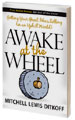
Awake at the Wheel, Book about big ideas If you're looking for a powerful way to jump start innovation and get your creative juices flowing, Awake at the Wheel is for you. Written by Mitch Ditkoff, Co-Founder and President of Idea Champions.
Free the genie card deck A deck of 55 cards to spark new ideas, breakthroughs and extraordinary results. Buy now! Or brainstorm with our online genie.

"This is really, really good stuff." — Seth Godin

Ingenuity Bank!
Enterprise software to help you create a virtual community of inspired, committed, collaborative innovators cranking out great ideas. Read More!
BrainTrust.
Idea Champions' "rent a brain" network of visionaries, wizards, and creative thinkers ready and able to conjure up breakthrough ideas, products and services on your behalf. Read More!
Face the Music Blues Band The world's first interactive business blues band. A great way to help your workforce go beyond complaint.

"In tune with corporate America." — CNN

Innovation Kits. Here's your one-stop shopping for everything you need (but forgot to ask for) in order to jump start innovation. Read More!
The Sales Force Is With You! Go beyond the commodity trap and help your sales force master the art and science of selling ideas. Taught by Farrell Reynolds, former President of Turner Broadcast Sales.
Our 360° Mission Statement ProcessTM helps your entire workforce dissolve silos and realign with new purpose while drafting your new company mission statement. Read A&E Television Network's rave about it here.
Breakthrough Cafe.
A totally unique brainstorming salon. Great food. Great food for thought. Great people. Collaborate, have fun, get out of the box.

"Inno-waiters With Whine Lists" – The Breakthrough Cafe featured in January 2006 issue of
© IDEA CHAMPIONS