25 Reasons Why Brainstorming Sessions Fail in Your Company

Whenever I ask my clients to tell me about the quality of their company's brainstorming sessions, they usually roll their eyes and grumble, noting several of the phenomena below.
Recognize any of them in your organization?
1. Lame facilitation
2. Wrong problem statement
3. Unmotivated participants
4. Hidden (or competing) agendas
5. Insufficient diversity of participants
6. Addiction to the status quo
7. Lack of clear ground rules
8. Insufficient trust in the facilitator
9. No transition from "business as usual"
10. Lack of robust participation
11. The extroverts take over
12. Habitual idea killing
13. Attachment to pet ideas
14. Discomfort with ambiguity
15. Hyper-seriousness

16. Endless interruptions
17. People come late and leave early
18. Premature adoption of the first "right idea"
19. Group think
20. Hierarchy, turfs, and competing sub-groups
21. Imbalance of divergent and convergent thinking
22. No tools or techniques to spark creativity
23. Inadequate idea capture methods
24. Premature evaluation
25. No meaningful follow through
Free the Genie sessions eliminate all of the above
Posted by Mitch Ditkoff at 07:45 AM | Comments (5)
July 28, 2023Are You Looking for a Creative Breakthrough?

If you are in the process of creating something wonderful and have hit the proverbial wall or simply need a jiggle, jolt, goose, nudge or spark, you have come to the right place. Here!
My online Free the Genie service provides aspiring innovators, entrepreneurs, and mavericks with just the right kind of mojo to open up the floodgates of creativity, clarity, and courage.
Simply put, Free the Genie is a 60-90 minute online brainstorming session that sparks brilliance, breakthrough, and bold new ideas.
The process I use to help people manifest their inspirations has been developed over the past 35 years of facilitating creative thinking sessions with thousands of people all over the world, including some of the most iconic organizations on planet Earth.
Bottom line, the Free the Genie experience is fun, engaging, empowering, and gets results.
Here's what a sampling of people have to say about it's benefits.
Intrigued? Send me an email and I will send you all the information you need to decide if what I am offering is right for you.
If you are more than intrigued and want to see what the first step of the process looks like, click here.
CONTACT: mitch@ideachampions.com
100 awesome quotes on what it really takes to innovate
MitchDitkoff.com
Posted by Mitch Ditkoff at 09:40 AM | Comments (0)
July 02, 2023Sun Tzu on Preparation

"Every battle is won or lost before it is fought." - Sun Tzu
What challenge or opportunity is coming up for you that will require a higher level of preparation than you usually make? What extra effort are you willing to make in order to prepare? What might prevent you from making the kind of effort you know you need to make?
How can you create the support you need to ensure that your preparation efforts succeed?
MitchDitkoff.com
Posted by Mitch Ditkoff at 10:04 AM | Comments (0)
April 07, 2023The Awesome Power of Immersion

"If I had an hour to solve a problem," explained Albert Einstein, "I'd spend the first 55 minutes thinking about the problem, and the last five solving it."
Translation? One of the secrets to having a big breakthrough is immersion -- "the state of being deeply engaged, involved, or absorbed."
Immersion is the ocean in which our fabulous insights, ideas, and illuminations are swimming. That's why Yogis seek out caves, embryos gestate, and writers go on retreat.
And that's why my business partner, Steven McHugh, and I rented a townhouse in Boulder, Colorado for 30 days and 30 nights when it was time for us to start up Idea Champions. We knew we had a great idea for a business, but we also knew that ideas were a dime a dozen and that unless we really immersed we'd end up with nothing much more than a charming story to tell at cocktail parties -- the idea for a business, but not the business itself.
Armed with little more than a flip chart, a few marking pens, and a burning desire to create something new, we unplugged from all our other commitments and jumped in with both feet.

We talked. We walked. We walked our talk. We noodled. We conjured. We brainstormed, blue-skied, dialogued, role played, invented, read, sang, stretched, drank coffee, wine, the crisp Colorado air, and whatever else it took to free ourselves from the gravity of what we already knew. If this was Rocky 1, our townhouse was the Gym, Adrienne nowhere in sight.
And every night before we went to bed, blissed out of our trees, we'd remind each other to remember our dreams and speak them aloud the first thing in the morning.
CLUES. We were looking for clues, hints, perfumed handkerchiefs dropped by our muse while we slept and anything else that bubbled to the surface of the imaginal stew we found ourselves now swimming in.
Crackpots? No. More like crockpots, simmering in our own creative juices, unimpaired by the almost infinite amount of distractions we had grown accustomed to calling our life.
Immersed. We were completely immersed -- two eggs submerged in the boiling water of creation, heat turned up, lid on, timer off.
Our walls? The walls of our abode? Covered with paper, sketches, scribbles, post-its, quotes, pictures, lists, charts, diagrams, questions, and take out menus -- the barely decipherable hieroglyphics of our journey into who knows where.
The floors? Our mothers would have had a heart attack, littered as they were with anything we didn't have a place for. Rube Goldberg meets Fellini. Yin meets Yang meets Jung -- the flora and fauna of two aspiring entrepreneurs on fire with possibility.

But our immersion went far beyond the four walls of our abode. It was a state of mind, not a geographical location. It didn't really matter where we were. Walking by the creek or sitting in a bar was all the same to us, ruled as we were by our shared fascination, random silken threads of conversation with complete strangers, and the increasingly apparent sense that we were on to something big.
And then, on the morning of the 19th day, very much at ease in our townhouse abode, there was a knock on the door -- a loud and insistent knock, a knock both of us found rather odd since nobody knew where we lived -- or so we thought.
"It's open," Steven shouted from across the room. "Go ahead and let yourself in."
And there, at the threshold, stood a woman neither of us knew, a woman boldly announcing that, for the past three days, she'd been hearing about "these two creativity guys" and she just had to meet us, her business now on the cusp of either breaking through or breaking down.
I don't remember a single thing of we said, but whatever it was hit the nail on the head.
The next day, there was another knock on the door. Apparently, someone else had heard about our whereabouts. This guy had a business, too, or was trying to have a business. He spoke. We listened. He spoke some more. We listened some more, occasionally asking a question or two and sharing some insight. He too, got what he needed.
On the third day, Jesus did not rise from the grave, but, yes, there was another knock on the door -- just enough proof to the logical part of our minds that the previous two visits were not random events, but part of some kind of emerging pattern -- what fans of Rupert Sheldrake might refer to as manifestations of the morphogenetic field, or what less metaphysical folks might describe as our very own "field of dreams."
Steven and I had done nothing at all to draw these people to us -- no ads in the paper, no posters on poles, no calls, no emails, no flyers, no social marketing campaigns. The only thing we'd done was immerse -- dig deeply into our own highly charged process of creating something new.
But this "nothing at all" wasn't nothing at all. It was something -- something grand and glorious. Something extraordinarily attractive.

Is a mother hen sitting on her egg doing nothing at all? Is she slacking? Is her seeming disappearance from the poultry marketplace a sign of irresponsibility?
To the casual observer, maybe that's what it looks like, but nothing could be further from the truth. Sitting is exactly what the mother hen needs to do in order to bring new life into the world. Stillness, not action, is her path.
Did Steven and I accomplish what we set out to do during our 30 days of immersion? Yes, we did. In spades. Beyond the inspiration, collaboration, and good feelings we experienced, we emerged with the design of our first product -- a creative thinking training we ended up licensing to AT&T just two years later for a truck load of money.
Was our immersion time all fun and games? No way. Chaos and confusion were our housemates, but the rent they paid sparked a ton of learning, creativity, discovery, and a new found willingness to make friends with the unknown -- what Henry Miller was referring to when he defined confusion as "simply a word we've invented for an order that is not yet understood."
In today's business world, immersion is a very rare commodity. ADD rules the day. Time is sliced and diced. We don't have time. Time has us. We tweet, we delete, we tap our feet, but all too often nothing much beyond the status quo ever really happens. Downtime has become an anathema -- the province of "B list" players. Busy-ness and business have become synonymous.
The assumption? The more we do and the faster we do it, the more success we'll have. Boil an egg? Ha! We microwave it -- even if it tastes like shit. Dive in? No way. We hydroplane.
But it doesn't have to be that way. It really doesn't.
Slowing down and going deep trumps speeding up and going crazy. Immersion trumps diversion. It's possible. Yes, it is. I have proof. And so do YOU, if only you would pause long enough to remember those extraordinary times when you unplugged, tuned in, and dove into your own process of creating something new and wonderful.
A QUESTION FOR YOUR CONSIDERATION:
What can you do, this week, month, or quarter, to unplug from the daily grind and give yourself the luxury of immersion? Where will you go? When? And who will you invite to accompany you, if anyone?
Excerpted from my forthcoming book: WISDOM AT WORK: How Moments of Truth on the Job Reveal the Real Business of Life.
Excerpted from Storytelling at Work
MitchDitkoff.com
IdeaChampions
Posted by Mitch Ditkoff at 08:58 PM | Comments (0)
April 30, 2022We Were Made for These Times!

What follows is an extraordinary call of the heart by Clarissa Pinkola Estes. Not only is it worth reading, it's worth reading aloud -- so you hear it and feel it as well as see it. Then, you get to decide who you want to share it with -- and how. This is a piece of deep, soul-inspired, primal writing that deserves to travel to every corner of the Earth.
"My friends, do not lose heart. We were made for these times. I have heard from so many recently who are deeply and properly bewildered. They are concerned about the state of affairs in our world now. Ours is a time of almost daily astonishment and often righteous rage over the latest degradations of what matters most to civilized, visionary people.
You are right in your assessments. The luster and hubris some have aspired to while endorsing acts so heinous against children, elders, everyday people, the poor, the unguarded, the helpless, is breathtaking. Yet, I urge you, ask you, gentle you, to please not spend your spirit dry by bewailing these difficult times. Especially do not lose hope. Most particularly because, the fact is that we were made for these times. Yes. For years, we have been learning, practicing, been in training for and just waiting to meet on this exact plain of engagement.
I grew up on the Great Lakes and recognize a seaworthy vessel when I see one. Regarding awakened souls, there have never been more able vessels in the waters than there are right now across the world. And they are fully provisioned and able to signal one another as never before in the history of humankind.
Look out over the prow; there are millions of boats of righteous souls on the waters with you. Even though your veneers may shiver from every wave in this stormy roil, I assure you that the long timbers composing your prow and rudder come from a greater forest. That long-grained lumber is known to withstand storms, to hold together, to hold its own, and to advance, regardless.
In any dark time, there is a tendency to veer toward fainting over how much is wrong or unmended in the world. Do not focus on that. There is a tendency, too, to fall into being weakened by dwelling on what is outside your reach, by what cannot yet be. Do not focus there. That is spending the wind without raising the sails.
We are needed, that is all we can know. And though we meet resistance, we more so will meet great souls who will hail us, love us and guide us, and we will know them when they appear. Didn't you say you were a believer? Didn't you say you pledged to listen to a voice greater? Didn't you ask for grace? Don't you remember that to be in grace means to submit to the voice greater?
Ours is not the task of fixing the entire world all at once, but of stretching out to mend the part of the world that is within our reach. Any small, calm thing that one soul can do to help another soul, to assist some portion of this poor suffering world, will help immensely. It is not given to us to know which acts or by whom, will cause the critical mass to tip toward an enduring good.
What is needed for dramatic change is an accumulation of acts, adding, adding to, adding more, continuing. We know that it does not take everyone on Earth to bring justice and peace, but only a small, determined group who will not give up during the first, second, or hundredth gale.
One of the most calming and powerful actions you can do to intervene in a stormy world is to stand up and show your soul. Soul on deck shines like gold in dark times. The light of the soul throws sparks, can send up flares, builds signal fires, causes proper matters to catch fire. To display the lantern of soul in shadowy times like these - to be fierce and to show mercy toward others; both are acts of immense bravery and greatest necessity.
Struggling souls catch light from other souls who are fully lit and willing to show it. If you would help to calm the tumult, this is one of the strongest things you can do.
There will always be times when you feel discouraged. I too have felt despair many times in my life, but I do not keep a chair for it. I will not entertain it. It is not allowed to eat from my plate.
The reason is this: In my uttermost bones I know something, as do you. It is that there can be no despair when you remember why you came to Earth, who you serve, and who sent you here. The good words we say and the good deeds we do are not ours. They are the words and deeds of the One who brought us here. In that spirit, I hope you will write this on your wall: When a great ship is in harbor and moored, it is safe, there can be no doubt. But that is not what great ships are built for."
Clarissa Pinkola Estes: American poet, post-trauma specialist, Jungian psychoanalyst, and author of Women Who Run With the Wolves.
Posted by Mitch Ditkoff at 12:33 PM | Comments (0)
November 03, 2021Brainstorming vs. Braincalming

If you work in a big organization, small business, freelance, or eat cheese, there's a good chance you've participated in at least a few brainstorming sessions in your life.
You've noodled, conjured, envisioned, ideated, piggybacked, and endured overly enthusiastic facilitators doing their facilitator thing. You may have even gotten some results. Hallelujah!
But even the best run brainstorming sessions are based on a questionable assumption -- that the origination of powerful, new ideas depends on the facilitated interaction between people.
You know, the "two heads are better than one" syndrome.
I'd like to propose an alternative for the moment: "two heads are sometimes better than one."
For the moment, I invite you to consider the possibility that the origination of great, new ideas doesn't take place in the storm, but in the calm before the storm... or the calm after the storm... or sometimes, even in the eye of the storm itself.
Ever wonder why so many people get their best ideas during "down time" -- the time just before they go to sleep... or just after waking... or in dreams... or in the shower... or in the car on the way home from work?
Those aren't brainstorming sessions, folks. Those are braincalming sessions. Incubation time.
Those are time outs for the hyperactive child genius within us who is always on the go. Methinks, in today's over-caffeinated, late-for-a-very-important-date business world, we have become addicted to the storm.
"Look busy," is the mantra, not "look deeply."
We want high winds. We want lightning. We want proof that something is happening, even if the proof turns out to be nothing more than sound and fury. High winds do not last all morning. Sometimes the storm has to stop.
That's why some of your co-workers like to show up early at the office before anyone else has arrived. For many of us, that's the only time we have to think.
"The best thinking has been done in solitude," said Thomas Edison. "The worst has been done in turmoil."
I'm not suggesting that you stop brainstorming (um... that's 20% of our business). All I'm suggesting is you balance it out with some braincalming. The combination of the two can be very, very powerful.
HERE'S A FEW WAYS TO GET STARTED:
1. In the middle of your next brainstorming, session, restate the challenge -- then ask everyone to sit in silence for five minutes and write down whatever ideas come to mind. (Be ready for the inevitable joking that will immediately follow your request). Then, after five minutes are up ask everyone to state their most compelling idea.
2. Ask each member of your team to think about a specific business-related challenge before they go to bed tonight and write down their ideas when they wake up. Then, gather your team together for a morning coffee and see what you've got.
3. Conduct your next brainstorming session in total silence. Begin by having the brainstorming challenge written on a big flip chart before people enter the room. Then, after some initial schmoozing, explain the "silence ground rule" and the process: People will write their ideas on post-its or flip charts. Their co-workers, also in silence, will read what gets posted and piggyback. Nobody talks.
It's your decision, at the end of the idea generating time, if you want the debrief to be spoken -- or if you want people to come back the next day for a verbal debrief.
"Let us be silent, that we may hear the whispers of the gods." - Ralph Waldo Emerson
The Mothership: Idea Champions
Posted by Mitch Ditkoff at 10:23 PM | Comments (6)
September 12, 2021Where Do Good Ideas Come From?
Posted by Mitch Ditkoff at 07:45 PM | Comments (0)
April 12, 2021YEAR OF LIVING CREATIVELY: Breakthrough Buddies

Here at the International Headquarters of The Year of Living Creatively -- my living room -- we believe that every one on planet Earth is never more than a few seconds away from a breakthrough. Or, at the very least, a big idea, insight, or inspiration. Newton had his under an apple tree. Archimedes' moment was in the bathtub. YOURS? Well... that's still-to-be determined.
To increase the odds of this happening, we invite you to give our Breakthrough Buddy service a shot -- an optional component of The Year of Living Creatively.
The concept is a simple one: Instead of you only receiving support from two other people in the course -- your virtual "Creative Project Partners" -- we enroll a friend of yours who is NOT in the course to play a real-time support role for you. Assuming their interest, Mitch will coach them to be your Breakthrough Buddy -- surprising you in various mind-opening ways for the duration of the course. And all for one purpose: to help you generate, develop, and implement bold new approaches to your Year of Living Creatively project
HERE'S HOW IT WORKS:

1. You give Mitch the name and contact info of a friend of yours who lives within ten miles of you -- someone you trust and have good chemistry with.
2. You let this person know that you're enrolled in The Year of Living Creatively course and that -- with their permission -- Mitch will call them to explain how they can play a "creative catalyst" role for you.
3. Assuming your friend is open to the possibilities, Mitch will call them, explain how the Year of Living Creatively program works and what their Brainstorm Buddy role is all about. HINT: It's fun, stress free, and inspiring.
4. If your nominated Breakthrough Buddy says YES to our invitation, Mitch he will mail them a care package of innovation-sparking goodies. He will also email them simple guidelines, prompts, tips, tools, and techniques to help them play their catalytic role. Plus, he will be available to them 24/7 if they have any questions or need support.
20 Awesome Quotes on Beginning
20 Easy Ways to Spark Innovation
25 Awesome Quotes on Creativity
Posted by Mitch Ditkoff at 02:38 AM | Comments (1)
March 22, 2021THE QUESTION: Who Created "The Year of Living Creatively?"

If you are thinking about enrolling in The Year of Living Creatively, one question you are likely to ask is this: "Who created it and what are his credentials?"
Your caution is understandable, especially if you are about to invest some of your precious time and money.
Which is precisely why, below, I have listed a selection of the products and services I have created over the years. My intention is not to call attention to myself, but to let you know that I've been deeply immersed in the creative process for decades and, along the way, have learned a lot about what enables the origination, development, and implementation of new possibilities and what obstructs it. In other words, I practice what I preach. Has everything I've created been a smashing success? No. But I've definitely had my share of successes. And the ones that didn't succeed taught me a lot -- about myself, life, the marketplace, and what it takes to go from the IDEA to the MANIFESTATION of the idea. Click the link for more...

1. IDEA CHAMPIONS: Co-Founder and President an innovation consulting and training company. Founded in 1987. Alive and well. Now migrating its services online. Client list.
2. FACE THE MUSIC: Co-Founder, lyricist, and MC of the world's first interactive business blue band. Founded in 1999. Sold my shares in 2008.
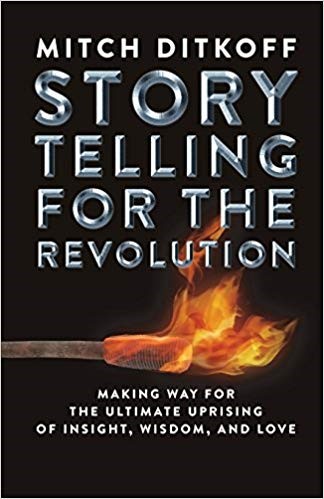
3. STORYTELLING FOR THE REVOLUTION: A book about the power of personal storytelling. Published in 2018.
4. FREE THE GENIE: A deck of cards to help aspiring innovators originate, develop, and manifest bold new ideas and possibilities.
5. FREETHEGENIE.com: The online version of the cards. Four idea-sparking games to help people get out of the box. Free 10-year trial subscription.
6. FREE THE GENIE BRAINSTORMING: Facilitated, online creative thinking sessions for individuals and small teams. Facilitator training program in the works. Testimonials.
7. WISDOM CIRCLES: Small group storytelling gatherings to build community, inspire, communicate tacit knowledge, and transmit wisdom. Virtual version to launch in 2021.
8. STORYTELLING AT WORK: Award-winning book about the power of personal storytelling in the workplace.
9. LIGHT READING: Underground community newspaper in Denver, Colorado. Founded in 1976.
10. THE BREAKTHROUGH CAFE: A creative thinking experience disguised as a cafe. Created for people in organizations who get their best ideas after work.
11. AWAKE AT THE WHEEL: Award-winning business fable about the mythical invention of the wheel.
12. THE YEAR OF LIVING CREATIVELY: A suite of online services to help anyone, anywhere, anytime radically increase their odds of manifesting a bold new idea, vision, or venture.
13. FULL MOON AT SUNRISE: A book of poetry. Published in 2012.
14. BRAINTRUST: An outsourced think tank to help organizations accelerate their process of originating and developing new products and services. First client: General Mills.
15. TEAM LEADERSHIP TRAINING: An online learning experience to help organizations establish high performing teams.
16. JUMP START CREATIVITY: The first creative thinking training (aka "Get Out of the Box") AT&T ever offered to its workforce. Licensed to AT&T in 1991.
17. HIGH VELOCITY BRAINSTORMING: Customized ideation sessions for forward thinking organizations. Train the trainer programs available.
18. TEAMWORK CARDS: A deck of 64 cards to spark collaboration, communication, and high performing teamwork.
19. CONDUCTING GENIUS WORKBOOKS: A 140-page guidebook for anyone committed to learning how to facilitate productive ideation sessions.
20. THIRST QUENCH THIRST: Book of poetry, 2007
21. THE DITKOFF/POUGET CLAN: A beautiful 29-year marriage to the extraordinary Evelyne Pouget. By the grace of God, we brought two amazing beings into the world -- Jesse (26) and Mimi (24).

22. CREATIVE THINKING GUIDEBOOKS: A set of five 16-page guidebooks to help aspiring innovators originate, develop, and implement new ideas.
23. INGENUITY BANK: Idea Management software. Commercialized in 2014. Licensed to the Federal Reserve Bank of St. Louis and Electronic Arts. Dissolved upon the death of my genius business partner and friend, Michael Schacker.
24. FIVE BLOGS:
-- The Heart of Innovation
-- Storytelling at Work
-- Heart of the Matter
-- Unspoken Word
-- Huffington Post
25. Micro-Learning for Innovators: An online library of innovation-sparking content for anyone wanting to dive deeper into their own creative genius. A "name-your-own-price" business model.
Posted by Mitch Ditkoff at 07:55 AM | Comments (1)
February 24, 2021A BRAND NEW DAY: Be Your Best Podcast with Gil Hanson

Recently, I had the great good fortune of being a guest on Gil Hanson's Be Your Best podcast. Gil, who is a world-class personal branding expert and masterful graphic designer, is extremely knowledgeable in the art of bringing out the best in people -- not just his clients, but his podcast guests, as well. Gil asked me a series of great questions on innovation, creativity, and storytelling that sparked quite an animated conversation.
If you're curious about the roots of Idea Champions, what it takes to create something out of nothing, and how my fledgling start-up scored a huge contract from AT&T by teaching their Director of Learning and Development how to juggle in just five minutes, you've come to the right place. Click here to listen. Episode #22.
Gil's Design Personal Brand website
The Year of Living Creatively
Free the Genie: Online Creative Thinking
MitchDitkoff.com
Idea Champions
Posted by Mitch Ditkoff at 09:30 PM | Comments (0)
January 02, 2021TWENTY IS PLENTY: Breakthrough Thinking for the Time-Crunched

THIS JUST IN! You don't have the time to read this. We know it. You know it. And all the marketing bots know it. Which is why I'm going to cut to the chase.
Your lack of time is really not a problem. For us, at Brainstorm Champions, it's simply the current reality. When in Rome...
Hey, if Twitter can become the preferred communication platform for 330 million people, we can figure out how to deliver our breakthrough thinking services in bite-sized pieces.
Which is precisely what we've done.
And while the "full monte" version of our Free the Genie service is a whopping 60-minutes long, we are now offering a 20-minute version -- TWENTY IS PLENTY: Breakthrough Thinking for the Time-Crunched.
That's it. You in? If so, here are your next steps:
1. Click this link and fill in the blanks
2. Select a day and time from our Calendly calendar
3. Pay $45 in advance, via PayPal.
Don't yet fully trust us?
Our clients
What they say
Free the Genie testimonials
More about Free the Genie
Questions? office@ideachampions.com
Posted by Mitch Ditkoff at 06:34 PM | Comments (0)
June 23, 2020What Is School For?
Posted by Mitch Ditkoff at 01:13 AM | Comments (1)
January 07, 2020GUY KAWASAKI on The Top Ten Mistakes of Entrepreneurs
This is absolutely brilliant! Fantastic content, authentic delivery, entertaining, and provocative. If you are an aspiring entrepreneur, this is required viewing. But even if you're not trying to raise venture capital, you can still learn a lot from Guy simply by tuning into the way he makes his pitch. And his Art of the Start is a treasure.
Posted by Mitch Ditkoff at 04:26 PM | Comments (0)
December 11, 2019On Creating an Innovation Mindset

If you want to spark innovation in your organization and are looking for the diamond cutters stroke, consider storytelling. Since 1987, I've tried everything under the sun to help my clients raise the bar for innovation. What I've discovered is that innovation begins in the mind and that unless people are in the right mindset, innovation will never be more than a pipe dream. Storytelling, I've learned, is the simplest, fastest, most memorable way to get people into an innovation mindset. Here's how we do it. And if you only have 90 minutes, this is how we do it. Its also boosts employee engagement.
I wrote the book
The back story
In our clients words
Posted by Mitch Ditkoff at 11:10 AM | Comments (2)
November 30, 2019Are You an Idea Addict?

There are lots of things in this world people get addicted to: alcohol, nicotine, heroin, sex, and iPhones, just to name a few. But perhaps the biggest addiction of them all is the addiction to our own ideas. Here's how it works:
We think something up. We feel a buzz. We tweak it, we name it, we pitch it, and POOF, the addiction begins.
At first, like most habits, it's a casual pursuit with a thousand positive side effects: increased energy, renewed focus, and a general feeling of well-being. Like wow, man. But then... we think about it in the shower. We think about it in the car. We think about it when people are asking us to think about other things. We even dream about it.

Soon we want everyone to know about it. We want them to feel the buzz. We want them to nod in agreement. We want them to recognize just how pure our fixation is.
If this is where it ended, it wouldn't be that big of a deal. I wouldn't be calling it an addiction. Maybe I'd be calling it an "inspiration," or a "commitment" or a "visitation from the Muse." But it doesn't end there. It goes on and on and on and on -- often to our own detriment.
If you are launching a new, creative venture, of course, you want to conjure up cool ideas. That's a good thing. But if you cling to ideas just because they're yours, or just because you've invested major time and energy into in them, then it's time to take a good look of what "intoxicating ideas" of yours it might be time to let go. Commitment is one thing. Addiction is quite another.
What hot, new idea of yours might you be just a little bit too addicted to?
Idea Champions
Brainstorm Champions
MitchDitkoff
Posted by Mitch Ditkoff at 08:20 PM | Comments (2)
October 06, 2019A Real Life Example of the Power of Giving Feedback

Most Fortune 500 companies have some kind of corporate strategy in place for ratcheting up their innovation efforts. Consultants are hired. CEOs give pep talks. And internal initiatives are launched.
To the casual observer, it all looks good, but few of these initiatives ever amount to anything In fact, research indicates that 70 percent of all change initiatives fail.
Why such a low percentage? It depends on who you ask. Senior leaders see it as a workforce issue. The workforce sees it as a senior leader issue. Consultants see it as an issue their company is best suited to resolve. And the occasional in-house astrologer sees it as a Gemini in Pluto issue. Bottom line, nobody really knows.

Here's how I see it: one of the biggest (and least addressed) reasons why most change initiatives fail can be traced back to the cro-magnon way most innovation-seeking people give and receive feedback -- especially when it comes to pitching high concept ideas.
Case in point: Some years ago, Lucent Technologies asked me to facilitate a daylong "Products of the Future" ideation session for 75 of their best and brightest. The pay was good. The challenge was compelling. And I was going to have carte blanche to design the session just the way I wanted.
Or so I thought.
The woman who had contacted me, I quickly found out, reported directly to the CEO. So far, so good. And her concept of the session was spot on -- that the CEO and his Direct Reports (a new rock band?), would make an appearance at the end of the day to listen to five BIG IDEA pitches and then give their feedback, real-time.
Theoretically, this made perfect sense. But theory and reality are two very different things -- kind of like the difference between asking your teenage daughter to clean up her room and her actually doing it.
The harsh reality is this: The vast majority of Senior Leaders are not very skillful when it comes to giving feedback -- especially in response to ideas that challenge the status quo. "Feedback," for them, has become code for "With all due respect, let me tell you why your idea sucks".
As a facilitator of high profile brainstorming sessions, I cannot, in good faith, allow this all-too-predictable dynamic to play itself out. Not only will potentially profound ideas be prematurely dismissed, the hard-working, brilliant people who have spent all day generating and developing these ideas will become royally pissed, disempowered, humiliated, passive/aggressive, and depressed. The result? Very few of them will want to participate in future sessions.
So I told the consultant-seeking woman from Lucent that I, in service to the outcomes she was about to hire me to ensure, needed to meet with her CEO so I could teach him and his team how to give effective, humane feedback to a roomful of 75 future product generating optic fiber geniuses.
 "Impossible!" was her response. "Our CEO is very busy man -- and besides... he doesn't like consultants."
"Got it," I said, quickly assessing my options. "And thank you, so much, for your kind invitation to facilitate the session, but I must respectfully decline" -- and, with that, I began packing up my briefcase.
This, shall we say, caught her slightly off guard. "I... don't understand where you are going with this," she replied.
"Look," I said. "If you want to get meaninful results from an all-day brainstorming session, especially if you are flying people in from who knows where, we've got to be absolutely sure that the feedback at the end of the day is done well. I am not going to walk 75 of your best and brightest people off the plank."
I could tell that my unexpected feedback was registering. "OK, OK...but the best I can do is get you five minutes with him during the coffee break just before the report outs".
"Great," I said. "I'll take it."
Fast forward two months.
From 8:30 am -- 3:00 pm, 75 of Lucent's most brilliant technologists conjured up products that made my head spin. The room was abuzz with glorious possibilities. The sense of accomplishment was palpable. At 2:45 they selected five of their best ideas and summarized them on flipcharts. At 3:00, it was time for coffee and sugar, me craning my head for the CEO and his merry band of direct reports.
I envisioned him to be a tall man, silver-haired, with a large Rolex and a steely look in his eyes -- someone who might be good friends with the Governor and eventually have his portrait hanging in the lobby at headquarters. He was, much to my surprise about 5'6", wearing a Mickey Mouse t-shirt, loafers, and no socks. My kind of guy.
"Rich," I began, extending my hand. "Welcome, Mitch Ditkoff here from Idea Champions, facilitator of today's extraordinary ideation session, "how would you like to learn a simple technique in the next five minutes that will not only take all the dread out of giving feedback, but spark some seriously powerful idea development on the spot?"
He looked at me as if I'd just given him the holy grail. "You're on!"
"Great. Here's how it works," I began. "When an idea is pitched, first say what you LIKE about it -- the upside, what's promising. After a few genuine likes, then express your CONCERNS -- the stuff you probably wanted to say in the first place. But for each concern you express, it will be your responsibility to follow it with a SUGGESTION, a way that would resolve your concern and keep the idea alive Got it?"
"Got it."
"Oh... one more thing, Rich. If you forget to use the method, do I have your permission to remind you?"
"Absolutely".
The senior team took their place on stage, sitting behind a table, draped in black, that reminded me of the Nuremberg Trials. The 75 brilliant brainstormers took their seats at round tables -- everyone attentively listening to me describe the feedback process that was just about to unfold.

The first BIG IDEA pitch was excellent -- a compelling idea for a telecommunications platform of the future that was utterly mind blowing. The audience applauded, I acknowledged the presenter, and then gave the floor to the CEO, reminding him to use the feedback technique I'd taught him just a few minutes ago -- which he proceeded to do for, oh, maybe 30 seconds or so.
After that? It was Apocalyse Now meets The Godfather, with a little Don Rickles in Vegas thrown in for good measure, a scene I'd witnessed countless times before in corporate America -- the kneejerk, reptilian-brained, go-for-the-jugular tendency most senior executives have to focus on what's wrong with a new idea before what's right.
Speaking into the mic in my best baritone imitation of the Wizard of Oz, I quickly intervened.
"Oh Mr. CEO of a very large and profitable telecommunications company. Remember the LCS technique! First your LIKES, then your CONCERNS, then your SUGGESTIONS."
In an optic fiber nanosecond, he sheepishly smiled, thanked me for the reminder, and returned to the technique.
The rest of the session went off without a hitch. Five powerful ideas got pitched. Seven of Lucent's top executives weighed in with insight, honesty, and graciousness. And 75 aspiring innovators experienced something they had probably never experienced before -- that it was possible to spend all day brainstorming "out there" possibilities and get the kind of feedback from senior leadership that was honorable, empowering, easy-to-listen to, and immediately helpful.
SO WHAT? Ever hear the phrase "ideas are a dime a dozen." Of course you have. It's one of the classic truisms we were all brought up to believe. That old saw, however, is less about ideas being inconsequential, than it is about people not knowing how to elicit their value. Granted, not every idea is worth developing, but far too many good ones are lost along the way because the person to whom the idea is pitched is blinded by their own knee jerk reactions.
The literature is filled with examples of great ideas whose value was not immediately recognized. The steam engine. The MacIntosh. FedEx. And the Post-It Note just to name a few. All of them were pitched to the "powers-that-be" and all were victims of knee jerk, naysaying, idea killing behavior. Yes, it's true, many senior leaders beat the drums for "out of the box thinking". But when push comes to shove, as it often does, their drumming is more like fingernails on the edge of an office desk than a conga player with fire in his eyes. So let's give our senior leaders what they need to make the shift from theory to practice -- and that is a simple method for them to respond to new and untested ideas in a way that increases the odds of innovation actually happening.
NOW WHAT? Think about your style of responding to new ideas. Do you listen? Do you pause long enough to see the seed of innovation? Do you give meaningful feedback in a humane way? And what about your organization? Do people know how to give and receive feedback? Do they take the time? Does the process increase the odds of innovation becoming a reality? If not, what can you about it this week to turn things around?
Posted by Mitch Ditkoff at 06:46 PM | Comments (0)
July 26, 2019The Six Sides of the So-Called Box

There's a lot of talk these days about the need for business people to "get out of the box", but very little talk about what the box actually is. Here's Mitch Ditkoff, President of Idea Champions, deconstructing the box in a 5-minute video.
One way to get out of the box
Another way
And a third way
Posted by Mitch Ditkoff at 11:59 PM | Comments (0)
April 23, 2019And a Child Shall Lead Them
Powerful TED Talk on climate change by a 16-year old girl from Sweden. Perhaps the best 11 minutes you will experience today. Worth watching -- and then doing something in response to her message.
Posted by Mitch Ditkoff at 12:44 AM | Comments (0)
March 16, 2019The Good Thing About Bad Ideas

One of the inevitable things you will hear at a brainstorming session is "there are no bad ideas." Not true. There are plenty of bad ideas. Nazism, for instance. Arena football. Bow ties.
What well-meaning "keep hope alive" brainstorming lovers really mean is this: Even bad ideas can lead to good ideas if the idea originators are committed enough to extract the meaning from the "bad".
Do you think that War and Peace was written in one sitting? No way. There were plenty of earlier drafts that were horrid, but eventually led to the final outcome.
The key? Finding the value in what seems to be a "bad idea" and then using that extracted value as a clue or catalyst for further exploration. The following technique, excerpted from Awake at the Wheel, shows you how...
HOW IT WORKS:

1. Identify a challenge worth brainstorming.
2. Conjure up a bad idea in response to it.
3. Tell someone about your bad idea.
4. Ask the other person to express something redeemable about your bad idea -- an aspect of it that has merit.
5. Using this redeemable essence as a clue, brainstorm some new possibilities
Idea Champions
Brainstorm Champions
Brainstorm now, online!
Posted by Mitch Ditkoff at 06:59 AM | Comments (0)
March 04, 2019Michelangelo on Genius
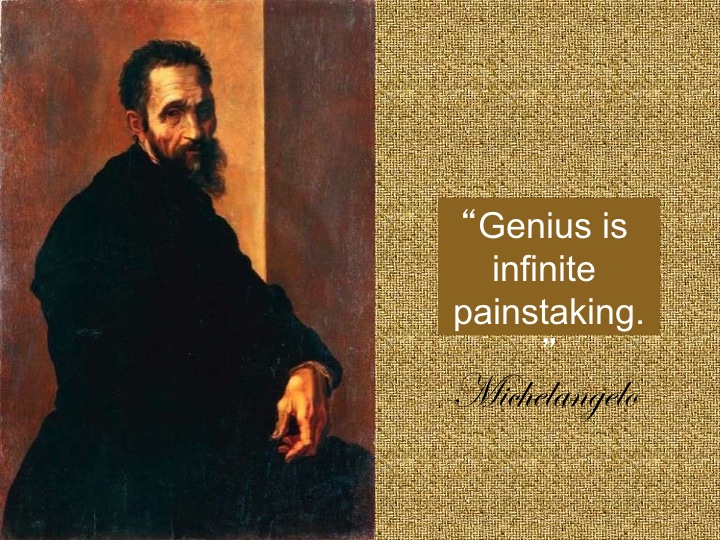
Idea Champions
Ingenious Leadership
My new poetry blog
Posted by Mitch Ditkoff at 03:00 PM | Comments (0)
February 17, 2019Innovation as a Happy Accident

A little known fact about innovation is that many breakthroughs have not been the result of genius, but "happy accidents" -- those surprise moments when an answer revealed itself for no particular reason.
The discovery of penicillin, for example, was the result of Alexander Fleming noting the formation of mold on the side of petri dish left uncleaned overnight.
Vulcanized Rubber was discovered in 1839 when Charles Goodyear accidentally dropped a lump of the polymer substance he was experimenting with onto his wife's cook stove.
More recently, 3M's post-it was also the result of an accident in the lab. Breakthroughs aren't always about invention, but the intervention required, by the aspiring innovator, to notice something new, unexpected, and intriguing.
LEARN FROM YOUR HAPPY ACCIDENTS:
1. Think about a recent project, pilot, or business of yours that did not turn out the way you expected.
2. Ask yourself if any of the unexpected results offer you a clue or insight about how you might proceed differently.
3. Instead of interpreting your results as "failure," consider the fact that the results are simply nature's way of getting you to see something new -- something that merits further exploration.
Excerpted from Awake at the Wheel
Idea Champions
MitchDitkoff.com
Posted by Mitch Ditkoff at 02:59 PM | Comments (3)
December 21, 2018The Martial Arts of the Mind
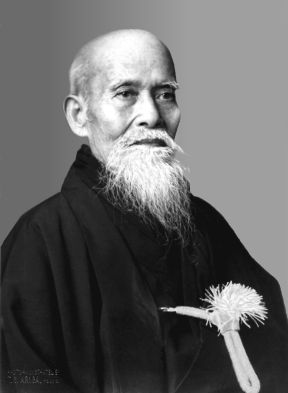
Ten years ago I was invited to teach a course on "Innovation and Business Growth" at GE's Crotonville Management Development Center for 75 high potential, business superstars of the future.
The GE executive who hired me was a very savvy guy with the unenviable task of orienting new adjunct faculty members to GE's high standards and often harsher reality.
My client's intelligence was exceeded only by his candor as he proceeded to tell me, in no uncertain terms, that GE gave "new instructors" two shots at making the grade -- explaining, with a wry smile, that most outside consultants were intimidated the first time they taught at GE and weren't necessarily at the top of their game.
I'm not sure how you say it in Esperanto, but in English what he said translates as "The heat is on, big time."
I knew I would have to raise my game if I expected to be invited back after my two-session audition was over.
And so I went about my business of getting ready, keeping in mind that I was going to be leading a 6-hour session for 75 of GE's "best and brightest" flown half way around the world -- high flying Type A personalities with a high regard for themselves and a very low threshold for anything they judged to be unworthy of their time.
I had five weeks to prepare, five weeks to get my act together, five weeks to dig in and front load my agenda with everything I needed to wow my audience: case studies, statistics, quotes, factoids, and more best practices than you could shake an iPhone at.
I was ready. Really ready. Like a rookie center fielder on designer steroids, I was ready.
Or so I thought.
The more I spoke, the less they listened. The less they listened, the more I spoke, trotting out "compelling" facts and truckloads of information to make my case as they blankly stared and checked their email under the table.
Psychologists, I believe, would characterize my approach as "compensatory behavior."
I talked faster. I talked louder. I worked harder -- attempting in various pitiful ways to pull imaginary rabbits out of imaginary hats.
Needless to say, GE's best and brightest -- for the entire 45 minutes of my opening act -- were not impressed.
Clearly, I was playing a losing game.
My attempt to out-GE the GE people was a no-win proposition. I didn't need new facts, new statistics, or new quotes. I needed a new approach -- a way to secure the attention of my audience and help them make the shift from left-brained skepticism to right-brained receptivity.
And I needed to do it five minutes, not 45.
The next few days were very uncomfortable for me, replaying in my head -- again and again -- my lame choice of an opening gambit and wondering what, in the world, I could do to get better results in much less time.
And then, like an unexpected IPO from Mars, it hit me. The martial arts!

As a student of Aikido, I knew how amazing the martial arts were and what a great metaphor they were for life.
Fast forward a few weeks...
My second session, at Crotonville, began exactly like the first -- with the Program Director reading my bio to the group in an heroic attempt to impress everyone. They weren't.
Taking my cue, I walked to center stage, scanned the audience and uttered nine words.
"Raise your hand if you're a bold risk taker."
Not a single hand went up. Not one.
I stood my ground and surveyed the room.
"Really?" I said. "You are GE's best and brightest and not one of you is a bold risk taker? I find that hard to believe."
Ten rows back, a hand went up. Slowly. Halfway. Like a kid in a high school math class, not wanting to offend the teacher.
"Great!" I bellowed, pointing to the semi-bold risk taker. "Stand up and join me in the front of the room!"
You could cut the air with a knife.
I welcomed my assistant to the stage and asked him if had any insurance -- explaining that I had called him forth to attack me from behind and was going to demonstrate a martial arts move shown to me by my first aikido instructor, a 110-pound woman who I once saw throw a 220-pound man through a wall.
Pin drop silence.
I asked our bold risk taker to stand behind me and grab both of my wrists and instructed him to hold on tight as I attempted to get away -- an effort that yielded no results.
I casually mentioned how the scenario being played out on stage is what a typical work day has become for most of us -- lots of tension, resistance, and struggle.
With the audience completely focused on the moment, I noted a few simple principles of Aikido -- and how anyone, with the right application of energy and the right amount of practice, could change the game.
As I demonstrated the move, my "attacker" was quickly neutralized and I was no longer victim, but in total control.
In three minutes, things had shifted. Not only for me and my attacker, but for everyone in the room.
That's when I mentioned that force was not the same thing as power -- and that martial artists know how to get maximum results with a minimum of effort -- and that, indeed, INNOVATION was all about the "martial arts of the mind" -- a way to get extraordinary results in an elegant way.
PS: I was invited back 26 times to deliver the course.
THE COMMENTARY
Every day, no matter what our profession, education, or astrological sign, we are all faced with the same challenge -- how to effectively communicate our message to others.
This challenge is particularly difficult these days, given the glut of information we all must contend with. The amount of information available to us is doubling every ten years! Yearly, more than one million books are published. Daily, we are bombarded with more 6,000 advertising messages and 150 emails. As a result, most of us find ourselves in a defensive posture, protecting ourselves from the onslaught of input.

What I've discovered in the past 25 years of working with some of the world's most powerful organizations is that if I really want to have get my message across, I've got to deliver it in a what that gets past the "guardians at the gate" -- the default condition of doubt, disengagement, and derision that comes with the territory of life in the 21st century business world.
My rite of passage at GE was a microcosm of this phenomenon.
Indeed, my presumptive effort to "win over my audience" by impressing them with data, case studies, and best practices was a losing game. Not only was I barking up the wrong tree, I was in the wrong forest.
The key to my breaking through the collective skepticism of GE's best and brightest wasn't a matter of information. It was a matter transformation.
They didn't need to analyze, they needed to engage -- and it was my job to make that easy to do. Or, as Mahatma Gandhi so deftly put it, I had to "be the change I wanted to see in the world."
I had to do something that invoked the curious, playful, and associative right brain, not the logical, linear, analytical left brain -- tricky business, indeed, especially when you consider that most business people, these days, have a very low threshold for anything they judge to be impractical
Which is why I chose the martial arts as the operational metaphor at GE, my attempt to move them from the Dow to the Tao.
Impractical? Not at all.
Bottom line, whether we know it or not, we have all entered the "experience economy" -- a time when being involved is at least as important as being informed.
Information is no longer sufficient to spark change. Data is no longer king. Thinking only takes us part of the way home. It's feeling that completes the journey -- the kind of feeling that leads to full on curiosity and the kind of engagement that opens the door to exciting new possibilities.
Which is exactly what happened at GE when I made the shift from marshaling my facts, to marshaling my energy -- and by extension, the energy of 75 of GE's best and brightest.
FOOD FOR THOUGHT: What message have you been trying to deliver (with too little impact) that might be communicated in a totally different way -- a way that more successfully engages people and leads to measurable results?
Excerpted from Storytelling at Work
Idea Champions
Applied Innovation
My Keynotes
It All Began With Balls
Big Blues from the Viagra People
Posted by Mitch Ditkoff at 10:58 PM | Comments (3)
December 12, 2018Allow More Time to Be Creative!
It doesn't get any simpler than this, folks! You want to be more creative? You want to create the conditions that allow other people you work with to be more creative? Stop rushing them! Go beyond the nanosecond! Allow more time!
Carl Jung chimes in
Idea Champions
Allow more time for storytelling!
Play time at AT&T
Posted by Mitch Ditkoff at 06:07 PM | Comments (0)
September 06, 2018A Big Shout Out to All of the Teachers on the Planet

In the past 12 months I have spent 90 days working very closely with Al Siraat College, an Australian school in the Islamic tradition, located in the suburbs of Melbourne. Working at the school for a month at a time, I've had an extraordinary opportunity, to see, first hand, up close and personal, both the glory and the challenge of what it takes be a teacher in 2018 and also what's required to establish the kind of school culture that is conducive to real learning.
On the glory side of the equation, there is a lot to acknowledge -- countless opportunities for teachers to make a difference in the lives of the next generation of movers and shakers... never-ending chances to open eyes, open minds, and open hearts... chances to listen, connect, nurture, empower, encourage, inspire, awaken, educate, and be a catalyst for positive change. The audience? Kids! Children! Teenagers! Multi-cultural keepers of a very special flame -- the hope for our world. The ones Thomas Edison referred to when he said that "the greatest invention in the world is the mind of a child."

On the flip side of the equation?
The extremely hard work required of teachers to deliver real value to class after class of kids who sometimes would rather be playing, texting, sleeping, googling, eating, watching TV, daydreaming, or any number of other pursuits far more interesting to them than algebra or sitting quietly at their desks. Toss in a few dozen X factors like one-parent families, stress, English as a second language, a multiplicity of learning styles, social media, distractability, bullying, and the rites of passage most kids go through daily and you have a formula for a very challenging profession.
I want to take this moment in time to deeply THANK all of the teachers in the world for taking on the challenge of educating our children -- and for staying with it even when it seems like nothing they do is noticed, working, or appreciated.
I also want to take this moment to thank all of the hard working teachers of Al Siraat for giving it their best day after day after day after day. I know it's not easy. I know it's not always fun. I know the path forward isn't always clear. But the efforts you are making ARE bearing fruit and will CONTINUE to bear fruit in ways you have not yet imagined. Stay with it! Hang in there! Trust the process! As they say, "Rome wasn't built in a day."
And to the Staff, Administrators, Directors, and Founders of Al Siraat, allow me to take this unofficial cyberspatial moment to acknowledge YOU for all your vision, commitment, perseverance, resilience, flexibility, collaboration, courage, and willingness to learn. The world needs more people like you! Stay with it! You are being called and you are responding, with nobility, love, and respect to the source of that call.
Thank you all, from the bottom of my heart, for the opportunity to be a part of what you are creating -- what one day may very well become a model for Islamic education in the West.
Heads of Learning
School Coordinators
Heads of Year
Middle Years Homegroup Teachers
Senior Years Homegroup Teachers
Junior Years Homegroup Teachers
Subject teachers
Specialist teachers
Counseling Services and Learning Support
Religion and Islamic Studies
Customer support
IT Support
Site Team
College Management
Executive Team
Posted by Mitch Ditkoff at 02:52 AM | Comments (0)
June 20, 2018How to Spark Innovation in Your Company in 10 Minutes Per Week

Do you work in an organization that is trying to raise the bar for innovation, teamwork, storytelling, and leadership, but doesn't have the budget to pay for trainings, keynotes, and workshops? Here's an alternative -- Idea Champions' Micro-Learning for Innovators service. It all happens online. At your own pace.
The price? YOU decide on the value of our service and make us an offer. 95% of the time we go with what our prospective clients suggest. 5% of the time we decline. Interested? mitch@ideachampions.com
Posted by Mitch Ditkoff at 10:23 AM | Comments (0)
June 07, 2018100 Simple Ways to Be More Creative on the Job

1. Ask the most creative people at work for their ideas.
2. Brainstorm with a co-worker.
3. Tape record your ideas on your commute to and from work.
4. Present your challenge to a child.
5. Take your team off-site for a day.
6. Listen to your inner muse.
7. Play music in your office.
8. Go for a daily brainstorming walk.
9. Ask someone to collaborate with you on your favorite project.
10. Exercise during your lunch break.
11. Turn on a radio at random times and listen for a message.
12. Invite your customers to brainstorming sessions.
13. Think of new ways to define your challenge.
14. Remember your dreams.
15. Reward yourself for small successes.
16. Introduce odd catalysts into your daily routine.
17. Get out of the office more regularly.
18. Give yourself an unreasonable deadline.
19. Take more naps.
20. Jot down as many ideas as possible in five minutes
21. Work in cafes.
22. Transform your assumptions into "How can I?" questions.
23. Conjure up a meaningful goal that inspires you.
24. Redesign your office.
25. Take regular daydreaming breaks.
26. Dissolve turf boundaries.
27. Initiate cross-functional brainstorming sessions.
28. Arrive earlier to the office than anyone else.
29. Turn a conference room into an upbeat think tank room.
30. Read odd books that have nothing to do with your work.
31. Block off time on your calendar for creative thinking.
32. Take a shower in the middle of the day.
33. Keep an idea notebook at your desk.
34. Decorate your office with inspiring quotes and images.
35. Create a headline of the future and the story behind it.
36. Choose to be more creative.
37. Recall a time in your life when you were very creative.
38. Wander around a bookstore while thinking about your challenge.
39. Trust your instincts more.
40. Immerse yourself in your most exciting project.
41. Open a magazine and free associate off of a word or image.
42. Write down your ideas when you first wake up in the morning.
43. Ask yourself what the simplest solution is.
44. Get fast feedback from people you trust.
45. Conduct more experiments.
45. Ask yourself what the market wants or needs.
46. Ask "What's the worst thing that could happen if I fail?"
47. Pilot your idea, even if it's not ready.
48. Work "in the cracks" -- small bursts of creative energy.
49. Incubate (sleep on it).
50. Test existing boundaries -- and then test them again.
51. Schedule time with the smartest people at work.
52. Visit your customers more frequently.
53. Benchmark your competitors -- then adapt their successes.
54. Enroll your boss or peers into your most fascinating project.
55. Imagine you already know the answer. What would it be?
56. Create ground rules with your team that foster new thinking.
57. Ask stupid questions. Then ask some more.
58. Challenge everything you do.
59. Give yourself a deadline -- and stick to it.
60. Look for three alternatives to every solution you originate.
61. Write your ideas in a notebook and review them regularly.
62. Make connections between seemingly disconnected things.
63. Use creative thinking techniques.
64. Play with the Free the Genie cards.
65 Use similes and metaphors when describing your ideas.
66. Have more fun. Be sillier than usual.
67. Ask "How can I accomplish my goal in half the time?"
68. Take a break when you are stuck on a problem.
69. Think how your biggest hero might approach your challenge.
70. Declare Friday afternoons a "no-email zone."
71. Ask three people how they would improve your idea.
72. Create a wall of images that inspires you.
73. Do more of what already helps you be creative off the job.
74. Laugh more, worry less.
75. Remember your dreams -- then write them down.
76. Ask impossible questions.
77. Eliminate all unnecessary bureaucracy and admin tasks.
78. Create a compelling vision of what you want to accomplish.
79. Work on hottest project every day, even if only 5 minutes.
80. Do whatever is necessary to create a sense of urgency.
81. Go for a walk anytime you're stuck.
82. Meditate or do relaxation exercises.
83. Take more breaks.
84. Go out for lunch with your team more often.
85. Eat lunch with a different person each day.
86. Ask for forgiveness, not permission.
87. Invite an outside facilitator to lead a brainstorming session.
88. Take more risks outside of the office (i.e. surf, ski, box etc.)
89. Ask for help when you need it.
90. Know that it is possible to make a difference.
91. Find a mentor.
92. Acknowledge all your successes at the end of each day.
93. Create an "idea piggy bank" and make deposits daily.
94. Have shorter meetings.
95. Try the techniques in Awake at the Wheel
96. Don't listen to or watch the news for 24 hours.
97. Make drawings of your ideas.
98. Bring your project or challenge to mind before going to bed.
99. Divide your idea into component parts. Then rethink each part.
100. Post this list near your desk and read it daily.
Illustration: Unsplash
Idea Champions
Posted by Mitch Ditkoff at 01:16 AM | Comments (9)
May 26, 2018The Real Value of Confusion

Are you confused about what's going on in your life these days or how to proceed with your most challenging project? Baffled? Bamboozled? If so, take heart! Confusion is not always a bad thing. In fact, it's often a necessary part of the creative process.
The weirdness enters when you start judging yourself for being confused. Then, instead of benefiting from this normal stage of "not knowing" you end up in endless rounds of self-talk, procrastination, and worry.
What is confusion, really? Technically speaking, it's a state of mind in which the elements you are dealing with appear to be indiscriminately mixed, out of whack, or unable to be interpreted to your satisfaction.
Everyone from Einstein to Mickey Mouse has had this experience. It comes with the territory of trying to innovate. Most of us, unfortunately, have a hard time acknowledging it.
"Not knowing" has become a euphemism for "ignorance". And so begins our curious routine of appearing to know and giving bogus answers -- to ourselves and others -- in a pitiful attempt to mask our confusion and maintain a sense of control, brilliance, and selfhood.

Our discomfort with not knowing prevents us from mining the value of this potentially fertile time of dislocation.
Picasso understood. "The act of creation," he said, "is first of all an act of destruction."
Indeed, great breakthroughs often emerge after times of dissolution, chaos, and confusion. Wasn't the universe itself created out of chaos?
llya Prigogine, a leading brain researcher, describes this phenomenon as the "Theory of Dissipative Structures". Simply put, when things fall apart, they eventually reorganize themselves on a higher level (if they don't first become extinct).
There is no need to fight confusion. Let it be. It's a stage we must pass through on the road to creation. Fighting confusion only makes it worse -- like trying to clean a dirty pond by poking at it with a stick.
And, besides, even while our conscious mind is telling us we're confused, our subconscious mind is processing a mile a minute to come up with some amazing solutions. In the shower. While we're exercising. Even in our dreams.
Look at it this way...
First, we refuse (to have our status quo threatened). Then, we get confused (trying to sort out all the new input). Then, we try to diffuse the process (by regressing or denying.) Eventually, we get infused (inundated by new insights). And, finally, we get fused (connecting with previously unrelated elements to form a new and unified whole).
Your next step? Allow confusion to be what it is -- the catalyst for more elegant outcomes. And if you really can't stand the confusion, here are seven simple things you can do to go beyond it:
1. Take a break from the problem at hand
2. Identify what's confusing you. Name it
3. Talk about your confusion with friends
4. Seek out missing information
5. Reframe your problem, starting with the words "How can I?"
6. Pay attention to your dreams and other clues bubbling up from your subconscious
7. Maintain a longer term perspective ("this too shall pass")
Posted by Mitch Ditkoff at 01:44 AM | Comments (10)
May 23, 2018Why It's Almost Impossible to Juggle 15 Balls
VIDEO: It All Began with Balls
ARTICLE: It All Began with Balls
MitchDitkoff.com
Idea Champions
Posted by Mitch Ditkoff at 09:01 AM | Comments (0)
May 22, 2018WHAT IS YOUR WOW PROJECT?
Here's the only creative thinking technique you will ever need. Three minutes worth. Ready? Answer this question: "What is one thing you want to manifest in this world before you die -- something that will stretch you to the limits and be of service to others?
Posted by Mitch Ditkoff at 10:57 PM | Comments (0)
May 07, 2018Breaking the Unbreakable Barrier

As the story goes, several years ago the CEO of Dow Corning walked into his company's R&D lab and spoke two sentences: "Glass breaks," was the first. "Why don't you do something about it?" was the second. That's it. Just two sentences. Then he turned and left the room.
The R&D team, a brilliant group of inventors, was curious, but they were also skeptical. After all, at that time, one of the properties of glass was breakable, just like one of the properties of water was wet. Unbreakable glass? What? Huh? A paradox. A condundrum. A seeming impossibility. Nevertheless, the R&D team got busy and ended up creating 18 different unbreakable glass products. Three of them became commercially viable and one, the now famous Corelle line of dinnerware, became a multi-million dollar line of revenue.
FOOD FOR THOUGHT: What powerful question can YOU ask your team, department, or entire organization today? What seemingly impossible breakthrough can you spark by getting people curious enough to go beyond the status quo?
The power of asking the right question
Idea Champions
My breakthrough book on storytelling
Posted by Mitch Ditkoff at 08:40 AM | Comments (0)
April 26, 2018Micro-Learning for Innovators in Just 15 Minutes Per Week
 If you are looking for a simple, inexpensive way to spark innovation in your organization in just 15 minutes per week, here it is. No workshops. No trainings. No keynotes. No complicated idea management software. No headbanging. And the first three companies that respond to this post get to name their own price. Here's what one of our happy clients says about this innovative service of ours.
PS: If you want to know how much it costs, text me at 845.389.9096 and I'll let you know ASAP.
The creator of this service
The company he co-founded
This might be included
10 ways to enable innovation in the workplace
Another way of thinking about time
Posted by Mitch Ditkoff at 08:24 AM | Comments (0)
April 16, 2018International Good Idea Day!

Let me be the first to inform you that today is the first annual International Good Idea Day -- a day I am officially declaring without the approval from my dysfunctional government or any slick lobbying group attempting to hustle other people's products or services for a hefty commission.
As the official creator of this fabulous new holiday, it is my honor to explain that the purpose of this way-better-than-groundhog-day extravaganza is for YOU to pitch your hottest new idea to someone in the next 60 minutes. Got it? Good! Go! (And if anything comes of it, please let me know).
Idea Champions
High Velocity Brainstorming
Brainstorm Facilitation Training
Posted by Mitch Ditkoff at 01:11 AM | Comments (0)
April 01, 2018The 10 Personas of an Effective Brainstorm Facilitator

Allow me to make a wild guess. You have participated in more than a few brainstorm sessions in your life. Yes?
And allow me to make another wild guess. Many of those sessions left you feeling underwhelmed, over-caffeinated, disappointed, disengaged, and doubtful that much of ANYTHING was ever going to happen as a result of your participation. Yes, again? I thought so.
There's a ton of reasons why most brainstorming sessions under-deliver, but the main reason -- the Mount Olympus of reasons (drum roll, please....) is the brainstorm facilitator. Armed with a short list of ground rules, a flipchart marker, and a muffin, most brainstorm facilitators miss the mark completely.
The reason has less to do with their process, tools, and techniques than it does with their inability to adapt to what's happening, real-time, in the room. In an all-too-professional attempt to be one-pointed, they end up being one-dimensional, missing out on a host of in-the-moment opportunities to spark the ever-mutating, collective genius of the group.
If only our well-intentioned brainstorm facilitators could abide by the words of Walt Whitman, when he confessed that he "contained multitudes."
Translation? If you or anyone you know is going to lead a diverse group of time-crunched, opinionated, multi-tracking, people through a process of originating breakthrough ideas, DON'T BE A ONE TRICK PONY! Be a multitude -- or, at the very least, be multi-faceted. Let it rip. Hang ten. Pull out the stops.
Use your right brain and your left. Let all the cats out of the proverbial bag -- and by so doing, exponentially increase your chances of sparking brainpower, brilliance, and beyond-the-obvious ideas.
OK. Enough bloggy pep talk. Let's get down to business. Take a few minutes now to rate yourself, on a scale of 1-10, for how skillful you are at embodying the following personas of a high flying brainstorm facilitator. Then tune into your biggest strength and ask yourself how you can amplify that quality. Then identify your biggest weakness and figure out how you can improve in that arena.

1.CONDUCTOR
A skilled brainstorm facilitator knows how to orchestrate powerfully creative output from a seemingly dissonant group of people. In the conductor mode, the facilitator includes everyone, evokes even the subtlest contributions from the least experienced participant, and demonstrates their commitment to the whole by offering timely feedback to anyone who "gets lost in their own song."
2.ALCHEMIST
A good brainstorm facilitator is able to transmute lead into gold -- or in modern terms -- knows how to help people "get the lead out." This talent requires an element of wizardry -- the ability to see without looking, feel without touching, and intuitively know that within each brainstormer lives a hidden genius just waiting to get out.
3.DANCER
Light on their feet, brainstorm facilitators move gracefully through the process of sparking new ideas. Able to go from the cha-cha to the polka to the whirling dervish spinning of a brainstorm group on fire, savvy facilitators take bold steps when necessary, even when there is no visible ground underfoot. "The path is made by walking on it," is their motto.
4. MAD SCIENTIST
Skillful brainstorm facilitators are bold experimenters, often taking on the crazed (but grandfatherly) look of an Einstein in heat. While respecting the realm of logic and the rational (the ground upon which most scientists build their homes), the enlightened facilitator is willing to throw it all out the window in the hope of triggering a "happy accident" or a quantum leap of thought. Indeed, it is often these discontinuous non-linear moments that produce the kind of breakthroughs that logic can only describe, never elicit itself.

5.DIAMOND CUTTER
Fully recognizing the precious gem of the human imagination (as well as the delicacy required to set it free), the high octave brainstorm facilitator is a craftsman (or craftswoman) par excellence -- focused, precise, and dedicated. Able to get to the heart of the matter in a single stroke without leaving anything or anyone damaged in the process.
6. ACTOR
Brainstorm facilitators are "on stage" whether they like it or not. All eyes are upon them, as well as all the potential critical reviews humanly possible. More often than not, the facilitator's "audience" will only be moved to act (perchance to dream) if they believe the facilitator is completely into his or her role. If the audience does not suspend this kind of disbelief, the play will close early and everyone will be praying for a fire drill or wishing they were back home eating a grilled cheese sandwich.
7.ENVIRONMENTALIST
Brainstorm facilitators are the original recyclers. In their relentless pursuit of possibility, they look for value in places other people see as useless. To the facilitator in full mojo mode, "bad ideas" aren't always bad, only curious indicators that something of untapped value is lurking nearby.
8. OFFICER OF THE LAW
One of the brainstorm facilitator's most important jobs is to enforce "law and order" once the group gets roaring down the open highway of the imagination. This is a fine art -- for in this territory speeding is encouraged, as is running red lights, jaywalking, and occasionally breaking and entering. Just as thieves have their code of honor, however, so too should brainstormers. Indeed, it is the facilitator's task to keep this code intact -- a task made infinitely easier by the ritual declaration of ground rules at the start of a session.''
9.SERVANT
Some brainstorm facilitators, intoxicated by the group energy and their own newly stimulated imagination, use their position as a way to foist their ideas on others -- or worse, manipulate the group into their way of thinking. Oops! Ouch! Aargh! Brainstorm facilitating is a service, not a personal platform. It is supposed to be a selfless act that enables others to arrive at their own solutions, no matter how different they may be from the facilitator's.
10. STAND-UP COMIC
Humor is one of the brainstorm facilitator's most important tools. It dissolves boundaries, activates the right brain, helps participants get unstuck, and shifts perspective just enough to help everyone open their eyes to new ways of seeing. Trained facilitators are always on the lookout for humorous responses. They know that humor often signals some of the most promising ideas, and that giggles, guffaws, and laughable side-talk frequently indicate a rich vein of possibility to explore. Humor also makes the facilitator much more "likable" which makes the group they are facilitating more amenable to their direction. Ever wonder why the words "Aha!" and "Ha-Ha" are so similar?
The book from which the article was excerpted
Idea Champions
Our clients
What they say
Our brainstorm training
Posted by Mitch Ditkoff at 12:11 AM | Comments (0)
February 06, 2018MICRO-LEARNING for Innovators (in just 15 minutes per week)

Innovation is a huge topic in organizations these days. Every company is looking for new and better ways to do more with less, differentiate themselves from the competition, and unlock the hidden genius of their workforce.
At the same time, many organizations are budget-constrained. Flying in an outside consultant to lead a workshop or training can sometimes be cost prohibitive. This I understand.
Which is precisely why my company, Idea Champions, is now offering Micro-Learning for Innovators, a cost-effective way to stir the innovation soup -- a virtual, self-organizing, just-in-time way to increase everyone's ability to be a proactive innovator on-the-job. And it only takes 15 minutes per week.
TOPICS INCLUDE: Mindset, Culture of Innovation, Creative Thinking, Idea Generation, Brainstorm Facilitation, Storytelling, Leadership, Teamwork/Collaboration, Listening/Feedback, Problem Solving

HOW IT WORKS:
1. You and I have a 20-minute phone conversation about WHY you want to raise the bar for innovation and creativity in your organization.
2. Based on your needs, I create a year-long, customized Micro-Learning for Innovators curriculum for you -- a landing page of links to 52 engaging articles and videos of mine on the topic (curated from more than 1,200 I have produced).
3. Each week (or month), for the next year, you forward selected links to your team (or whatever part of your workforce is participating in the program.)
4. Participants read/view the link(s) in preparation for their meeting (real-time or virtual) that you or one of your surrogates facilitates. All you need to reserve on your agenda is 10 minutes for the innovation topic. NOTE: This is micro-learning, not head-banging.
5. You (or your designated meeting moderator) facilitates the innovation-topic-of-the week conversation. This deepens learning, quickens the sharing of best practices, sparks creative thinking, ensures accountability, and establishes a robust, intrinsically motivated learning community.
OPTION #1: I send you a simple "Moderator's Guide" that helps ensure your weekly innovation-sparking conversations are as effective as possible.
OPTION #2: I participate on your launch call to help you set the context, inspire participation, and answer any questions your people might have about the value, purpose, and process of the program.
OPTION #3: At TBD intervals, throughout the year, you invite me to facilitate one of your online meetings/trainings.
FEE: Name your own price for an annual license. (In other words, you quantify the value of my service to your organization and make me an offer. If it's "in the zone," I will say YES. If your offer is below what I consider fair, we will talk and see if we can come to an agreement.
WHO CREATED THE PROGRAM? Mitch Ditkoff, Co-Founder of Idea Champions, Author of the two award-winning winning books on innovation and storytelling. Creator of a wide variety of storytelling workshops and keynotes. Innovation Blogger of the Year, two years running. Master storyteller. His clients.
Interested? email Mitch today: mitch@ideachampions.com
Our clients
What they say
Our workshops and trainings
One of our micro-learning partners
Posted by Mitch Ditkoff at 09:02 AM | Comments (0)
November 02, 2017The Best Definition of Creativity?

If you google the phrase definitions of creativity, guess how many definitions show up? 135 million! That's right, 135 million. And so, if you are looking for THE definition, give up now. You won't find it. It doesn't exist. What does exist is mucho people's attempts to define creativity -- definitions, by the way, that are influenced by their particular world view, expertise, profession, assumptions, mindset, nationality, and language skills.
That being said, it is still a useful exercise to zero in on a definition that floats your boat -- especially if you are charged with the responsibility of helping your team, department, organization, or own lone-wolf self become more creative.
Towards that end, what follows are 15 definitions I have curated on your behalf. Some are culled from the work of people whose names you will recognize. Some are from complete unknowns. It doesn't matter in the least. What matters is your willingness to think more deeply than usual about this fascinating topic and that you find (or create) a working definition for yourself to get the party started. Ready?
Dictionary.com: "The ability to transcend traditional ideas, rules, patterns, and relationships."
Rollo May: The process of bringing something new into being -- something that brings to our awareness what was previously hidden and points to new life."
Maria Popova: "The ability to connect the seemingly unconnected."
Roger van Oech: "Imagining familiar things in a new light. Digging below the surface to find previously undetected patterns and find new connections between unrelated phenomena."
Daniel Pink: "Giving the world something it didn't know it needed."
Elizabeth Gilbert: "The strange partnership between a human being's labor and the mystery of inspiration."
Henry Miller: "The occurrence of a composition which is both new and valuable."
Carl Rogers: "The emergence of a novel, relational product growing out of the uniqueness of the individual."
Mihaly Csikszentmhalyi: "An idea, act, or product which changes an existing domain or transforms an existing domain in a new way."
Bernadette: Jiwa: "Tapping into your soul and your intuition and allowing them to guide you what to make."
Michael Grybko: "An idea that is novel, good, and useful. Making connections between different ideas to solve a new problem."
Danny Sullivan: "Building universes out of nothing."
David Merman Scott: Seeing patterns that others don't and effectively communicating them.
Scott Godin: "This might not work."
God: "Let there be light."
The commonalities above? Bringing something new into existence. Transcending existing norms. Going beyond the status quo. Making new connections. Seeing unseen patterns. Tapping into inspiration and intuition. Using your imagination in fresh ways. Adding value to the lives of others.
For the moment, think of creativity as a two-sided coin. One side of the coin is all about the WHAT -- as in the product, service, or deliverable you are birthing. The other side of the coin is all about the HOW -- as in what you need to do in order to birth something new and brilliant in the world.
25 awesome quotes on creativity
Idea Champions
Posted by Mitch Ditkoff at 06:11 PM | Comments (0)
October 28, 2017Innovation from the Inside Out

These days, almost all of Idea Champions' clients are talking about the need to establish a culture of innovation. Some, I'm happy to report, are actually doing something about it. Hallelujah! They are taking bold steps forward to turn theory into action.
The challenge for them is the same as it's always been -- to find a simple, authentic way to address the challenge from the inside out -- to water the root of the tree, not just the branches.
External systems and protocols, no matter how seductive they are to create, are simply not sufficient to guarantee real innovation. In the words of Oliver Wendell Holmes, "Systems die. Instinct remains."
This is not to say that organizations should ignore systems and structures in their effort to establish a culture of innovation. They shouldn't. But systems and structures all too often become the Holy Grail -- much in the same way that Six Sigma has become the Holy Grail.
Unfortunately, when the addiction to systems and structures rules the day, an organization's quest for a culture of innovation degenerates into nothing much more than a cult of innovation.

Organizations do not innovate. People innovate. Inspired people. Fascinated people. Creative people. Committed people. That's where innovation originates -- from deep within the inspired individual who understands that his/her sustained effort is what's required to go beyond the status quo.
The organization's role -- just like the individual manager's role -- is to get out of the way. And while this "getting out of the way" will undoubtedly include the effort to formulate supportive systems, processes, and protocols, it is important to remember that systems, processes, and protocols are never the answer. They are the context, not the content. They are the husk, not kernel. They are the menu, not the meal.
Ultimately, organizations are faced with the same challenge that religions are faced with. Religious leaders may speak passionately about the virtues their congregation needs to abide by, but sermons only name the challenge and remind people to experience something -- they don't necessarily change behavior.
Change comes from within the heart and mind of each individual. It cannot be legislated or evangelized into reality.
What's needed in organizations who aspire to innovation is an inner change. People need to experience something within themselves that will spark and sustain their effort to innovate -- and when they experience this "something," they will be self-sustaining.
They will think about their projects in the shower, in their car, and in their dreams. They will need very little "management" from the outside. Inside out will rule the day -- not outside in. Intrinsic motivation will flourish.
People will innovate not because they are told to, but because they want to. You can create all the reward systems you want. You can reinvent your work space until you're blue in the face. You can license the latest and greatest idea management tool, but unless each person in your organization OWNS the need to innovate and finds a way to tap into their own innate brilliance, all you'll end up with is a mixed bag of systems, processes, and protocols -- the husk, not the kernel -- the innovation flotsam and jetsam that the next administration or next CEO or next key stakeholder will mock, reject or change at the drop of a hat if the ROI doesn't show up in the next 20 minutes.
You want culture change? You want a culture of innovation?
Great. Then find a way to help each and every person in your organization come from the inside out. Deeply consider how you can nurture, and develop the primal need all people have to create something extraordinary.
What is the simplest thing you can do, today, to spark innovation on your team?
Posted by Mitch Ditkoff at 10:58 AM | Comments (10)
August 29, 2017How I Won a Contract from AT&T By Teaching One Man to Juggle

A picture may be worth a thousand words, but a good story is worth a million. Here's a five-minute story about how the company I co-founded, Idea Champions, won a large contract from AT&T by teaching the Director of Training and Development how to juggle in five minutes.
Read the full story in this book
A priest, a penguin, and a newspaper reporter walk into a bar
Me speaking about storytelling in business

Posted by Mitch Ditkoff at 05:56 PM | Comments (0)
May 16, 2017On Building the Case for Storytelling
One of the biggest challenges that internal change agents have when it comes to fostering a culture of storytelling in the workplace is building the business case -- why it matters and what the impact can be. The quote below, from John Kotter, author of Leading Change, will help. If you need help building your case, shoot me an email and I will send you some more "grist for the mill" -- links to compelling articles and videos on the topic.
Storytelling at Work: the blog
Storytelling at Work: the book
The author of both
Posted by Mitch Ditkoff at 08:06 AM | Comments (0)
May 04, 2017Need a Breakthough? Unplug for a Moment. Take a Break!

True innovators rarely follow the straight and narrow path. Not only do they march to a different drummer, they're often not even on the same playing field as most people. Take Seymour Cray, for example, the legendary designer of high-speed computers.
According to John Rollwagen, ex-chairman of Cray research, Seymour used to divide his time between building the next generation super computer and digging an underground tunnel below his Chippewa Falls house.
Cray's explanation of his tunnel digging behavior is consistent with the stories of many other creatives -- inner-directed, boundary-pushing people who understand the need to go off-line whenever they get stuck.
Bottom line, whenever they find themselves struggling with a thorny problem, they walk away from it for a while. They know, from years of practical experience, that more (i.e. obsession, analysis, effort) is often less (i.e ideas, solutions, results).
Explained Cray, "I work for three hours and then get stumped. So I quit and go to work in the tunnel. It takes me an hour or so to dig four inches and put in the boards. You see, I'm up in the Wisconsin woods, and there are elves in the woods. So when they see me leave, they come back into my office and solve all the problems I'm having. Then I go up (to my lab) and work some more."
Explained Rollwagen, "The real work happens when Seymour is in the tunnel."
We help people dig their tunnel
And sometimes we do this via storytelling (like the one above)
MitchDitkoff.com
Posted by Mitch Ditkoff at 09:55 PM | Comments (0)
April 21, 2017Move the Hole!

I like what Edward deBono once said about the phenomenon of creative people trying to get results, but coming up empty (and I paraphrase). "If you are digging for oil and don't find any, move the hole!"
Pretty simple, eh? Sometimes, it seems as if aspiring innovators get fixated on a particular approach and, no matter what happens (or doesn't), they just keep doing the same old thing over and over again even when experience reveals that their approach is not working.
Of course, it's always possible that other factors are at play:
1. Perhaps the hole you've dug is too shallow and success is only a few shovelfuls away. Digger deeper, then, makes sense. Always possible.

2. Maybe you're digging in the right place, but the tools you're digging with are not the right tools for the job.
3. And, of course, it's always possible that in your effort to discover oil, you don't see the unexpected diamonds and gold coins you stumble upon because everything that is "not oil" is invisible to you.
So, let's make this real for a moment. Think of a project you are working on -- one you have passion for whose results have been slower to materialize than you hoped. Got it? Good. Now answer the following before doing any more digging:
CAN YOU DIG THIS?
1. What are your instincts telling you about how to proceed? Have you dug the hole deep enough? Might it be time for you to move the hole? And if it is the time to move the hole, where might you move it? What are some new approaches to try? Other places to look?
2. If you sense that you haven't dug deep enough -- that you've been a dilettante, slacker, or half-hearted digger for oil -- what can you do to martial your forces and commit to a more rigorous digging effort? And what support, if any, might you need?
3. If, in your digging adventures, you have stumbled upon some unexpected "finds", but dismissed them because you were only focused on oil, how might you extract the value from your accidental discoveries?
By the way, 75% of all product breakthroughs are NOT the result of strategic plans or "intentional effort", but the result of serendipity and "happy accidents" -- what happens when the open-minded innovator stumbles on something intriguing, pauses, and makes the right kind of effort to see if this discovery has value and is worth pursuing.
Posted by Mitch Ditkoff at 02:07 PM | Comments (0)
April 20, 2017The 18th Camel

A father left 17 camels as an asset for his three sons. When the father passed away, his sons opened up the will. The will of the father stated that the eldest son should receive half of 17 camels while the middle son should receive one third and the youngest son one ninth.
As it was not possible to divide 17 into half or 17 by 3 or 17 by 9, the three sons began to fight with each other. Unable to work out their differences, they soon decided to go to a local wiseman, present their problem, and receive his sage counsel.
The wiseman, after contemplating the seemingly unresolvable conundrum, excused himself, went home, and returned a few minutes later with one of his own camels which he added to the 17. This increased the total number of camels now to 18.
Immediately he began reading the deceased father's will aloud to the three contentious sons. Half of 18 = 9, so he gave the eldest son 9 camels. One-third of 18 = 6, so he gave the middle son 6 camels. One-ninth of 18 = 2, so he gave the youngest son 2 camels.

The total number of camels (9 + 6 + 2) given to each of the three sons equaled 17, which left one, extra camel. So the wiseman, with a wry smile on his face, took the extra camel (his!) for himself and rode it home, laughing all the way. Problem solved!
FOOD FOR THOUGHT: Every problem has a solution, even though the solution may not be immediately obvious. The challenge is to find the 18th camel -- the so-called "elegant solution." In order for this to happen we must first let go of the assumption that there IS no solution. There is ALWAYS a solution. Always. It just may not be visible to you in the moment.
What problem of yours do you need to look at from a different angle? What is your 18th camel? And if you can't figure it out by yourself, who can you brainstorm with to arrive at a possible solution?
MitchDitkoff.com
Storytelling as the 18th camel
We teach people how to find their 18th camel
Posted by Mitch Ditkoff at 03:10 PM | Comments (0)
April 16, 201714 Ways to Get Breakthrough Ideas

There's a lot of talk these days about the importance of innovation. All CEOs worth their low salt lunch want it. And they want it, of course, now.
What sparks innovation? People. What sparks people? Inspired ideas that meet a need, whether expressed or unexpressed -- ideas with enough mojo to rally sustained support. Is there anything a person can do -- beyond caffeine, corporate pep talks, or astrology readings -- to quicken the appearance of breakthrough ideas?
Yes, there is. And what follows are 14 catalysts -- simple guidelines, principles, and approaches that will help you on your way.
1. FOLLOW YOUR FASCINATION
If you find yourself fascinated by a new idea, chances are good that there's something meaningful about it for you to consider. Fascination, quite simply, is nature's way of getting our attention. Well beyond seduction or attraction, it's an indication that we are being called. Out of the thousands of ideas with the power to capture our imagination, the felt fascination for one of them is a clue that there's something worthy of our engagement.
Don't dismiss it as trivial. Give it room. Give it time to breathe. Honor it. If you have any doubt, consider the origins of the word "fascination". It comes from the Latin "fascinus," meaning to be "enchanted or delighted."

What enchants or delights us is sacred -- or could be sacred -- a clue that something significant is knocking on our door. Indeed, if we are willing to let fascination grow inside us, a kind of immaculate conception can occur, the illogical, miraculous becoming pregnant with possibility -- the bodily expression of the phenomenon that you are here to birth something extraordinary.
The idea is simply the first "waaaaaaah" to get you to notice.
What new idea is fascinating you? What new possibility has captured your attention? In what ways can you honor this inspiration today?
2. IMMERSE
Breakthrough ideas, like telemarketers or Jehovah's Witnesses, have a curious habit of showing up at odd times. And because they do, we're not always ready to receive them. To complicate matters, chances are good that when they do show up, we are multi-tracking our little tushies off -- checking email, microwaving dinner, or looking for our Smart Phone amidst the half-folded laundry. Not exactly the pre-conditions for breakthrough.
The alternative? Immersion -- the act of becoming completely involved or absorbed in something -- engrossed, enthralled, or preoccupied."
If you want to radically increase your odds of originating breakthrough ideas, you will need to immerse. Don't be a chicken, be a hen! Baby chicks break through the shell separating them from flight not because their mothers are rushing off to meetings on parenting skills, but because their mothers are immersed in the act of hatching. Mommy is sitting in one place for a looooooooong time. And baby chick is also sitting (curled up) in one place for a looooooooong time.
At Google, employees are given 20% of their time to immerse in projects that have nothing seemingly to do with their so-called day job. At 3M, it's 15%. W.L. Gore gives employees a half a day each week to immerse in projects that fascinate them.
Look at your calendar. Block out some time to focus on the development of your most inspired idea or venture. Unplug! Incubate! Hatch! Immerse!
3. TOLERATE AMBIGUITY
Breakthrough ideas are not always the result of a revolutionary Eureka moment. On the contrary, they are often the result of an evolutionary series of approximations or failed experiments. When Thomas Edison was asked how it felt to fail 800 times before coming up with tungsten as the filament for the light bulb, his answer was a revealing one.
"Fail?" he said. "I didn't fail once. I learned 800 times what didn't work."
Edison had the ability to tolerate ambiguity -- to "not know." Like most breakthrough thinkers, he had the ability to dwell in the grey zone. Confusion was not his enemy.
"Confusion," explained Henry Miller, "is simply a word we have invented for an order that is not yet understood."
If you are attempting to birth a breakthrough idea, get comfortable with discomfort. Give up your addiction to having all your ducks in a row, at least in the beginning of your discovery process. People may think you're a quack, but so what? Your chances of birthing a breakthrough idea (and result) exponentially increase the more you are able to tolerate ambiguity.
What new idea of yours is bubbling on the brink of breakthrough? In what ways can you stay with it, even if something in you is impatient for a breakthrough?

4. MAKE NEW CONNECTIONS
True creativity rarely happens in a vacuum. On the contrary it is the product of two or more variables connecting in a new way. It happens all of the time in nature. Water, for example, is really just the connection between hydrogen and oxygen. It happens in the human realm as well. Roller blading is nothing more than the connection between ice skating and roller skating. MTV? Nothing more than the connection between music and television. Drive in banking? Car + banking.
The originators of these breakthrough products didn't pull rabbits out of hats. All they did was see a new, intriguing (and potentially commercial) connection between already existing elements.
Why don't more of us make these kinds of connections? Because we usually stay within the confines of what we already know. We live in a box of our own creation -- whether that box be defined by our nationality, profession, concepts, cubicle, or astrological sign.
The more we are willing to get out of this box, the more likely it will be that powerful new connections will reveal themselves to us -- uncommon linkages between this, that, and the other thing -- kind of the way it was for Johannes Gutenberg when he noticed a previously undetected connection between the wine press and coin punch. And so the printing press was born.
Make three parallel lists of ten words. The first list? Nouns. The second list? Verbs. The third list? Adjectives. Then look for intriguing new connections between them.
5. FANTASIZE
In 1989, Gary Kasparov, the Soviet Union Grand Chess Master, played a two game match against "Deep Blue," the reigning supercomputer of the time. Kasparov won easily. When asked by the media what his competitive advantage was, he cited two things: intuition and the ability to fantasize. (And this, from a master strategic thinker!)
Few of us are ever encouraged to fantasize -- a behavior most commonly associated with children or perverts. And yet, fantasizing is exactly how many breakthrough ideas get their start -- by some maverick, flake, or dreamer entertaining the seemingly impossible.
I find it curious that business leaders want their employees to come up with fantastic ideas or solutions, but they don't want their employees to fantasize. And yet, the words "fantastic" and "fantasy" come from the same linguistic root, meaning to "use the imagination."
Think of a current challenge of yours. What would a fantasy solution to this challenge look like? What clues does this fantasy solution give you?
6. DEFINE THE RIGHT CHALLENGE
"It's not that they can't find the solution," said G.K. Chesterton, the renowned American philosopher and writer, "They can't find the problem!"
Translation? Most people, in their rush to figure things out, rarely spend enough time framing their challenge in a meaningful way. If they owned a GPS, they'd fail to take the time to program in their destination because they were so much into the hustle of getting out of town. Coming up with the right question is at least half of getting the right answer.
If you want a breakthrough idea, begin by coming up with a breakthrough question -- one that communicates the essence of what you're trying to create.
State your most inspired challenge or opportunity as a question beginning with words "How can I?" Then write it three different ways. Which is your real question?

7. LISTEN TO YOUR SUBCONSCIOUS
If you study the lives of people who have had Eureka moments, you'll note that their breakthroughs almost always came after extensive periods of intense, conscious effort. They worked, they struggled, they noodled, they gave up, they recommitted -- and then the breakthrough came. And often at unexpected moments. They weren't buying lottery tickets at their local deli, hoping to win a breakthrough fortune, they were digging for treasure in their own back yard.
Rene Descartes got the idea for the Scientific Method in a dream. Richard Wagner got the idea for Das Rhinegold while stepping onto a bus after long months of creative despair. Einstein used to conduct "thought experiments" (a fancy name for daydreaming) whenever he got stuck.
In other words, the conscious mind works overtime in an attempt to solve a problem or achieve a goal. Unable to come up with the breakthrough, the challenge gets turned over to the subconscious mind which then proceeds to figure it out in its own, sweet time.
Of course, all of this assumes that we are listening to the promptings of our subconscious mind.
This week, keep a log of your most inspired ideas, intuitions, and dreams. At the end of the week, review your log. See what insights come to you.
8. TAKE A BREAK
If you want a breakthrough, you will need to take a break. True innovators rarely follow the straight and narrow path. Not only do they march to a different drummer, they're often not even on the same playing field as most people.
Take Seymour Cray, for example, the legendary designer of high-speed computers. He used to divide his time between building the next generation super computer and digging an underground tunnel below his Chippewa Falls house. Cray's explanation of his tunnel digging behavior is consistent with the stories of many other creatives -- inner-directed, boundary-pushing people who understand the need to go off-line whenever they get stuck.
Bottom line, whenever they find themselves struggling with a thorny problem, they walk away from it for a while. They know, from years of experience, that more (i.e. obsession, analysis, effort) is often less (i.e. ideas, solutions, results).
Explained Cray, "I work for three hours and then get stumped. So I quit and go to work in the tunnel. It takes me an hour or so to dig four inches and put in the boards. You see, I'm up in the Wisconsin woods, and there are elves in the woods. So when they see me leave, they come back into my office and solve all the problems I'm having. Then I go up (to my lab) and work some more."
Next time you find yourself stuck on a thorny problem or project, walk away from it for a while. Stay conscious of new solutions coming to you during this down time.
9. NOTICE AND CHALLENGE PATTERNS AND TRENDS
There are many people these days who make their living from the pattern recognition business: futurists, meteorologists, air traffic controllers, and stock brokers just to name a few. And while their success rates may not always be 100%, it is clear that whatever success they enjoy is intimately tied to their ability to notice patterns and then interpret those patterns correctly for the rest of us.
The same holds true for breakthrough thinkers. The only difference? Breakthrough thinkers often hit the gravy train by challenging old patterns and then reconfiguring them in new ways.
"The act of creation," said Picasso, "is first of all an act of destruction."
"The genius," said American painter, Ben Shahn, "is merely the one able to detect the pattern amidst the confusion of details just a little sooner than the average man."
What trends in the marketplace most intrigues you? In what ways might these trends shift in the coming years -- and how might your most inspired idea be in sync with this imagined shift?
10. HANG OUT WITH A DIVERSE GROUP OF PEOPLE
Years ago Sony used to insist that their engineers spend at least 25% of their work time out of the office and mixing it up with people outside of the four walls of their industry. Keepers of the innovation flame at Sony understood that diverse inputs were essential to the origination and development of breakthrough ideas.
Unfortunately, most of us tend to stay within the intellectual ghettos of the familiar. We hang out with the same people day and night -- usually people who either agree with us, report to us or, through some indefinable act of karma, are joined to us at the hip.
If you want to increase your chances of getting a breakthrough idea, you will need to break the bonds of the familiar. Hang out with a different crowd. Go beyond the usual suspects. Seek the input of oddballs, mavericks, outcasts, or, at the very least, people outside your field. If you can let go of your need for comfort and agreement, you will find yourself catapulted into new ways of seeing, thinking, and acting -- all precursors to breakthrough ideas.
Make a list of ten people outside of your traditional posse that you can spend some time with this month.
11. BRAINSTORM
Breakthrough thinkers are often rugged individualists. They believe in their inalienable rights to think for themselves. They value their opinions, their perspectives, and their innate creativity. Their biggest fear is group think. All well and good.
But there is an important distinction to be made between group think and the phenomenon of inspired individuals getting together to spark each other's brilliance. Indeed, most great breakthroughs are more about inspired collaborations than they are about lone wolf genius.
Think Bill Gates and Paul Allen (Microsoft), Steve Jobs and Steve Wozniak (Apple), Sergey Brin and Larry Page (Google), David Filo and Jerry Yang (Yahoo), Watson and Crick (DNA), Lennon and McCartney (the Beatles), Hewlett & Packard.
All you need to do is frame a meaningful question, invite the right people, and facilitate the process for helping your think tank creatively jam. If you are not the right person to facilitate, you probably know someone who is. Ask them.
What is the topic of your next group brainstorm? Who will you invite? Who will facilitate? When?
12. LOOK FOR HAPPY ACCIDENTS
Breakthrough ideas are often less about the purposeful act of inventing new things that it is the art of noticing new things that happen accidentally -- those surprise moments when the answer is revealed for no particular reason.
The discovery of penicillin, for example, was the result of Alexander Fleming noting the formation of mold on the side of a Petri dish left unattended overnight. Vulcanized rubber was discovered in 1839 when Charles Goodyear accidentally dropped a lump of the polymer substance he was experimenting with onto his wife's cook stove.
Breakthroughs aren't always about inventions, but about the intervention required to notice something new, unexpected, and intriguing. For this to happen, you will need to let go of your expectations and assumptions and get curious. Give up being an expert. Let go of the past. See with new eyes.
What failed experiment or unexpected outcome might be interesting for you to reconsider?

13. USE CREATIVE THINKING TECHNIQUES
I live in the Northeast. In the Winter, it's common for old cars, especially on very cold mornings, not to start. When this happens, the best thing you can do is get a jump start. All you need are jumper cables and another car that's got its motor running.
Creative thinking techniques are like jumper cables. They spark ignition. They turn potential into kinetic energy. They get you going when you're stuck. If you're looking for a breakthrough idea, perhaps all you need is a jump start. That jump start can take many shapes. It can be a classic, creative thinking technique, of which there are many. It could be a "creative thinking coach" or a favorite book, or a quote. Ultimately, it doesn't matter what medium you choose, just as long as you choose something to get your motor running.
What is one creative thinking technique you might use the next time you need a jump start on the job?
14. SUSPEND LOGIC
Perhaps Einstein said it best when he declared: "Not everything that can be counted counts; and not everything that counts can be counted."
He was referring, of course, to the part of the human being that knows intuitively -- the part that is tuned in, connected, and innately creative. Kids live in this place. The rest of us just visit, preferring the left-brained world of rationality, logic, linearity, and analysis.
On some primal level, we're all from Missouri. We need proof. And while there is nothing inherently wrong with gathering data, the addiction to it subverts our ability to originate breakthrough ideas.
We know this. That's why we go to the movies, the pub, watch TV, read novels, dial 900 numbers, and daydream. We seek an altered state, one that is free of the normal gravity of daily life. That's why movie makers ask us to suspend disbelief. That's why brainstorm facilitators ask us to suspend judgment. That's why women (innately intuitive as they are) ask the men in their lives to stop being so damn practical for a change and actually feel something.
It is in this state of suspension that our innate creativity is free to percolate to the surface -- over, under and around all of the left brained guardians at the gate. And so... if you want to really birth a breakthrough idea, you too will need to enter into this state -- at least in the first phases of your new venture. Suspend judgment. Suspend evaluation. Suspend your addiction to the practical. What exists on the other side is fuel for the fire of your untapped creativity.
What can you do this week to suspend practicality, logic and rationality in service to birthing your big idea?
Posted by Mitch Ditkoff at 04:39 AM | Comments (1)
March 10, 2017Making the Time to Be Creative
One of the biggest obstacles to creativity and, by extension, innovation, is the lack of time that is so prevalent in today's ADD culture. This two-minute video makes a very compelling case for you and all the people you work with to take some more time if you REALLY want to crank up the creativity.
25 quotes on creativity
Idea Champions
Posted by Mitch Ditkoff at 09:26 AM | Comments (0)
March 07, 2017Innovation Begins with Fascination

I own a huge library of books on innovation. Mostly hardcover. The $27.95 variety with big indexes and forwards by people who make more money than I do. Some of these books are actually good. Most of them bore me. (I must confess I have a secret desire, whenever I enter a bookstore, to put glue between pages 187 & 188 in all of the new releases just to see if the publishers get any complaints).
The books attempt to describe the origins of innovation. You know, stuff like "the innate human impulse to find a better way" and "the imperative to find a competitive edge." That sort of thing.
Corporate-speak, in other words.
In my experience, the origin of innovation is fascination -- the state of being intensely interested in something. Enchanted. Captivated. Spellbound. Absorbed. What kids are naturally good at.
Kids and those mavericks at workwho make everyone nervous and running for their spreadsheets at the drop of a hat.A person who is fascinated does not need to be motivated... or managed... or "incentivized."
All that person needs is time, some resources, meaningful collaboration, and periodic reality checks from someone who understands what fascination is all about.
That's why Google gives its workforce 20% of their time to explore projects on their own. That's why 3M and W.L. Gore do something similar. They know that the root of innovation is fascination.
If you, or the people who report to you, are not currently in a state of fascination it's time to turn things around. That is, IF you want to spark some innovation.
How do you do this? For starters, try this simple exercise:
THE SEED OF FASCINATION
1. On a piece of paper, create three parallel headlines -- "What Fascinates Me," "People I Admire," and "What I Would Do If I Knew I Couldn't Fail."
2. Jot down at least five responses beneath each headline.
3. Look for intriguing, new connections between your responses. Any insights? Ahas?
4. Jot down your new ideas.
5. Circle your favorite idea and brainstorm it with a friend. Then pitch anyone who's influence can help you launchyour ideas for how to bring more fascinating projects into your work life.
Posted by Mitch Ditkoff at 11:24 PM | Comments (7)
December 17, 2016How to Facilitate Breakthrough Brainstorming Sessions for Your Clients in Three Hours or Less

Here's the deal: You are one of the creatives in a high flying PR, Marketing, or Communications company and have been asked by one of your clients to lead an upcoming brainstorming session. That's the good news. The-not-so-good news? Even though you're an idea-generating machine, facilitating sessions that bring out brilliance in others is not your forte. And to raise the stakes even higher, your client wants more than just "ideas". Your client wants remarkable, actionable ideas and wants the session to be highly engaging, energizing, and worth their precious time. Get it? The heat is on, big time.
Idea Champions can teach you how
Posted by Mitch Ditkoff at 04:08 PM | Comments (0)
October 07, 2016It All Began With Balls
Here's a fun, 7-minute story about Idea Champions big breakthrough soon after we started the business -- inspiration for YOU to do something different, provide your clients an EXPERIENCE, and have some fun along the way. "If you always do what you've always done, you'll always get what you've always got."
This story in the Huffington Post
Excerpted from this book
Posted by Mitch Ditkoff at 07:59 AM | Comments (0)
September 07, 2016Step Over the Imaginary Line
50 quotes on risktaking
The Joe Belinsky Factor
Creating the Innovation Mindset
Idea Champions
Posted by Mitch Ditkoff at 11:17 PM | Comments (0)
June 07, 2016HOW TO GET PEOPLE OUT OF THE BOX: A 5-Minute Tutorial

Ever heard the expression "get out of the box?" Of course you have. Ever wonder what the six sides of that so-called box actually are? If not, here's your 5-minute tutorial of the day. Once you're clear about what the sides of the box are, you will be significantly more able to help people (and yourself) get out of it.
One way to get out of the box
Another way
My book on the subject
Boxes
Posted by Mitch Ditkoff at 11:24 AM | Comments (0)
May 06, 2016A Very Cool Brainstorm Facilitation Training for People in the Fast Lane
Our brainstorm website
More about the training
What our clients say
Tell us more about your need
Our client list
VIDEO: The eight dimensions of a brainstorming session
Posted by Mitch Ditkoff at 12:49 PM | Comments (0)
April 18, 2016You CAN Tell a Book by its Cover -- Especially If You Have 9 Choices

Ever hear the phrase "You can't judge a book by it's cover?" Of course you have. But what you probably haven't heard is how far back that phrase goes -- all the way back to June, 1867, as seen in the newspaper, Piqua Democrat. "Don't judge a book by its cover, see a man by his cloth, as there is often a good deal of solid worth and superior skill underneath a jacket and yaller pants."
While no one at Idea Champions, as far I as know, has never thought about buying a pair of "yaller pants", we have thought about designing the cover of our CONDUCTING GENIUS workbook in a way that communicates what exists beyond the cover. Which is why we offer nine different cover designs for the people who participate in our brainstorm facilitation training. Take a peek below and see if YOU can get a feeling for what our 1-3 day course is all about.
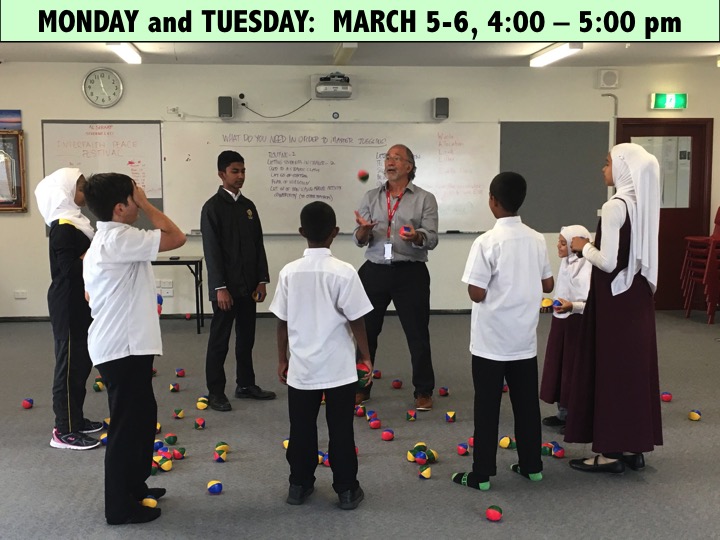





This is the training it accompanies
This is what our clients say
Idea Champions
Posted by Mitch Ditkoff at 08:03 PM | Comments (6)
March 14, 2016Moore Is Not Less
It doesn't matter if you are a Democrat, Republican, Tea Partier, Liberal, Birther, Rebirther, Socialist, Social Butterfly, Vegan, Feminist, Nihilist, Atheist, Subversive, Conspiracy Theorist, Media Junkie, Fruitarian, Immigrant, or Bee Gee Fan, if you want your cage rattled, check out Michael Moore's new movie.
Posted by Mitch Ditkoff at 10:25 PM | Comments (0)
December 08, 2015What You Can Learn from the FedEx Logo in Five Seconds

During the past two years, I've asked more than a thousand people what they see when they look at the FedEx logo. 80% say "letters" or "colors" or "shapes" or "the word "FedEx." The other 20% tell me they see an arrow -- a white arrow.
When I ask the baffled 80% if they see the arrow, most of them shake their heads and shrug. Only when I point to the arrow (in between the second "E" and the "x") do they see it -- a moment that is usually followed by their favorite exclamation of surprise and a chuckle.
This phenomenon, methinks, is a great metaphor for what it really takes to innovate. There's something right in front of our eyes and we just can't seem to see it.
It's been there for a long time, but for us it doesn't exist. In fact, if someone were to ask us if it existed, our answer would be an emphatic "no" -- not because it doesn't exist, but because we can't see it.

This explains a lot of things. Cognitive psychologists boil it down to just three words: "Motivation affects perception." In other words, we see what we're primed to see and miss the rest.
Shakespeare had a more poetic way of referring to this phenomenon. He called it "rose-colored glasses."
Our entire work life has become a kind of oversized FedEx logo -- full of colors, shapes, and letters -- but all too often we miss the white arrow. What we need, is a background/foreground shift -- the ability to see what we never knew was there.
Good teachers have a knack for helping their students make this kind of shift. Good coaches, too. They have a kind of X-ray vision. They see what their students (or their players) can't see and help them discover it on their own.
Simply put, they know how to prime the experience of tuning into the seemingly invisible -- the omnipresent opportunities to innovate that are non-obvious. That's the challenge before us all these days -- to go beyond our blind spots, limiting assumptions, and habits of thought in order to see bold new possibilities.
One simple way to do this is to start paying more attention to stories that move you, especially your own. Embedded in your stories is the "white arrow", the hidden code of what you are really learning. The more you tell your stories and the more you reflect on what they really mean, the more the white arrow will become visible -- to you and everyone else who gets a chance to listen to your stories.
Storytelling at Work
MitchDitkoff
Posted by Mitch Ditkoff at 07:14 AM | Comments (1)
October 10, 2015Einstein Wasn't Into Six Sigma

"Not
everything
that
can
be
counted
counts;
not
everything
that
counts
can
be
counted."
- Albert Einstein
Brainstorm facilitation training
Idea Champions
Free the Genie
Posted by Mitch Ditkoff at 08:11 AM | Comments (0)
September 04, 2015HOW TO MAXIMIZE IDEA POWER FOR FREE: A 3-Minute Video Tutorial

Need powerful, new ideas to grow your business, solve a problem, or find a better way? Don't want to go to yet another meeting to figure things out? Start paying attention to the ideas you are conceiving away from the workplace. And encourage others to do so, as well. Here's WHY and HOW.
Idea Champions
First, identify the problem
Innovation sparking keynotes
Free online creative thinking tool
Posted by Mitch Ditkoff at 10:34 AM | Comments (0)
July 17, 2015A Creative Tip from Einstein

One way to do so
Idea Champions
We talk our walk
Brainstorm Facilitation Training
Posted by Mitch Ditkoff at 04:30 PM | Comments (0)
June 01, 2015The Incremental Improvement Trap

In today's nano-second, downsized, caffeine-buzzed business world, corporations are increasingly demanding that "their people" redouble their efforts to find new and better ways of getting the job done.
If this were the 1950's, an efficiency expert might be called in, a bespectacled, uncharismatic gentleman with a fascination for predictability, order, and control. His motto? "A place for everything and everything in its place."
It wasn't a great leap of faith for upwardly mobile managers to buy into this trendy "consulting service" since it seemed like such a safe way to yield increased productivity and reduced costs. And yes, sometimes it did...
Eventually, this tidy little service matured into a full blown "organizational intervention" and was renamed and repriced.
The name? "Reengineering." The price? A lot.
The theory upon which this was based was difficult to find fault with -- that most company's processes were sadly misconfigured and, like the average American city, had grown to incredibly convoluted proportions without much thought for elegance, orderliness, or efficiency.
Systems, as the story went, were often disconnected from organizational needs, bringing with it an extraordinary amount of confusion, frustration, and a few too many martinis. But let's dig a bit deeper.

It's interesting to note that the root of the word "reengineer" is "engine" (as in the machine that drives movement forward) and the root of the word engine is "gine" -- from the Latin "ingenum", meaning "genie," the spirit that drives the engine (from the same root as the word "genius").
What reengineering enthusiasts have forgotten is the fact that it is the "genie/genius" that drives the engine -- the very same genie being routinely excised from our organizations for the sake of efficiency.
The result? Organizational "solutions" have become overly systems- driven and do not give proper due to the collective intelligence, imagination, and creativity of the workforce.
If you are a Lean Management aficionado or a Six Sigma fan, relax. I am not making fun of you. You are smart. You are committed. And you do good work. Yes, I understand that root cause analyses, histograms, fishbone diagrams and the like do have an important role to play in an organization's effort to operate optimally. Indeed, when predictability, control and measures are the key drivers, continuous improvement tools can be extremely useful.
However, (dramatic pause here, folks... drum roll...and a paradigm shift to go), predictability, control, and measures are not the only forces that guide a company's success.
Invention, innovation, ingenuity, and creativity are not merely "processes" that can be replicated by getting everyone to follow the dots drawn by some reductionist-driven consultant. For that, something else is needed -- something beyond business as usual -- something that embraces discontinuity, ambiguity, serendipity, spontaneity, surprise, paradox, mystery, and chaos.
The invention of penicillin? A surprise to the inventor. A complete accident in the lab. The invention of Teflon? An experiment gone awry. Vulcanized rubber? A big overnight boo boo. The discovery of Velcro? Certainly not a function of a fishbone diagram.
Time and again the literature speaks of breakthrough moments and breakthrough ideas being preceded by a breakdown of the existing order. "You can't get there from here", could be their motto. Logic is replaced by a-logic, analysis by intuition, fixed laws by mutable laws. Is light a wave or a particle? Both and neither, depending, of course, on who the experimenter is.
And what about the Theory of Dissipative Structures which posits that everything in this universe eventually falls apart only to reorganize itself at a higher level? ("The act of creation begins, first of all, as an act of destruction" noted Picasso).
Business leaders beating the drums of double digit growth need to wean themselves from their addiction to incremental improvement and allow more discontinuity in their lives. Lots more. In fact, I'd venture to say several standard deviations more.

At the very least, our fearless leaders (and the people they lead) would be well-served to contemplate this pearl by Albert Einstein: "Not everything that counts can be counted; and not everything that can be counted, counts."
Indeed, honoring the laws of discontinuity is one of the most responsible things forward thinking business leaders can do. Otherwise they are merely moving the chairs around on the deck of the Titanic. (The boat is sinking, but they know exactly at what rate the chairs are sliding into the ocean.)
How then, does a company introduce "discontinuous improvement" into its culture? How does a company stir the soup, challenge the status quo, think more creatively, go beyond business as usual, explore blue sky, get disruptive, and otherwise foster a dynamic culture of innovation without the whole "thing" devolving into some kind of corporate Lord of the Flies?
Take five minutes now to jot down as many ideas as possible for how your team or department can spark more discontinuous improvement this month.
Idea Champions
Brainstorm Champions
Posted by Mitch Ditkoff at 11:17 PM | Comments (0)
March 04, 2015Turn Your Ideas Into Digital Art!

This just in from my 20-year old son, Jesse, a third year digital media student at Hampshire College:
Just recently, I was prompted by one of my art classes to create a social art project. No definition of "social" was provided. We were meant to interpret this as we wished and create art that involves society in some way.
I believe that art is viewed, by many people, as unapproachable. In other words, if you haven't declared yourself as an 'artist', how will you ever create a piece of art? This is the misconception I am working to dispel.
Art is not solely an act of creation. It is also a thought process, often manifesting in visual form, but it is no less valid if it exists only in your head. So... I have decided to launch a project that offers people an outlet to have their ideas brought to life by an aspiring visual artist -- in this case, me.
Knowing my own process, everything I have created has been influenced, in some way, by the opinions and advice of my peers and community. I want to take this phenomenon one step further.

No later than March 20th, I will be choosing from anonymous submissions and creating a series of art/photography pieces comprised entirely of other people's ideas. Nothing is off limits, because what's not physically possible can be created digitally. My hope is that this project lends itself to making your most interesting, powerful, embarrassing, and bizarre ideas a visual reality in a way you hadn't previously considered feasible.
The ideas you submit can be as simple as one word, a complex list of specific instructions, or even an existing photograph you would like to see recreated.
The "social art" I will create, based on the ideas I receive, will be posted, by April 1, on this page The more submissions I receive, the more interesting the results will be, so don't be shy.
Please share this link with your friends, and stay tuned for some interesting pictures! Thank you for you time and interest!"




Got an idea for a cool piece of art? Submit it here by March 20th.
Posted by Mitch Ditkoff at 07:42 AM | Comments (0)
January 08, 2015VIDEO: Ideas Are Scary
50 quotes on the power of ideas
Let us scare you
Scare yourselves
That big beautiful idea of yours
Posted by Mitch Ditkoff at 04:10 PM | Comments (0)
December 13, 2014BIG IDEA: Empowering the Homeless
What idea do you have to make a difference? What can YOU do to go beyond the obvious and really be of service to people in need? And if you work in an organization, how can you rally the troops to join you in the venture? Check out what 24-year old Veronika did. Genius!
Need to brainstorm it with others?
Just need a starter idea?
Posted by Mitch Ditkoff at 07:46 PM | Comments (0)
December 10, 2014Win a Subscription to Free the Genie

In an effort to ho, ho, ho the ground for innovation in 2015 (and in gratitude for YOU being a reader of Heart of Innovation), Idea Champions will be giving away five annual subscriptions to our Free the Genie creative thinking app. If you want to enter the raffle, simply send an email to info@ideachampions.com by 12/26 and include one New Year's resolution you are making for the coming year. If your name is selected, we'll send you the link to your free subscription on 12/31. Go for it! And happy holidays to you!
FreeTheGenie.com
Five ways to use Free the Genie
The non-virtual version
Posted by Mitch Ditkoff at 12:28 PM | Comments (0)
December 02, 2014How Big Ideas Make Their Appearance at the Most Unexpected Times

Just published in the Huffington Post -- the story of how BIG IDEAS sometimes manifest in the most unexpected situations -- in this case, the idea for a business blues band that came to me late one night, as a young parent, while I was out on the town with my wife for "date night."
Where do YOU get your breakthrough ideas?
Face the Music
How to attract a big AHA!
Posted by Mitch Ditkoff at 04:33 PM | Comments (0)
October 07, 2014THE SEED OF INNOVATION MOMENT: A 3-Minute Video Tutorial

If you are trying to spark a renaissance of innovation in your company by launching some kind of "innovation initiative", consider the fact that the seed of innovation is already available in every conversation that people are having. This 3-minute video tutorial dives in deeper.
The Seed of Innovation keynote
Create change agents
A more structured way to do this
Posted by Mitch Ditkoff at 03:51 PM | Comments (0)
September 15, 2014Is Peace the Innovation We Need the Most?

"Innovation" continues to be a hot topic in corporate circles these days -- a "competitive edge" organizations are increasingly attempting to hone so they can not only differentiate themselves from the competition, but survive in today's topsy turvy economy.
That being said, there are some forward thinking organizations out there who are going beyond the status quo and seriously asking themselves what they can do differently to not only be "socially responsible", but use their corporate clout to help various peace-themed global causes truly impact positive change.
If that describes your organization, please contact us. Idea Champions, in 2015, will be launching a new innovation-sparking service to help corporations, world wide, figure out HOW they can leverage their resources, bandwidth, and brainpower to foster peace and well-being in the world -- and still make a profit.
International Day of Peace in the Huffington Post
Idea Champions
Posted by Mitch Ditkoff at 02:35 PM | Comments (0)
August 02, 2014Unleashing Business Brilliance

That's what we do. And below are five ways we do it.
Conducting Genius
Engaging Innovation
Ingenious Leadership
What's the Problem?
Team Innovation
What our clients say
Posted by Mitch Ditkoff at 05:00 PM | Comments (0)
July 07, 2014Rene Descartes Had It Backwards

Rene Descartes, the famous French philosopher, mathematician, and writer is remembered by many as the author of the famous phrase, "I think therefore I am."
With all due respect to the probably-way-smarter-than-me Mr.Descartes, I don't buy it.
Based on my non-Aristotelian, late night sojourns into the flip side of thinking, it's become very clear to me that a more accurate statement would be "I am therefore I think."
Then again, since we all know Werner Heisenberg irrefutably proved that the experimenter affects the experiment, it is likely that the truest philosophical statement of being would probably take on the shape of the person who said it.
And so, in a highly non-caffeinated fit of blogospheric bravado, I present to you 15 alternate statements of epistemological coolitude that give Descartes' tired phrase (and mine) a run for their money.
1. "I wink, therefore I am." - Sarah Palin
2. "I blink, therefore I am." - Malcolm Gladwell
3. "I link, therefore I am." - Larry Page and Sergey Brin
4. "I sink therefore I am." - Davey Jones and his Locker
5. "I stink therefore I am." - Pepe LePew
6. "I drink, therefore I am." - WC Fields
7. "I ink, therefore I am." - Kinkos
8. "I slink, therefore I am." - Marilyn Monroe
9. "I rink, therefore I am." - Wayne Gretzky
10. "I kink, therefore I am." - Ray Davies
11. "I clink, therefore I am." - Moet Chandon
12. "I fink, therefore I am." - Vinny "The Rat" Scalucci
13. "I pink, therefore I am." - Mary Kay
14. "I tink, therefore I am." - Bob Marley
15. "I plink, therefore I am." - Ernest Kaai
Got others? Lay them on me.
A big thank you to Cary Bayer and Barney Stacher for a bunch of the aforementioned pearls of wisdom
Posted by Mitch Ditkoff at 06:39 PM | Comments (5)
June 04, 2014What Is Your Big Idea?

I know you have a big idea. A juicy one. One you have a hard time not thinking about. What is it? And what is your next step to get it out of your head and into the world?
Brainstorming made easy
My book on the matter
Make the most of offline ideas
Posted by Mitch Ditkoff at 02:53 PM | Comments (0)
March 29, 201456 Reasons Why Most Corporate Innovation Initiatives Fail

Innovation is in these days. The word is on the lips of every CEO, CFO, CIO, and anyone else with a three-letter acronym after their name. As a result, many organizations are launching all kinds of "innovation initiatives" -- hoping to stir the creative soup. This is commendable. But it is also, all too often, a disappointing experience.
Innovation initiatives sound good, but usually don't live up to expectations. The reasons are many. What follows are 56 of the most common -- organizational obstacles we've observed that get in the way of a company truly raising the bar for innovation.
See which ones are familiar to YOU. Then, sit down with your Senior Team... CEO... innovation committee, or team and jump start the process of going beyond these obstacles.
56 Reasons Why Most Corporate Innovation Initiatives Fail
1. "Innovation" framed as an initiative, not the normal way of doing business
2. Absence of a clear definition of what "innovation" really means
3. Innovation not linked to company's existing vision or strategy
4. No sense of urgency
5. Workforce is suffering from "initiative fatigue"
6. CEO does not fully embrace the effort
7. No compelling vision or reason to innovate
8. Senior Team not aligned
9. Key players don't have the time to focus on innovation
10.Innovation champions are not empowered
11. Decision making processes are non-existent or fuzzy
12. Lack of trust
13. Risk averse culture
14. Overemphasis on cost cutting or incremental improvement
15. Workforce ruled by past assumptions and old mental models
16. No process in place for funding new projects
17. Not enough pilot programs in motion
18. Senior Team not walking the talk
19. No company-wide process for managing ideas
20. Too many turf wars. Too many silos.
21. Analysis paralysis
22. Reluctance to cannibalize existing products and services
23. NIH (not invented here) syndrome
24. Funky channels of communication
25. No intrinsic motivation to innovate
26. Unclear gates for evaluating progress
27. Mind numbing bureaucracy
28. Unclear idea pitching processes
29. Lack of clearly defined innovation metrics
30. No accountability for results
31. No way to celebrate quick wins
32. Poorly facilitated meetings
33. No training to unleash individual or team creativity
34. Voo doo evaluation of ideas
35. Inadequate sharing of best practices
36. Lack of teamwork and collaboration
37. Unclear strategy for sustaining the effort
38. Innovation Teams meet too infrequently
39. Middle managers not on board
40. Ineffective roll out of the effort to the workforce
41. Lack of tools and techniques to help people generate new ideas
42. Innovation initiative perceived as another "flavor of the month"
43. Individuals don't understand how to be a part of the effort
44. Diverse inputs or conflicting opinions not honored
45. Imbalance of left-brain and right brain thinking
46. Low morale
47. Over-reliance on technology
48. Failure to secure sustained funding
49. Unrealistic time frames
50. Failure to consider issues associated with scaling up
51. Inability to attract talent to risky new ventures
52. Failure to consider commercialization issues
53. No rewards or recognition program in place
54. No processes in place to get fast feedback
55. Inadequate sense of what your customers really want or need
56. Company hiring process screens out potential innovators
Posted by Mitch Ditkoff at 01:31 PM | Comments (4)
March 19, 2014A Cool Online Creative Thinking Tool

Got a challenge? Need a big idea, insight, or breakthrough? Try Idea Champions' online creative thinking tool, The Idea Lottery. Absolutely free. You'll need a question to brainstorm and about 10 minutes.
We teach this and other innovation catalysts in this course
Posted by Mitch Ditkoff at 08:38 PM | Comments (0)
March 16, 2014How to Spark Wisdom in the Workplace

Dear Heart of Innovation Readers:
If you have received any value from this blog and would be interested in supporting my next, big project -- now launched as a GoFundMe campaign -- click here for a 3-minute video of me describing it and a written description of what the whole thing is all about -- a venture which includes the writing, publication, and promotion of a new book, Wisdom at Work, along with the launching of WISDOM CIRCLES in organizations around the world.
Whatever support you can provide is very much appreciated, Plus, you will be sent a copy of the book when it's published, if you want.
Mitch Ditkoff's GoFundMe campaign
Posted by Mitch Ditkoff at 09:35 AM | Comments (0)
February 19, 2014How to Open the Door to Innovation

There is no magic pill, but there is a key. And the key has a lot to do with creating a critical mass of savvy innovation catalysts and change agents who know how to open doors (and minds).
Posted by Mitch Ditkoff at 08:32 PM | Comments (0)
February 17, 2014Would You Invest Three Hours to Save Yourself Months of Wasted Effort?

Idea Champions has just launched a groundbreaking three-hour workshop that will save your organization untold time, tons of money, and a thousand pounding headaches you can't afford to have.
Posted by Mitch Ditkoff at 02:18 PM | Comments (0)
December 10, 2013The Fine Art of Blue Sky Thinking

In 1989, Gary Kasparov, the Soviet Union Grand Chess Master, played a two game match against "Deep Blue," the reigning supercomputer of the time.
Kasparov won easily.
When asked by the media what his competitive advantage was, he cited two things: intuition and the ability to fantasize.
Einstein, too, was a big fan of fantasizing. "The ability to fantasize," he said, "is more important to me than my ability to absorb positive knowledge."
Few of us, in the workplace, are ever encouraged to fantasize -- a behavior most commonly associated with children, flakes, or perverts. And yet, fantasizing is exactly how many breakthrough ideas get their start -- a quantum leap of thought by some "dreamer" entertaining the seemingly impossible.
A SIMPLE BLUE SKY THINKING TECHNIQUE:
 1. Make a wish for the successful resolution of your most pressing business challenge. (i.e. "I wish it was easier... faster... cheaper.")
2. Extend this wish further by making a wild wish -- something less likely than your wish, but still in the realm of possibility.
3. Stretch your wild wish even further by thinking of a fantasy solution to your challenge -- a seemingly impossible way to get a result. (If your fantasy solution makes you laugh or whistle, you're on the right track).
4. Distill your fantasy solution down to it's core principle -- the essence or gist hidden within it.
5. Using this core principle as a catalyze, conjure up -- and write down -- at least five new ideas to help you meet your goal.
Excerpted from our Blue Sky Thinking guidebook
It helps people open up to new possibilities
And take intelligent risks
One way we do it real-time
Posted by Mitch Ditkoff at 10:40 PM | Comments (2)
November 14, 2013One Reason Why Brainstorming Fails

Advertising executive Alex Osborn, frustrated by his employees' inability to come up with novel and creative ideas, invented the concept of brainstorming in the late 1930's. His 1953 book, Applied Imagination, described how to apply the concept in very simple terms. Osborne put forth two basic principles: Defer Judgment and Focus on Quantity.
These days, people attempting to lead ideation sessions are often mindful of the first principle, but they almost never remember the second. And this, quite simply is a big reason why most brainstorm sessions fail to produce even mediocre results.

At first glance, the quantity principle seems counter-intuitive. How can people come up with quality ideas, you might ask, by not striving for quality ideas?
But there's a method to this madness -- and it has to do with how our minds work and how we are trained to think.
If you are asked to come up with "good" and "novel" ideas in response to a problem, challenge or opportunity, whether you are working alone or with others, you will tend to aim for the best ideas possible. Makes sense, right?
However, in your striving for the best idea, you will tend to dismiss ideas you consider to be less-than-terrific.
When ideas pop into our minds, we tend to judge them immediately as too small, too big, too pedestrian, too unrealistic, too obvious, too goofy, too ordinary, too expensive, or too whatever.
It's as if the Red Queen is ensconced in our brains, shouting "off with his head!" at every idea that dares to speak up.
That's because human beings are conditioned to see what's wrong with an idea before seeing its possibilities.
It's like seeing a baby bird and judging it to be inadequate because it can't fly yet.
And this process is barely conscious. We dismiss our ideas so quickly that we often don't even notice they were thought of at all. "We've got nothing" becomes our mantra.
If you are generating ideas in a group and everyone is experiencing this phenomenon at the exact same time, the great silence will inevitably head its ugly rear. No one will be willing to share any of the ideas that have popped into their heads because their ideas will be self-censored -- deemed to be inadequate or flawed.
This is why "experts" are, usually, the worst brainstormers imaginable.

Educated, experienced, and cognizant of all the ins and outs of the topic being brainstormed, experts will immediately see the flaws -- not the possibilities -- killing promising new ideas with the effectiveness of a healthy immune system killing off a germ or virus.
This is why many forward thinking focus groups bring in children or non-experts to generate new ideas -- people whose idea immune systems are not yet fully developed.
Think about it for a moment. If "ordinary" ideas can be generated, articulated, announced, and captured then an interesting thing can happen. Other people can improve the ideas. One idea will lead to another and another and another, radically increasing the odds of something truly original manifesting.
This kind of magic, however, cannot happen if Osborn's principle of striving for quantity is ignored.
Think of Osborn's dual principles as two sides of the same coin.
Defer judgment postpones the act of criticizing ideas as they are generated. Focusing on quantity helps us defer our tendency to judge our ideas as they are conceived.
Not unlike the proverbial coin, if you don't have both sides, "you've got nothing."
-- Val Vadeboncoeur
Idea Champions
Virtual Brainstorm Training
High Velocity Brainstorming
Posted by Mitch Ditkoff at 09:00 PM | Comments (1)
September 18, 2013The Top 10 Reasons Why The 10 Top Reasons Don't Matter
1. If you need more data to prove your point, you'll never have enough data to prove your point.
2. Being unreasonable is often an innovator's biggest advantage.
3. Analysis paralysis.
4. You already know what to do.
5. You're going to follow your gut, anyway.
6. "Not everything that counts can be counted; and not everything that can be counted counts." (Einstein)
7. By the time you put your business plan together, the market has already passed you by.
8. "Conclusions arrived at through reasoning have very little or no influence in altering the course of our lives." (Carlos Casteneda)
9. The scientific method came to Rene Descartes in a dream!
10. "Reason" is your clever little strategy for explaining the decisions you've already made with your gut. Not that there's anything wrong with "reason," mind you -- it's just highly overrated. Like Six Sigma, for example. Or having been afraid of doing something risky in high school because others kept telling you it was going to end up on your "permanent record."
Idea Champions
Catalyzing the Creative Mind
Free the Genie
Posted by Mitch Ditkoff at 11:01 PM | Comments (1)
February 19, 2013High Concept on the Highway
Every once in a while I hear of a cool Kickstarter project that I want to shout from the rooftops. This is one of them, the brainchild of Woodstock artist and renaissance man, Norm Magnuson. Please take a look and help this history making project get off the ground.
Posted by Mitch Ditkoff at 11:06 PM | Comments (0)
December 13, 2012What's Next After Twitter
This just in! Twitter is dead.
Or if not dead, dying. Or if not dying, passe. It's time has come and gone.
Industry experts agree. There is now a way more streamlined option available to you. Find out here -- noted in my most recent Huffington Post article.
12/12 is the Pope's first day on Twitter.
Idea Champions
Posted by Mitch Ditkoff at 12:07 PM | Comments (0)
November 21, 2012The Top Ten Reasons Why The Top Ten Reasons Don't Matter
I'm sure you are a reasonable person -- thoughtful, analytical, and rational. Nothing wrong with that now, is there? Indeed, these very popular mental faculties can come in handy. But there is something beyond them that needs more breathing space in your life. Reason, no matter how reasonable,
can only take you so far. Anyway, here's my fun list, on the Huffington Post, of why we need to go beyond reason.
Idea Champions
Keynote presentations
Unreasonable cards
Posted by Mitch Ditkoff at 01:36 AM | Comments (0)
August 10, 2012Web Workshops from Idea Champions
Here's a 3minute video overview of Idea Champions newest service -- Web Workshops -- highly engaging 60-minute tutorials to help your workforce raise the bar for innovation, collaboration, and communication.
Posted by Mitch Ditkoff at 04:11 PM | Comments (0)
July 17, 2012Rethinking The Role of a Manager
The root of the word "manager" comes from the same root as the words "manipulate" and "maneuver", meaning to "adapt or change something to suit one's purpose". Although these words may carry a pejorative meaning, there is nothing inherently wrong with them. Indeed, into each life a little manipulation and maneuvering must fall.
For example, if the door to your office gets stuck, a handyman might need to manipulate it to get it working again. If there is a log jam at the elevator, you might decide to maneuver around the crowd and take the stairs.
However, there is another kind of manipulation and maneuvering that is a problem -- when managers use their position to bend subordinates to their will.
While short-term gains may result, in the end the heart is taken out of people. Your staff may become good soldiers, but they will lose something far more important in the process -- their ability to think for themselves.
Unfortunately, ingenuity in many corporations has gone the way of the hula-hoop. "Intellectual capital" is the name of the game these days -- and it is the enlightened manager's duty to learn how to play. Only those companies will succeed whose people are empowered to think for themselves and respond creatively to the relentless change going on all around them.
Managers must make the shift from manipulators to manifesters. They must learn how to coach their people into increasingly higher states of creative thinking and creative doing. They must realize that the root of their organization's problem is not the economy, cycle time, strategy or outsourcing, but their own inability to tap into the power of their workforce's innate creativity.
Where does this empowerment start? First, by recognizing what power is: "the ability to do or act". And second, by realizing that power is intimately connected to ideas.
Most managers, unfortunately, perceive new ideas as problems -- especially if the ideas are not their own. More often than not, managers don't pay enough attention to the ideas of the people around them. They say they want innovation. They say they want "their people" to do something different. But they do precious little to support their subordinates in their efforts to do so. More commonly, they foist their own ideas on others and can't figure out why things aren't happening faster.
That's not how change happens. If people are only acting out somebody else's ideas, it's only a matter of time before they feel discounted, disempowered and just plain dissed. People are more than hired hands; they are hired minds and hearts, as well.
Let's start with the basics. Everything you see around you began as an idea. The computer. The stapler. The paperclip, the microchip and the chocolate chip. All of these began as an idea within someone's fevered imagination.
The originators of these ideas were on fire. Did they have to be "managed?" No way. In fact, if they had a manager, he or she would have done well to get out of the way.
If you want to empower people, honor their ideas. Give them room to challenge the status quo. Give them room to move -- and, by extension, move mountains.
Who has the power in an organization? The people who are allowed to think for themselves and then act on their ideas! Who doesn't have power? The people who have to continually check-in with others.
Think about it. The arrival of a new idea is typically accompanied by a wonderful feeling of upliftment and excitement -- even intoxication. It's inspiring to have a new idea, to intuit a new way of getting the job done. Not only does this new idea have the potential to bring value to the company, it temporarily frees the idea originator from their normal habits of thinking. A sixth sense takes over, releasing the individual from the gravity of status quo thinking.
In this mindset, the idea originator is transported to a more expansive realm of possibility. All bets are off. The sky's the limit. All assumptions are seen for what they are -- limited beliefs with a history, but no future.
If you are a manager, you want people in this state of mind. It is not a problem. It is not the shirking of responsibility. It is not a waste of time. On the contrary, it's the first indicator that you are establishing a company culture that is conducive to innovation.
This is not to say, of course, that you have to fund every idea that comes your way. On some level, ideas are a dime a dozen -- and only a handful of them are ever going to amount to much. But if you treat all ideas as if they are worthless, you will never find the priceless ones.
You, as a manager, want to increase the number of new ideas being pitched to you. You want to create an environment where new ideas are popping all the time. If you do, old problems and ineffective ways of doing things will begin dissolving. This is the hallmark of an innovative organization -- a place where everyone is encouraged and empowered to think creatively. Within this kind of environment managers become coaches, not gatekeepers.
It's one thing to tell people "you want their ideas", it's quite another to create the kind of environment that makes this rhetoric real.
How does a manager do this? First, by expressing a lot of positive regard. Get interested! Pay attention! Be present to the moment! This is not so much a technique as it is a state of mind. If your head is always filled with your own thoughts and ideas, there won't be any room left to entertain those of others. It's a law of physics. Two things cannot occupy the same place at the same time.
Your willingness to sit up and take notice needs to be just as strong as if a customer were to call and complain. If possible, drop what you're doing, focus all of your attention on the idea generator, take a deep breath, and begin a series of questions that demonstrate your interest. If you cannot drop what you are doing, schedule some time -- as soon as possible -- for the idea originator to pitch you.
And whether the pitch is now or later, your response -- in the form of exploratory questions -- needs to be as genuine as possible. Consider some of the following openers:
* "That sounds interesting. Can you tell me more?"
* "What excites you the most about this idea?"
* "What is the essence of your idea - the core principle?"
* "How do you imagine your idea will benefit others?"
* "In what ways does your idea fit with our strategic vision?"
* "What information do you still need?"
* "Is there anything similar to your idea on the market?
* "What support do you need from me?"
Most of us, however, are so wrapped up in our own ideas that we rarely take the time to listen to others. Your subordinates know this and, consequently, rarely share their ideas with you.
But it doesn't have to be this way. And it won't necessarily require a lot of time on your part. Some time, yes. But not as much as you might think. Choose not to listen and you will end up frantically spending a lot more time down the road asking people for their ideas about how to save your business from imminent collapse. By that time, however, it will be too late. Your workforce will have already tuned you out.
How can you make more time to listen to the ideas of your direct reports and teammates?
Posted by Mitch Ditkoff at 07:14 AM | Comments (0)
May 08, 2012Creating Time to Innovate

On Thursday May 17th, I will be delivering a live webinar on Fostering a Culture of Innovation. The first 50 people to sign up get half off, so register now!
During the past few years I've noticed a curious paradox heading its ugly rear among business leaders tooting the horn for innovation.
On one hand they want the rank and file to step up to the plate and own the effort to innovate.
On the other hand, they are unwilling to grant the people they are exhorting any more TIME to innovate.
Somehow, magically, they expect aspiring innovators to not only generate game-changing ideas in their spare time, but do all the research, data collection, business case building, piloting, project management, idea development, testing, report generation, and troubleshooting in between their other assignments.
Tooth fairy alert!
This is not the way it happens, folks! Not only is this approach unreasonable, it's unfair, unbalanced, and unworkable.
You cannot shoehorn game-changing innovation projects into the already overcommitted schedules of your overworked workforce.
If you do, it won't be innovation you'll get, only half-finished projects and a whole lot of cranky people complaining to you in between yet another unnecessary meeting.
Oh sure, there are always a few who will find a way, via skunkworks and caffeine, to find the time... but for the most part, organizations are painting their people into a corner.
Aspiring innovators don't need pep talks. They need TIME. Time to think. And time to dream. Time to collaborate. And time to plan. Time to pilot. And time to test. Time to tinker. And time to tinker again.

That's why Google gives its engineers 20% of their time to work on projects not immediately connected to its core business. That's why W.L. Gore gives its workforce a half day a week to follow their fascinations. That's why Corel instituted it's virtual garage program.
"Dig where the oil is," Edward deBono once said. Indeed! And where is the oil? Right beneath the feet of each and every employee who is fascinated by the work they do, aligned with their company's mission, and given enough time to make magic happen.
Need proof? 50% of Google's newly launched features were birthed during this so-called "free time". -- midwived by engineers, programmers, and other assorted wizards happily following their muse.
The fear? If you give people "freedom" they'll end up playing video games and taking 3-hour lunches. Alas, when fear takes over, folks, (the same fear Peter Drucker asked us all many years ago to remove from the workplace), vision is supplanted by supervision and all his micromanaging cousins.
Time to innovate is not time wasted. It is time invested.
Freedom does not necessarily lead to anarchy. It can lead to breakthrough just as easily.
Remember, organizations do not innovate. People do. And people need time to innovate. Time = freedom. Freedom to choose. Freedom to explore. Freedom to express. And yes, even freedom to "fail."
If you've hired the right people, communicated a compelling vision, and established the kind of culture that brings out the best in a human being, you are 80% there.
Now all you need to do is find a way to give your people the time they need to innovate.
For more of our wisdom on innovation, creative thinking, and becoming the best company you can be, check out our newly launched webinars at www.ideachampionsuniversity.com!
Posted by Mitch Ditkoff at 12:36 AM | Comments (1)
April 01, 2012Our World Wide Webinatrix Speaks!

The writers of this blog are excited, thrilled, and tickled to announce the launching of a entirely new service to the known universe: Webinars powered by Idea Champions University.
Having spent the past 25 years delivering a wide variety of innovation-sparking workshops, trainings, meetings, conferences, and consulting interventions to forward thinking organizations everywhere, we've decided to let go of our addiction to Frequent Flyer miles and go virtual.
Our new venture began with a simple question: "How can we have the biggest impact on the most amount of people in a cost-effective, highly engaging, low carbon footprint way?"
The answer? Build a webinar curriculum and deliver our services online.

Which is exactly what we've done and will continue to do as long as the need in the marketplace exists.
Bottom line, if you're looking for a better way to build the core competency of innovation, you've come to the right place.
No airfare required. No cabs. No sending your people to overpriced hotels and wondering whose gonna cover for them while they're eating muffins and collecting one more three-ring binder they will never read.
Operators are not standing by. But our website is. And so is our integrity -- the collective mojo we've built for the past 25 years with some of the finest organizations in the world.
So visit us online to learn more about what we're offering. And while you're at it, feel free to register for one of our upcoming open-enrollment webinars -- a great way to kick our virtual tires.

If you are one of the first 50 people to register, you'll receive a 50% discount and a free annual subscription to our highly regarded online Free the Genie app.
If you'd rather schedule a group webinar (for up to 100 people), contact Sarah Jacob, our World Wide Webinatrix.
She means business.
Posted by Mitch Ditkoff at 01:48 AM | Comments (0)
March 03, 2012WEBINAR #1: Ideation Jump Start
Idea Champions is happy to announce the launch of its new webinar curriculum for 2012 -- a series of high value 60-minute tutorials for companies wanting to foster innovation in a way that is encouraging, empowering, and enlightening.
Here's a brief description of the first one -- a webinar that has already been delivered nine times to Chubb Insurance.
IDEATION JUMP START is a powerful way to catalyze brilliance, creativity, and new ideas for individuals and teams at every level of your organization. It is especially beneficial for people who are committed to going beyond the status quo and originating elegant, new approaches to meeting pressing business challenges.
Prior to the webinar, we will help you define 1-3 challenges you want participants to address in the webinar.
WHAT YOU WILL LEARN:
1. How to access breakthrough ideas from your subconscious mind
2. Four mind-opening techniques to help you originate powerful, new ideas on and off-the-job
3. Five simple ways to increase the effectiveness of small group brainstorming
4. How to give and receive the kind of feedback that decreases naysaying and increases the odds of powerful, new ideas taking root in the organization
Bottom line, people who participate in an IDEATION JUMP START webinar have their "creative floodgates" opened and make a meaningful commitment to generating powerful, new ideas that will help their company grow.
Presented by Mitch Ditkoff, President of Idea Champions
For more info, contact Sarah Jacob (sarah@ideachampions.com)
Posted by Mitch Ditkoff at 11:24 PM | Comments (0)
February 18, 2012The Romance of Creativity
If you are trying to bring something new into the world, know this:
The creative process is very much like a relationship.
And like most relationships, it usually begins with fascination -- that curious state of mind that keeps you spellbound, charmed, and aroused.
Whenever someone gets a new idea, a kind of romance begins.
For many of us, just thinking about a new idea is an aphrodisiac. It turns us on, psyches us up, and otherwise makes it hard to eat, sleep, or obsess about cash flow.
While some people involved in a new relationship are able to sustain this excitement for months, most of us are less fortunate. It's the rare person who knows how to savor and expand upon this feeling for years.
After the intoxication of the initial encounter wears off, a less-than-incredible reality sets in.
Where once we saw only beauty, now we see blemishes.
To make matters worse, a werid kind performance anxiety enters the picture.
"Will I be good enough to achieve my goal?" we ask. "Do I have what it takes?"
Call it doubt if you like, but any way you slice it, the honeymoon is over.
What follows is a painful period of re-evaluation.
Long-buried fears of being consumed by the "other" surface, driving us into withdrawal. Instead of enjoying the outpouring of creative energy that accompanies a new idea, we study it. We dissect about it. We doubt it. Anything but let go to it.
Before you know it, the approach/avoidance game is upon us. On Monday we're totally absorbed in our new venture. On Friday, we're sure it's a waste of time.
The plot soon thickens.
Instead of maintaining our commitment to our HOT new idea, we begin having flings.
We flirt with other ideas, other possibilities, other new loves. We get into everything and anything -- whatever it takes not to sustain our ongoing relationship with our original inspiration.
Is there any hope?
Yes, there is. And something a lot more powerful than hope -- awareness.
Simply by being aware of the mind games you play will go a long way towards making magic happen.
To begin with, understand that all romances, no matter how inspiring, are temporary. The trivial ones end. The good ones mature, often growing into committed relationships -- even marriages.
If you are serious about your current hot idea, be willing to get closer to it. Be willing to go from the romance stage to an intimate relationship.
Understand what the creative process is -- an impossible-to-deny encounter with yourself -- your fears, your power, your vision, and what drives you to play the game of life.
Know that you will have your falling out periods and your disagreements. Know that you will sometimes feel like a fraud. And know that the fuel for many creative breakthroughs has not only been passion, purpose, and power, but confusion, conflict, and collapse.
It's normal. It's human. It's part of the process.
Above all, do whatever it takes to put the elation back into your relationship to creativity.
Illustration
Photo
Photo
Idea Champions
Awake at the Wheel
Posted by Mitch Ditkoff at 07:09 AM | Comments (1)
February 08, 2012Consultant Outsources Sleep!

In an extraordinary move, destined to be emulated by forward thinking business leaders everywhere, I've just outsourced all my sleep to a guy named Namdev in New Delhi.
Yes, it's true. I no longer need to sleep. Namdev does it for me. It's astounding how much more productive I've been this week.
And, as if my sleep breakthrough wasn't enough, I've also outsourced all my exercise to a guy named Sung Lee in Malaysia. God bless Sung Lee! He's been on the Stairmaster three hours today and will be working on our delts and pecs tomorrow. Needless to say, I'm feeling totally buff at the moment.
I was just about to have a big piece of cherry cheesecake to celebrate my innovative, time-saving enhancements, but I've outsourced all my eating to a woman named Min Yung in Taiwan. I'm down to 145. Hallelujah! All my pants fit!
The only thing I didn't outsource this week was this blog posting and a visit to my dentist. (Do any of you know someone willing to get a root canal on my behalf?)
I speak!
Idea Champions
Innovation Kits
Free the Genie!
Posted by Mitch Ditkoff at 12:30 AM | Comments (4)
January 30, 2012The Art and Science of Losing Count
"Not everything that can be counted counts, and not everything that counts can be counted."
-- Albert Einstein
If you have even the slightest respect for the wild-haired father of modern physics, consider this: Your organization's fascination with metrics is often nothing more than a thinly veiled attempt to quantify the unquantifiable -- a compulsive effort to validate that which you and everyone else already know to be true.
I'm not suggesting you abandon metrics (I track, daily, how may unique visitors make it to my website) -- all I'm saying is not everything needs to be measured, at least not all of the time.
The core of your company's "innovation process" is actually less about mind, and more about heart. (And if you're about to ask me how I know that, please read the Einstein quote one more time).
Posted by Mitch Ditkoff at 08:17 AM | Comments (0)
January 14, 2012Want to Innovate? Start Here!
Failure is not what you think it is
Idea Champions
Thanks to Sarah Jacob for the heads up!
Posted by Mitch Ditkoff at 10:52 PM | Comments (0)
January 10, 2012Get Out of the Box!

What can you do, this week, to help your team get out of the box?
Idea Champions
Free the Genie
Awake at the Wheel
Posted by Mitch Ditkoff at 10:07 PM | Comments (0)
January 07, 2012Go Beyond the Business Blues

For years I was trying to figure out what all my clients had in common. Opposable thumbs? Yes. The Isle of Langerhans. That, too. Big, fat opinions about everything. For sure.
But even more than the aforementioned stuff in the preceding paragraph which you just read and probably haven't yet forgotten even though your short-term memory is getting shorter by the nanosecond and you're probably wondering, by now, why I'm rambling on and on when most blog postings are supposed to be short and sweet, it dawned on me one fine day as I was scraping marinara sauce off my shirt that the main thing all my clients had in common was the blues.
Yes, indeed. The blues. The same blues Muddy Waters had. And Robert Johnson. And BB King. Those blues.
Unlike the blues greats, however, my clients didn't have a way to express their blues. And, in the absence of this opportunity, their God given right to get right was lost.
But no more, brothers and sisters! No more!
Now, even the most buttoned down, white collared, bow-tied creators of spreadsheets at midnight have a chance to get those business blues off their chest and move towards a better future -- not to mention have fun, collaborate, and learn what it takes to innovate on the fly.
Ladies and gentlemen, without any further ado, allow me to introduce you to the world's first business blues band -- Face the Music!.
PS: Should you decide to contact them, be sure to mention that it was Idea Champions who sent you. (We give 5% of our referral fees to TPRF, one of the most well-run and inspired humanitarian organizations in the world).
The Six Sigma Blues
My blues encounter at Pfizer
The Email Blues
The Gotta Have a Process Blues
Idea Champions
Posted by Mitch Ditkoff at 01:33 AM | Comments (0)
December 25, 2011Intro to Divergent Thinking
Sir Kenneth Robinson makes a lucid, three-minute case for the power of divergent thinking and offers a surprising factoid (which intuitively you already know).
Thanks to Scott "Divergent" Cronin for the heads up.
Posted by Mitch Ditkoff at 11:51 PM | Comments (0)
December 23, 2011Treat Crazy Ideas With Respect
The next time somebody approaches you with a "crazy" idea, pause before putting them down. Instead of looking for what's wrong, look for what's right.
See if you can find a hidden jewel in the idea, a principle, an essence that is promising -- even if the idea itself is rough, raw, or imperfect.
The fact is: most great inventions, products, or services begin as a crazy idea. Maybe 99 out of 100 times, the so-called crazy idea will go nowhere, but the 100th time it just may be a winner.
One more thing -- if you make a habit of trashing other people's "crazy" ideas too quickly, people will stop approaching you with any idea. Then all you'll be left with are your own.
Posted by Mitch Ditkoff at 07:44 PM | Comments (0)
December 12, 2011Shining Eyes and Open Hearts
Ben Zander is the most extraordinary speaker/presenter/catalyst I've ever had the good fortune to experience other than my teacher, Prem Rawat. I first heard Ben at HSM's World Business Forum, in NYC. He entranced 4,000 business people for two hours and ended his enchantment by getting everyone to sing Ode to Joy in German. Ben is a masterful conductor, not just of orchestras, but of the human spirit of what's possible every single minute of the day.
Posted by Mitch Ditkoff at 09:41 PM | Comments (0)
November 13, 2011Obvious to You, Amazing to Others
Derek Sivers, Founder of CD Baby, used to live one street away from me in Woodstock, NY. I saw him only once, walking on the road. Now here he is on YouTube. Yo, Derek! Thanks for this! So true...
Posted by Mitch Ditkoff at 12:01 AM | Comments (0)
October 04, 2011Meet Me at the World Business Forum

Hey everyone... I'm going to be at the World Business Forum, in NYC, this Wednesday and Thursday (October 5-6) as a "guest blogger."
If you are attending and want to connect, seek me out. I'll be sitting in the "Guest Bloggers" section.
I'm kind of a cross between Johnny Depp, Brad Pitt, and George Clooney.
Or maybe Ben Kingsley, George Carlin, and your Uncle Normie.
Hope to see you there!
Mitch Ditkoff
Idea Champions
Posted by Mitch Ditkoff at 02:16 PM | Comments (0)
September 26, 2011The Six Sigma Blues

One of my favorite clients of all time was a key manager in a prominent Fortune 500 company.
She was smart. She was funny. She was creative. And she was kind.
Then her company adopted Six Sigma.
I couldn't help but notice that soon after this she started becoming very cranky, not unlike the way an artist gets upon filling out a tax form.
When I asked her how the Six Sigma initiative was going, she rolled her eyes and mumbled something about "going through the motions."
In a lucid online Business Week posting, Brian Hindo deconstructs some of the flawed assumptions of the Six Sigma approach.
"The very factors that make Six Sigma effective in one context," explains Hindo, "can make it ineffective in another. Traditionally, it uses rigorous statistical analysis to produce unambiguous data that help produce better quality, lower costs, and more efficiency. That all sounds great when you know what outcomes you'd like to control. But what about when there are few facts to go on -- or you don't even know the nature of the problem you're trying to define?
"New things look very bad on this scale," says MIT Sloan School of Management professor Eric von Hippel, who has worked with 3M on innovation projects that he says 'took a backseat' once Six Sigma settled in.
"The more you hardwire a company on total quality management, the more it is going to hurt breakthrough innovation," adds Vijay Govindarajan, a management professor at Dartmouth's Tuck School of Business. "The mindset that is needed, the capabilities that are needed, the metrics that are needed, the whole culture that is needed for discontinuous innovation, are fundamentally different."
And so, dear Heart of Innovation readers, in honor of all people who have ever questioned the long-term value of Six Sigma... in honor of all the people who have understood that increasing -- not decreasing -- variability is often the key to success, it is my utmost pleasure to make my graceful exit from this latest blog posting with the immortal, finger-snapping, toe-tapping, knee-slapping, put-on-your-blues-hat-and-sunglasses lyrics to....
THE GOTTA HAVE A PROCESS BLUES
I woke up this morning,
put both feet on the floor,
but I didn't have a process
to find the bathroom door,
so all I did was shuffle,
first the left foot, then the right,
forgot to count the tiles,
(hey boss, I ain't too bright.)
We got green belts, black belts,
corporate karate,
and soon we'll need a process
for going to the potty.
Lord, I need a chart and graph to help me choose
just what to name this song about the Six Sigma blues.
Back when we were kids
the only processed thing was cheese,
now we need a process
every single time we sneeze,
I say "achoo," I blow my nose,
I try to get it right,
my Black Belt says my charts don't flow,
not once a gesundheit.
I make no mistakes,
I do everything right --
to make sure nothing breaks,
I stay up all night,
I'm a Six Sigma cowboy
cutting cycle time in half,
I measure every joke
and the way it makes me laugh.
We got green belts, black belts,
corporate karate,
and soon we'll need a process
for going to the potty,
a fishbone diagram would be so cool to help me choose
just what to name this song about the Six Sigma blues.
I barely make a boo boo, I rarely blow a deal,
you might call it voo doo, but that's just how I feel,
I'm one in a million
though my defects number three,
I log on while I'm sleeping
and I've changed my name to "E."
We got green belts, black belts,
corporate karate,
and soon we'll need a process
for going to the potty.
-- Blind Willy Nilly (aka "Mitch Ditkoff")
Photo
Face the Music
Idea Champions
Posted by Mitch Ditkoff at 10:10 PM | Comments (2)
July 17, 2011Unleash Your Inner Genie, Virtually

In olden times (pre-Starbucks, pre-Twitter, pre-Lady Gaga), the quickest way to get your wishes fulfilled was to rub a magic lamp and wait for the genie to appear.
Times have changed.
Now you need a life coach and a social media strategy.
Me? I long for simplicity.
Breakthrough is not about complexity. It's about getting out of your way long enough to arrive at extraordinary, new possibilities.
Which is why I'm thrilled to announce the launch of Idea Champions' new, virtual Free the Genie tool -- an engaging desktop tool that makes it easy for anyone with a challenge to generate, develop, and share their new ideas with others.

You've heard of the One Minute Manager? Well, this is the One Minute Innovator. Or five. Or ten -- depending on how much time you've got.
Intrigued? Please accept our gift of a free 15-day trial subscription.
So, go ahead. Rub our lamp. Kick our virtual tires. Do whatever it takes to free your genie.
www.freethegenie.com
Free the Genie cards
What organizations say about us
Posted by Mitch Ditkoff at 12:32 AM | Comments (1)
March 03, 2011What, Exactly, IS the Box?
"Innovation" is the holy grail for most organizations. Everyone wants it. Everyone talks about the need to "get out of the box" and do something different. But there's a huge gap between the rhetoric and the reality.
The reasons are many -- but the biggest reason is this: No one really knows what the so-called box really is.
And because we don't, we end up shadow boxing imaginary monsters -- coming up with untold processes, protocols, and pep talks that don't really get to the heart of the matter. Not a good idea.
So, dear aspiring innovator -- what do YOU think the box is?
Next week, in this space I will share my current understanding of the box, name all six sides -- and kick start the conversation of how you, your organization, and the rest of world can get out of it.
Posted by Mitch Ditkoff at 10:40 AM | Comments (0)
December 03, 2010What You Can Learn from the Bloody Mary
In 1939, a Russian immigrant owned the rights to distribute vodka in the U.S. His efforts bombed, big time. Americans weren't interested in a colorless, odorless alcohol.
Depressed, he sold the rights to Heublein, who asked themselves: "What can we combine with Vodka to give it a distinctive taste and color?"
They came up with tomato juice and, voila, the Bloody Mary was born. Sales? Through the roof.
What most of us think of as an "innovation" is really just the elegant combination of two (or more) pre-existing elements resulting in the creation of a new, value-added product or service.
Want to try it for yourself? Click here for a cool, interactive technique.
Posted by Mitch Ditkoff at 01:39 PM | Comments (0)
October 08, 2010It's Time to Go For It!

You need a breakthrough. I know you do. You need a quantum leap.
Forget about incremental improvement for the moment. Go for something big and bold.
Stop wimping around.
Stick your neck out.
(The card to your left is from our Free the Genie deck.
For a 15-day free trial of the online version, click here.
Posted by Mitch Ditkoff at 03:46 PM | Comments (0)
August 10, 2010Getting Down to the Business of Creativity
Here's a terrific article on creativity, based on the work of three Harvard researchers/professors.
According to Teresa Amabile's research, "inner work life" is one of the biggest determinants of creative output. In other words, a positive mood is a pre-condition for creativity in the workplace.
If you are attempting to establish a sustainable culture of innovation in your organization, you (and everyone else) would be well-served to do everything humanly possible to positively impact the mood (i.e. tone, feeling, atmosphere, vibe, spirit) of the environment in which you work.
And that begins, of course, with the individual.
When you treat people with respect, acknowledgment, and genuine positive reinforcement, you significantly increase the odds of creativity -- and by extension, innovation -- flourishing in your organization.
Common sense? For sure. But common sense is all too uncommon in most organizations these days. In our rush to produce, get an edge, and accomplish, we forget the most important thing -- and that is the quality of our interactions with others.
Posted by Mitch Ditkoff at 05:35 AM | Comments (0)
July 21, 2010Top 100 Amazon Reviewer Favorably Compares "Awake at the Wheel" to "Who Moved My Cheese?"

Nice review of my book from Thomas Duff, Top 100 Amazon reviewer:
Awake at the Wheel: Getting Your Great Ideas Rolling (in an Uphill World) can, in my opinion, be compared to the classic "Who Moved My Cheese?".
Ditkoff does for creativity what Johnson and Blanchard did for living with change... It gives the reader a short, humorous story loaded with meaning and concepts that hit the reader right where they live.
Ditkoff explores the world of ideas and creativity though the story of Og. Og is a caveman who spends more time thinking than the average Neanderthal.
He stumbles upon the concept of a circle, and becomes obsessed with what it could mean to the group. Of course, most of his fellow cavemen are more concerned about maintaining the status quo... hunting, eating, staying warm.
Og takes a journey to talk with a wise one, and from that trip the wheel is born.
But even then, others in his clan are more interested in shooting it down as something that will never work. But one person does figure out the practical application, and pretty soon everyone is "rolling along" with the greatest thing since dried mammoth...
I really did like this book.
Taking the concept of ideas and putting them in caveman terms freshens up what could be just another book on creativity.
At the end of the book are 35 "tools" you can use to spur your own idea machine, as well as how best to make sure these fleeting thoughts don't disappear like smoke from a campfire.
Like many companies have done with "Cheese", this should be a mass purchase, handed out toall employees, and then discussed in team meetings.
Those who are into this genre will love it, and the Neanderthals who are cynical will likely spend the 30 minutes or so it should take to read it.
And they might even come out of that experience as the new Og of your organization.
What others are saying about it.
Winner of Axiom Business Book Award: (scroll to category #22)
Posted by Mitch Ditkoff at 03:11 PM | Comments (0)
February 21, 2010The Rise of the Innovation Ninjas
Every once in a while I come across a quote or excerpt from an article that I want to immediately post on the windshield of every client of mine. It cuts to the chase and lucidly states what I've been trying to say, in various Neanderthalic ways, all these many years.
Take Einstein for example: "Not everything that counts can be counted; and not everything that can be counted counts." Bingo! Bullseye! What a perfect way of explaining to a left-brained addicted world that metrics and analysis is not the only game in town.
And then there's Gary Hamel. He takes a bit more time than Albert to make his point, but hey, it's all relative isn't it? Check this out from the man behind one of my favorite business books of all time:
"Today, innovation is the buzzword du jour in virtually every company, but how many CEOs have put every employee through an intensive training program aimed at boosting the innovation skills of the rank and file? Sure companies have electronic suggestion boxes, slush funds for new ideas, elaborate pipeline management tools, and innovation awards -- but in the absence of a cadre of extensively trained and highly skilled innovators, much of the investment in these innovation enablers will simply be wasted."
"Imagine that you coaxed a keen, but woefully inexperienced golfer onto the first tee at Pebble Beach. After arming the tyro with the latest titanium driver, you challenge him to split the fairway with a monster drive. You promise the neophyte a $100 bonus every time he hits a long bomb that stays out of the rough, and another $100 for every hole where he manages to break par.
But what you don't do is this: You don't give him any instruction -- no books, no tips from Golf Digest, no Dave Pelz and Butch Harmon, no video feedback, and no time off to perfect his swing on the practice range. Given this scenario, how many 200-yard drives is our beginner likely to land in the fairway?
How long is he likely to stay avidly devoted to the task at hand? And what kind of return are you likely to get on the $2,000 you spent on a bag full of high tech clubs and the 450 bucks you shelled out for a tee time? The answers are: Not many, not long, and not much. And no one who knows anything about golf would ever set up such a half-assed contest.
"That's why I'm dumbfounded by the fact that so few executives have invested in the innovation skills of their frontline employees. The least charitable explanation for this mind-boggling oversight: senior managers subscribe to a sort of innovation apartheid.
They believe that a few blessed souls are genetically equipped to be creative, while everyone else is a dullard, unable to come up with anything more exciting than spiritless suggestions for Six Sigma improvements.
A more charitable reading: CEOs and corporate HR leaders simply don't know how to turn on the innovation genes that are found in every human being.
"Obviously, you can't teach someone to be an innovator unless you know where game-changing ideas come from. In other words, you need a theory of innovation -- like Ben Hogan's theory of the golf swing.
This is why, a few years back, I and several colleagues analyzed more than a hundred cases of business innovation. Our goal: to understand why some individuals, at certain points in time, are able to see opportunities that are invisible to everyone else. Here, in a pistachio-sized shell, is what we learned:
Successful innovators have ways of seeing the world that throw new opportunities into sharp relief. They have developed, usually by accident, a set of perceptual "lenses" that allow them to pierce the fog of "what is" in order to see the promise of "what could be." How? By paying close attention to four things that usually go unnoticed:"
1. Unchallenged orthodoxies -- the widely held industry beliefs that blind incumbents to new opportunities.
2. Under-leveraged competencies -- the "invisible" assets and competencies, locked up in moribund businesses, that can be repurposed as new growth platforms.
3. Under-appreciated trends -- the nascent discontinunities that can be harnessed to reinvigorate old business models and create new ones."
4. Unarticulated needs -- the frustrations and inconveniences that customers take for granted, and industry stalwarts have thus far failed to address."
Thanks Gary!
Clearly, what's needed these days are organizations full of Innovation Ninjas. Skillful, agile, perceptive, courageous, and highly trained individuals who know how to find their way through the seeming obstacles in the way in order to get a result.
These obstacles might be "internal" -- as in the outdated assumptions, paradigms, and habits of people with three letter acronyms after their name. OR the obstacles might be "external" -- as in an organization's funkadelic infrastructure, protocols, and processes.
But whatever the obstacles encountered (not counted!), our nimble ninjas of necessity manage to find their way to the goal. Imagine if you had hundreds of these people working in your company. Imagine you had thousands.
Posted by Mitch Ditkoff at 12:57 AM | Comments (0)
December 28, 2009Need a Breakthrough in 2010?

Whenever Aladdin wanted a wish fulfilled, he rubbed a magic lamp to invoke the genie. You? What do you have? I'll tell you what you have. You ALSO have a genie, but yours is virtual. No need to rub. Just click.
But before you do, you'll need to bring a challenge, opportunity, or problem to mind. Then frame it as a question beginning with the words "How can I?" Something you REALLY want to see manifest in 2010 -- whether it's business or personal.
Once you have your "How can I?" question, click here. And if you like what happens with our online Genie, you can order the offline genie, here. Or license it for your intranet.
And while you're at it, check out my book on the art and science of manifesting new ideas.
Posted by Mitch Ditkoff at 04:54 PM | Comments (0)
July 15, 2009Jump Start Innovation in 7 Minutes
I begin this blog posting with a big, fat assumption -- that you, dear reader, are involved in some kind of project, venture, or team that's committed to innovation, growing your business, or breakthrough results.
I'm also assuming that your project, venture, or team, gets in a rut from time to time.
Bold new ideas are needed... a clearer vision of what's possible... and increased forward momentum.
If so, click here. It will take you to an online brainstorming game designed to spark breakthroughs. Reading about it, however, isn't enough. You actually have to DO it.
"If not YOU, who? If not NOW, when?"
Posted by Mitch Ditkoff at 10:32 AM | Comments (0)
July 07, 2009No Strings Attached
Tired of going to long, boring conferences that promise to give you the "competitive edge," tool you up with the latest best practices, and supercharge your ability to see the future clearly? Of course you are. And so, in the spirit of true customer service, Idea Champions is happy to provide you NOW with two minutes of priceless wisdom rarely shared at corporate gatherings. (No handouts! No 3-ring-binders! No tapes to buy at the back of the room!)
Posted by Mitch Ditkoff at 11:08 PM | Comments (0)
March 03, 200914 Ways to Get Breakthrough Ideas
Is there a secret to coming up with a breakthrough idea? No, there isn't. But there are things you can do to increase the likelihood. Here are 14, excerpted from my ChangeThis Manifesto, available here for downloading.
1. Follow your fascination
2. Immerse
3. Tolerate ambiguity
4. Make new connections
5. Fantasize
6. Define the right challenge
7. Listen to your subconscious
8. Take a break
9. Notice and challenge existing patterns and trends
10. Hang out with diverse groups of people
11. Brainstorm
12. Look for happy accidents
13. Use creative thinking techniques
14. Suspend logic
Photo by Pela
Posted by Mitch Ditkoff at 03:24 AM | Comments (0)
February 20, 2009Awake at the Wheel wins Silver Medal in the Axiom Business Book Awards!

This just in! Awake at the Wheel, my book on what it takes to originate, develop, and manifest BIG IDEAS has just won a Silver Medal in the Axiom Business Books Awards competition (Business Fable category).
Needless to say, I am very pleased and hope this kind acknowledgment by the savvy business wizards at Axiom will encourage you to click here and order a copy (or ten) before the Sultan of Brunei buys out the entire inventory.
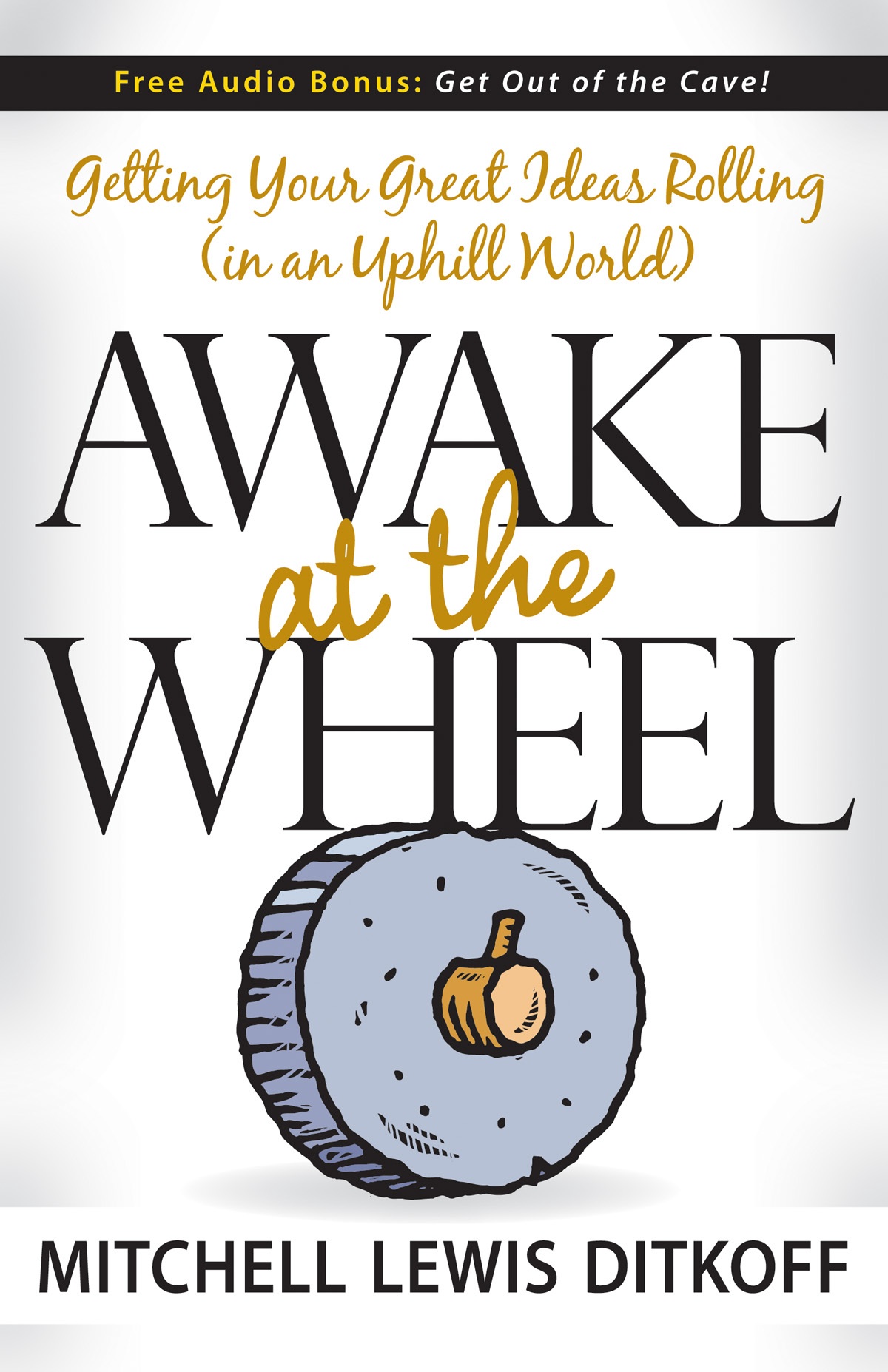 A huge thank you to the fabulous Nettie Hartsock (digital strategist, publicist, and book champion) for encouraging me to enter. And another huge thank you to David Hancock and the wonderful people at Morgan James Publishing for seeing the value of my book (after 22 other publishers rejected it) and launching it lovingly into the world.
Posted by Mitch Ditkoff at 11:38 PM | Comments (10)
February 14, 2009Find Your Creative Tribe on Facebook
Yo! Back in the day, whenever I wanted to hang out with other "creative types" I had to do weird stuff like pound my chest or send smoke signals at midnight. No more!
Now there's Facebook Groups. Or more specifically, my new Create, Innovate, Get Out of the Cave! group -- a place for aspiring innovators to gather round the cyberspatial fire and stoke the flames of creation.
Hey, don't be a neanderthal! You're not in this alone!
Dig it. I struggled to invent the wheel thousands of years before the Mesopotamians (who got all the credit). I had, like, one friend, Ugh, to help me through the process. But YOU have thousands! And they're all starting to meet here.
Posted by Mitch Ditkoff at 07:31 AM | Comments (0)
February 12, 2009Hamster Burial Kits and 998 Business Ideas
Ideas are a dime a dozen. The money is in the execution.
Need proof? For Seth Godin's Alternative MBA program, this week nine forward thinking (and very prolific) wizards each came up with 111 business ideas.
But ideas are only valuable when someone (like you) makes something happen. What follows are their 999 business ideas, free for the taking.
If you see one you like, let us know. If you need some support developing the idea or maintaining your inspiration, click here... or over here.
Posted by Mitch Ditkoff at 09:39 PM | Comments (0)
November 11, 2008Metaphors Be With You!
If you want to originate breakthrough business solutions, you will need to think differently than you usually do. In a phrase, you will need to "get out of the box."
But how? How does a person go beyond the boundaries of their own mind? Is there a key? A door? A nearby genie just waiting to be invoked? How, precisely, does a person think something they've never thought of before?
Perhaps the simplest and most powerful way is to awaken the image-making part of your brain. To imagine. (Ever wonder why the word "image" is the root of the word "imagination?")
Poets and writers are masters at awakening the imagination. A simple turn of phrase, a simple metaphor, and a reader's mind is opened to a whole new world of perception, understanding and experience.
But not only poets and writers have this knack. Scientists do, too.
Friedrich Kekule, the noted German chemist, at a loss for words, described his breakthrough understanding of the benzene molecule as "a snake biting its own tail." And Einstein's Theory of Relativity was preceded by one of his famous "thought experiments" in which he imagined himself riding a light beam into outer space while holding a mirror in front of his face.
No wonder Einstein said, "I rarely think in words at all." No wonder Aristotle, centuries before, concluded, "It is impossible to even think without a mental image."
Unfortunately, business people do it all the time. Addicted to the logical, linear, analytical and rational, we have traded in our artistry for craftsmanship...our palette of possibilities for an increasingly thinning bottom line.
The resulting state of our imagination? Downsized, outsourced, and otherwise re-engineered into oblivion. But it doesn't have to be that way. Not by a long shot. A simple turn of phrase can re-ignite it. And the most effective turn of phrase is the metaphor (and its kissing cousins, analogy and simile).
Simply put, a metaphor is the application of a word or phrase to an object or concept it does not literally denote (i.e., "The ghetto was a volcano about to erupt.") A metaphor calls attention to a similarity between two seemingly dissimilar things and, by so doing, establishes the kind of creative tension that has the potential to spark quantum leaps in thinking -- the kind of leaping that generates insight and discovery.
In fact, a well-placed metaphor is a lot like a... chemical reaction... or a meeting of the minds... or a successful merger between companies. Something good can happen when two similar, but different, elements enter into a relationship with each other.
"That's a stretch," you might say. And yet, it is this very act of "stretching" that opens the door to new solutions.
If you're stuck in the desert, which would you rather have: A 20-page report telling you where the water is... or a map? Metaphor is the map -- a guide to your own, out-of-the-box solution-finding ability. Yes, a picture is worth a thousand words -- especially when that picture, consciously chosen, stretches the imagination just enough to disentangle it from the limitations of ordinary business logic.
If you want to learn more about metaphorical thinking, click here to order It's AHAppening!, Idea Champions' series of five creative thinking guidebooks. Metaphors Be With You, from which this posting was excerpted, is one of the five.
Digital image from www.toddpowelson.com
Posted by Mitch Ditkoff at 07:40 AM | Comments (1)
October 16, 2008True Blue Sky Thinking
Where everyone else saw only buildings overhead, one innovator saw a new font.
Lisa Reinermann, a University of Duisburg student, had this Aha! insight while exploring the narrow streets of Barcelona.
Suppose you were Lisa. How would you notice the font-ness of sky-shapes contained by rooflines? First, ignore size. Don't let the fact that fonts are small but these sky-shapes are building-sized distract you from the visual reality. (Lisa's camera probably helped her flatten, rescale and reframe her perception.) Second, reverse figure and ground. Make the usual background (the sky) the foreground and the usual foreground (the closer buildings) background. Role reversals are common in many innovations. Weaknesses (like inferior glue) often reframe as strengths and become the breakthroughs (Post-It Notes) of the future.
To Lisa's credit, once she had her breakthrough she stuck with it, searching, walking and neck-craning to find other locations to complete every letter in the alphabet. Her photo-typographic alphabet is now a font set published by German Type Foundry Slanted called Type The Sky. The collection comes as a type face and a photo book.
Posted by Tim Moore at 03:28 PM | Comments (1)
True Blue Sky ThinkingWhere everyone else saw only buildings overhead, one innovator saw a new font.
Lisa Reinermann, a University of Duisburg student, had this Aha! insight while exploring the narrow streets of Barcelona.
Suppose you were Lisa. How would you notice the font-ness of sky-shapes contained by rooflines? First, ignore size. Don't let the fact that fonts are small but these sky-shapes are building-sized distract you from the visual reality. (Lisa's camera probably helped her flatten, rescale and reframe her perception.) Second, reverse figure and ground. Make the usual background (the sky) the foreground and the usual foreground (the closer buildings) background. Role reversals are common in many innovations. Weaknesses (like inferior glue) often reframe as strengths and become the breakthroughs (Post-It Notes) of the future.
To Lisa's credit, once she had her breakthrough she stuck with it, searching, walking and neck-craning to find other locations to complete every letter in the alphabet. Her photo-typographic alphabet is now a font set published by German Type Foundry Slanted called Type The Sky. The collection comes as a type face and a photo book.
Posted by Tim Moore at 03:28 PM | Comments (1)
August 30, 2008Innovation Slush Funds
Nortel, the fiber optics giant, allocates pools of money (or "innovation slush funds") at different organizational levels for any idea a manager thinks has great potential, but doesn't want to be accountable for the bottom-line result. Very cool.
A client of mine, at Michelin, does a similar thing. He is authorized to distribute as much as $10,000 to aspiring innovators who have done their homework and are able to convince him that their high potential projects need a bit funding to get untracked. Also very cool.
What I like about this approach is that it sidesteps the bureaucratic hokey pokey, run-it-up-the-flagpole, command and control, funky chicken shuffle that all too often scuttles powerful new ideas in need of a timely infusion of capital to get them rolling.
Of course, these "innovation slush fund" scenarios require some trust and clearly defined evaluation criteria to keep things on the up and up -- but that is simply done. No Six Sigma required. It's such a simple thing to do and can radically reduce the time it takes for breakthrough ideas and aspiring innovators to make magic happen in your organization.
In what ways can YOU establish some kind of innovation slush fund this month? And if you have already done so, click "comments" below and let us know how it's working out.
And remember, as one wise pundit put it, "It's not the money that starts the idea, it's the idea that starts the money."
Posted by Mitch Ditkoff at 09:30 PM | Comments (1)
July 13, 2008Need a Breakthrough?
Tired of rubbing that magic lamp you bought on ebay, hoping for a genie to appear? Need a big breakthrough on a project of yours? Look no further. You've come to the right place. And you won't need to rub a single thing.
All you need to do is click.But first you'll need to think of a venture or idea you really want to get off the ground. Got it? Good. Now click here and let our online genie help you on your way.
(If you like the results, you can order the off-line genie here.)
Posted by Mitch Ditkoff at 05:18 PM | Comments (0)
July 12, 2008Ideas for Other People
I have an odd ability to come up with ideas for other people when I'm not really trying. Book and song titles are my specialties.
Often the ideas are so intriguing, I try to convince myself to do something with them, but eventually I realize they belong to someone else. The question, of course, is WHO?
Usually I don't know and the ideas end up orphans. But now that I've got this blog thing going, I've got a way to share the wealth -- or at least a few chuckles. So, here goes:Book title for a psychic: I Thought I Was a Small, But I'm a Medium. Book title for a psychologist with an Eastern bent: Yin, Yang and Jung. Title for a song for a recovering alcoholic: 50 Ways to Love Your Liver.Go ahead. Take 'em. They're free.
Posted by Mitch Ditkoff at 08:51 PM | Comments (0)
June 29, 2008More On Where and When You Get Your Best Ideas
A big thanks to Chuck Frey of Innovation Tools for his June 26th posting on our just-released poll results re: "Where and When People Get Their Best Ideas?"
Chuck notes the top ten catalysts:
1. When you're inspired
2. Brainstorming with others
3. When you're immersed in a project
4. When you're happy
5. Collaborating with a partner
6. Daydreaming
7. Analyzing a problem
8. Driving
9. Commuting to and from work
10. Reading books in your field
And here are the bottom ten:
70. Swimming
71. Brushing your teeth
72. Drinking anything with alcohol
73. Playing a sport
74. When you're sad
75. Mowing the lawn
76. Shaving
77. Procrastinating
78. In a bar
79. Having sex
80. Smoking tobacco
(If you're looking for a fun way to spark some great ideas, click here.)
Or here.
Posted by Mitch Ditkoff at 11:14 AM | Comments (1)
June 01, 2008AWAKE AT THE WHEEL: Getting Your Great Ideas Rolling (in an uphill world)
Ta da! After seven years, 22 rejections, multiple rewrites, 2 agents, and a whole lot of looking at myself in the mirror, here it is: the publication of my new book, AWAKE AT THE WHEEL: Getting Your Great Ideas Rolling (in an Uphill World). Part fable, part creative thinking toolbox, the book is a wake up call for all aspiring innovators -- a simple way to help people "get out of the cave" and manifest BIG ideas in a world not always ready for the new and the different.
If you have an inspired idea that is lingering in your mind and needs a fresh jolt to see the light of day, this book is for you.
To order from Amazon, click here.
Tim Gallwey: "A superb catalyst for anyone with the urge to bring their best ideas into reality."
Donna Fenn: "Og may have invented the wheel, but Mitch Ditkoff has created a GPS for the innovation process. Awake at the Wheel is a witty and inspiring roadmap for the journey from ideas to invention."
Jay Conrad Levinson: "Nothing is as powerful as an idea whose time has come. The time has come for this book and Mitchell Lewis Ditkoff has put it into words. He has done a masterful job."
Jack Mitchell: "Go ahead and 'hug' your employees by giving them Awake at the Wheel and creating a company culture that fosters, develops, and celebrates the best of their ideas."
Joyce Wycoff: "A highly accessible alchemist's stone for aspiring innovators."
Melinda McLaughlin: Awake at the Wheel illuminates! It's the perfect book for those of us who have felt the excitement of the 'aha' moment only to experience the frustration that comes when no one sees the brilliant lightbulb above our head. Mitch Ditkoff takes us on an engaging journey that re-imagines how to turn an idea into great success and makes it suddenly seem easy.?
Chuck Frey: "Entertaining and inspiring."
Posted by Mitch Ditkoff at 06:05 AM | Comments (0)
April 18, 200824,000 Year Old Cave Man Invites You to a Book Signing in Woodstock
See that Neanderthal to your left? That's Og, the mythical inventor of the wheel and the hero of Mitch Ditkoff's new book which hits the book stores on May 1.
In honor of Og, I am inviting you to the book signing at the Golden Notebook in Woodstock, NY, Saturday, April 26th, 5:00 - 7:00 pm.
Here's what Og has to say about the book signing:
Morkel noophpa umphh! Kiaww noofti agu. Brrpp. Obama! Rok. Remu! Ditkoff sumphfta jabu.
Translation?
"Hey bipeds with Blackberries and cash flow problems! You don't even need to know how to read to enjoy a book signing! Free wine! Free cheese! The tribe reconvenes! And Mitch Ditkoff, who has recently developed full use of both opposable thumbs, will be signing books. Or eating crackers. Or talking too much.
Bring a friend. Bring two. Really, you don't have to buy a single book if you don't want to. Just come and be part of the fun.
And support the fabulous Golden Notebook!
If you want to listen to Mitch's two minute rap about the book, click here.
PS: If you can't make it to the book signing, so be it. You can still buy a copy here.
Posted by Mitch Ditkoff at 07:58 PM | Comments (0)
December 23, 2007Millions and Billions: The Probability of Terrestrial Life
The late science popularizer Carl Sagan once urged his readers and viewers to contemplate the millions of galaxies in the universe and consider the probability of extraterrestrial life existing somewhere outside our own planet. Today we live in a revised era, increasingly aware of humanity's impact on mothership Earth. So to shed light on our local dilemma, an innovative artist has been building a body of work that asks us to contemplate a different kind of vastness - the vastness of industrially stimulated consumerism.

Chris Jordan is a photo-montagist who creates vast wall-size panels which from a distance seem to be no more than interesting textures. Upon closer inspection though, they turn out to be created from tens of thousands of a single kind of consumable object we use and throw away: cigarettes, plastic bags, beverage bottles, aluminum cans, Vicodan tablets, cell phones. He packs these objects so tightly together that they merge into unified pointillist fields.
In one three panel set, a giant portrait of Ben Franklin turns out to be composed of 125,000 $100 bills. This number, it turns out, represents how much the United States spends each HOUR on the Iraq war - $12.5 million. Similar short clips of "consuming time" characterize most of Jordan's work: five SECONDS of plastic bags used and discarded by US Consumers (60,000 ; detail image above); a DAY's worth of cell phones discarded by US consumers (426,000, detail image below).
Because of the short time samples Jordan's montages represent, his work can convey the speed and staggering scale of industrial consumption in a way no other visualization has until now. We can grasp intuitively that these beaches of discarded goods are expanding daily, or hourly, by similar spatial units. (Four football fields of plastic bottles every five minutes. More plastic floating in the middle of the Pacific Ocean than zooplankton.)

Like grains of sand on a beach, the individual objects in Jordan's images disappear. You search for a "subject" but nothing appears in the foreground. All the objects fuse into one vast background, a disorienting blur of granular overwhelm.
Then it dawns on you: YOU'RE the subject; YOU'RE the foreground. One of those plastic beverage bottles is MY water bottle. One of those cell phones is YOUR cell phone. Each one of us, easing through a supermarket checkout line on any given day, answers the question "Paper or Plastic?" WE are the subject, the foreground.
Chris Jordan creates flat backgrounds we have to place ourselves "in front of." And this helps us intuitively comprehend our interconnectedness and our impact on our LOCAL universe. Unlike Carl Sagan's CETI vision, Jordan lets us step back and contemplate the probabilities for life - not in space but HERE, on this fragile and finite planet. He asks us to consider where the superhighway to "prosperity" as we've defined it ultimately leads.
Here's a short interview with the artist.
Posted by Tim Moore at 08:33 PM | Comments (0)
September 11, 2007The Best Ideas Poll: 2007

Einstein got his best ideas while shaving. Mozart used to exercise before composing. Rene Descartes came up with the Scientific Method in a dream. Three geniuses. Three totally different catalysts for breakthrough thinking.
How about you? Where and when do you get your best ideas? In the shower? Late at night? On vacation? Brainstorming?
Three years ago, I polled 200 people on this very same topic -- a poll that consisted of 34 items and one other category. What astounded me was how many other responses I received -- a veritable Jerry Lewis Telethon of times and places I never once considered as having anything to do with the act of creative thinking.
Which is why our 2007 BEST IDEAS POLL is way more comprehensive. (Notice I did not use the word robust to describe our poll. The word robust is hereby banned from this blog for all eternity). Where was I? Oh, yes -- this year's Best Ideas poll. Interested in taking it? Of course you are. All you need to do is click here. The whole thing will take you less than seven minutes. Its simple. Its fun. And it will likely spark at least a few insights into where and when YOU get your best ideas.
NOTE: The results of our research will be posted here sometime in November, so be sure to check back.
Posted by Mitch Ditkoff at 10:37 PM | Comments (1)
September 07, 2007Seeding Is Believing
I have recently been accused, by one of my colleagues, of writing overly long blog entries. At first I got defensive, but then I realized how right he was. And so, it is with great respect to the blogospheric code of brevity, that I ask you all to contemplate one, simple, non-hyperlinked question today: Where do you find the seeds to grow seedless watermelons?
Posted by Mitch Ditkoff at 11:49 PM | Comments (2)